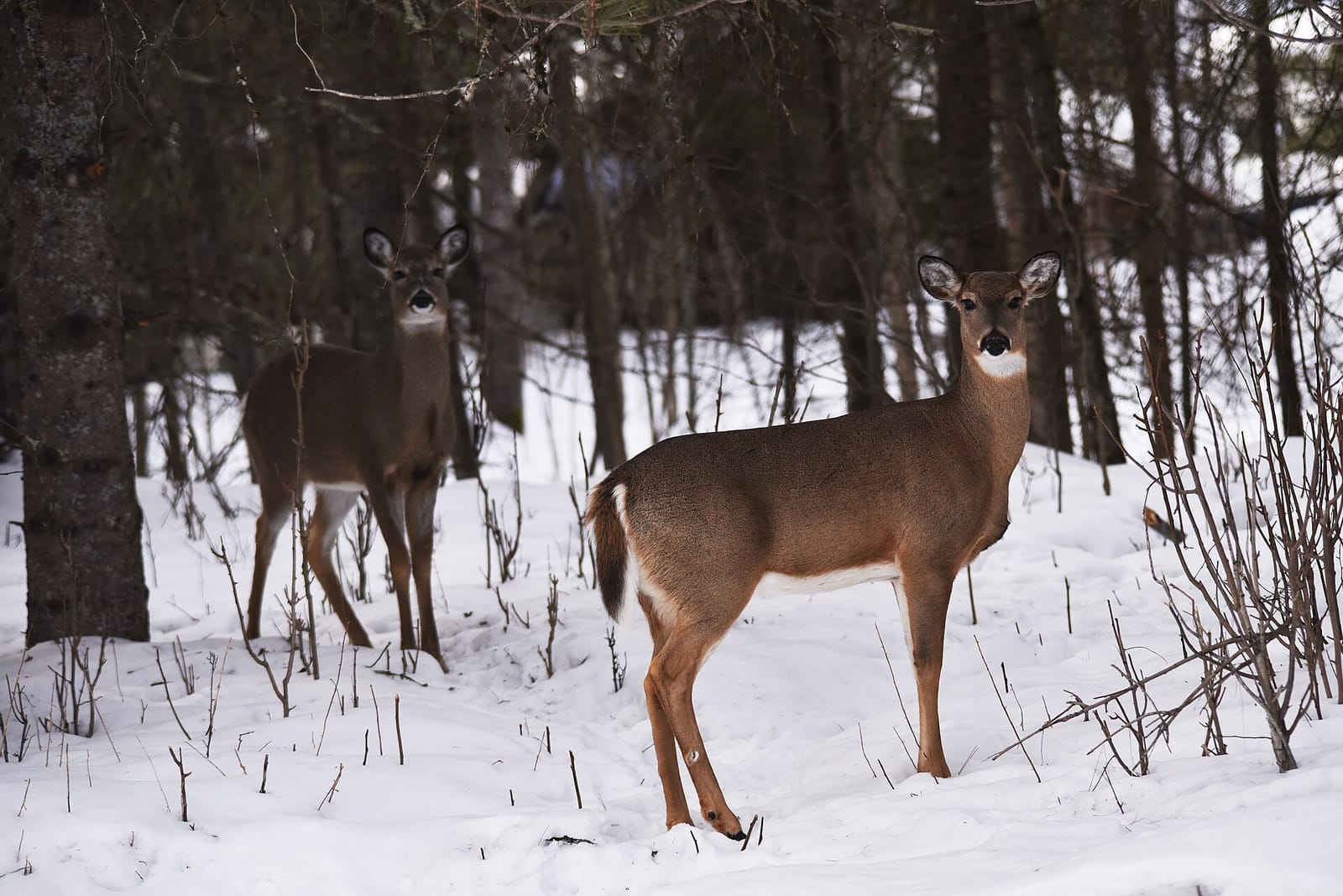
Do whitetail deer migrate? Some do. In snowy northern forests, deer leave their summer range for sheltered winter areas and come back in spring. The Michigan Department of Natural Resources says that “Following the onset of winter conditions, deer may migrate up to 50 miles from summer range to reach specific or preferred wintering complexes” (Michigan DNR). Not every whitetail makes the trip, and in some winters none do. Young bucks make a different one-way move called dispersal, which is easy to mistake for migration.
Key Takeaways
- In northern forests, whitetails often migrate to winter cover. Michigan DNR says the trip can be “up to 50 miles.”
- Minnesota DNR says migrations by individual deer “may be from 1 or 2 miles to 12-15 miles.”
- Snow triggers it. Minnesota says deer move after “significant snowfalls of approximately 12 inches or more.”
- In mild winters, Minnesota says deer “may not shift their home ranges.”
- Dispersal is different: the Pennsylvania Game Commission says “around 70 percent of all yearling bucks will disperse.”
Do whitetail deer migrate in winter?
In the north, yes. Minnesota DNR says that after “significant snowfalls of approximately 12 inches or more,” deer begin moving to winter habitat complexes. Those areas “have heavier mixed deciduous and coniferous forest and swamp conifer areas,” where deer bunch up, or yard. It adds that “These migrations by individual deer may be from 1 or 2 miles to 12-15 miles” (Minnesota DNR).
Michigan’s numbers go higher. Its DNR describes moves of “up to 50 miles” and says “Following winter break-up, deer disperse back to their summer areas” (Michigan DNR). That round trip is what makes it a migration.
The deer aren’t going somewhere warmer. They’re going somewhere with shelter. Michigan says “Conifer cover provides deer with shelter from snow, wind, and cold temperatures,” and “conifer branches intercept and retain snow, allowing deer easier travel.” In the Upper Peninsula, it says preferred cover is “upland stands of eastern hemlock and swamps of northern white cedar.” For more on what happens in those winter areas, see our guide to deer yarding behavior in northern forests.
Do deer use the same winter yards every year?
Often. Minnesota DNR says many cedar deer yards in northern Minnesota “have documented use by deer for decades.” Michigan lists “established migratory deer patterns, deer movement behavior or instinct” among the factors it weighs when managing wintering complexes. Michigan also calls “deer yards” a loose term and prefers “wintering complexes,” because definitions vary.
Do deer migrate every year?
Not necessarily. Minnesota DNR says “In years when snowfall comes late and remains relatively shallow, deer may not shift their home ranges and will remain spread out on the landscape” (Minnesota DNR). Snow drives the move, so a mild winter can mean no move at all.
All the official migration guidance we found comes from northern forest states. We didn’t find an official source putting a number on how many whitetails migrate in farm country or the South, so we don’t give one.
How big is a whitetail’s home range?
Minnesota DNR says “In Minnesota’s northern forests an adult doe’s seasonal home range is between 120-900 acres” and “Adult bucks occupy 300-1,300 acre home ranges and expand their home ranges during the fall rutting season.” It adds that deer “make seasonal changes in the use and size of their home range in response to changing weather, food availability and cover needs” (Minnesota DNR).
Migration vs. dispersal: why the buck you watched all summer vanished
Dispersal is a young buck leaving the area where he was born, usually for good. The Pennsylvania Game Commission says “Dispersal, or movement away from a buck’s area where it was born, is common in Pennsylvania,” and “Research results indicate between around 70 percent of all yearling bucks will disperse” (Pennsylvania Game Commission).
Timing matters for hunters. Pennsylvania says “most dispersal occurs in the fall during October and November prior to the peak of the breeding season.” In its study, bucks in Armstrong County “dispersed about 5 miles while bucks in Centre County dispersed 4 miles,” and one buck “swam across the Allegheny River” before settling “25 miles from his natal range.” The agency’s takeaway: “disappearance of a buck in the fall may not indicate death of a buck.” More on this in our look at yearling buck dispersal distances.
Older bucks are steadier. Pennsylvania says “older bucks’ movements are more predictable than yearling bucks.” Rut movement is a third thing altogether; see our deer rut guide.
FAQ
Do whitetail deer migrate south for the winter? No. Northern whitetails move to sheltered conifer cover, not south. Michigan DNR says deer head for “preferred wintering complexes.”
How far do whitetail deer migrate? Minnesota DNR says 1 or 2 miles to 12-15 miles. Michigan DNR says up to 50 miles.
When do deer leave their winter yards? Michigan DNR says “Following winter break-up, deer disperse back to their summer areas.”
Do does disperse like bucks? Less often. Minnesota DNR says “Yearling does establish home ranges near their mother, while yearling bucks are more likely to establish home ranges some distance from their mother’s home range.”
The other side of it
You could argue “migration” oversells what most whitetails do. Minnesota DNR itself puts the word in quotation marks, and its shortest moves are a mile or two. Next to the long migrations people picture, a doe walking a few miles to a cedar swamp is closer to moving to the basement for winter. Still, Michigan’s 50-mile figure is a real migration by any standard. As for the hunter convinced his missing 2.5-year-old migrated to the neighbor’s: Pennsylvania’s data says the yearling was the one likely to leave. The neighbor’s food plot is the more likely explanation.
Keep reading
Michigan's biggest bucks in the record book →
Latest deer news
Sources
- Deer Wintering Complexes, Michigan Department of Natural Resources
- Managing your woodland for white-tailed deer, Minnesota Department of Natural Resources
- Deer Movements, Pennsylvania Game Commission
Comments