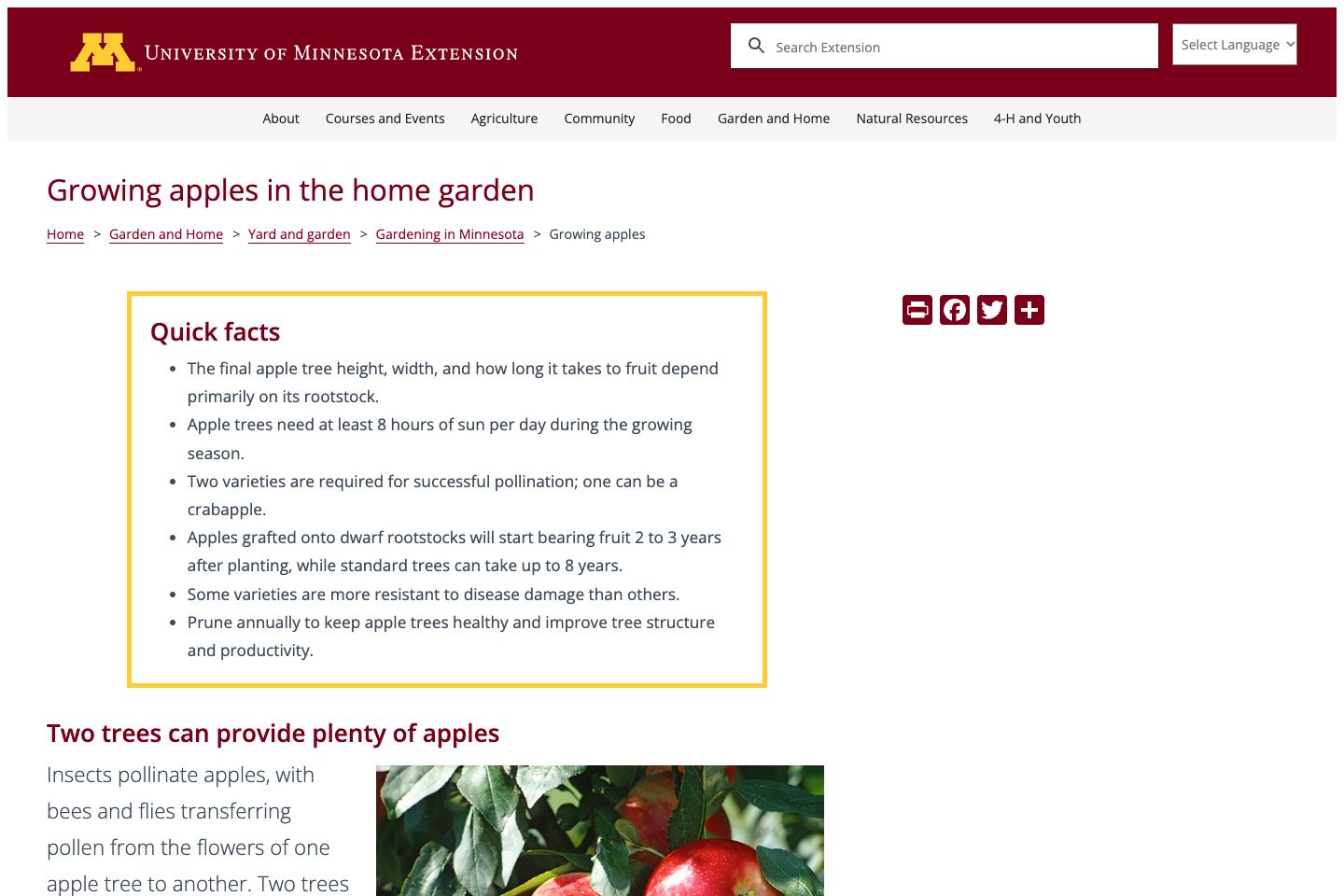
Old apple trees still feed deer when sunlight, pruning, and protection bring them back into bearing. University of Minnesota Extension states apple trees need at least 8 hours of sun per day during the growing season and that two varieties are required for successful pollination - one can be a crabapple (UMN Extension). Apples grafted onto dwarf rootstocks begin bearing 2 to 3 years after planting, while standard trees can take up to 8 years (UMN Extension). Extension guidance is to prune annually to keep trees healthy and improve structure and productivity, with dormant pruning for existing trees done before growth begins after the coldest weather and away from wet periods (UMN Extension). Rootstock is the dominant factor controlling final tree height, width, and years to fruit (UMN Extension). From November through March, if wildlife pressure is high, put fencing or cages around trees (UMN Extension). That sun-prune-fence package is the rehabilitation checklist for soft-mast deer orchards built from abandoned or neglected trees (UMN Extension).
Key Takeaways
- Apples need ≥8 hours direct sun daily in the growing season (UMN Extension).
- Two varieties required for pollination; crabapple can be the partner (UMN Extension).
- Dwarf rootstocks bear in 2-3 years; standards may take up to 8 (UMN Extension).
- Prune annually; dormant prune after coldest weather, avoid wet periods (UMN Extension).
- Fence or cage trees November-March when wildlife pressure is high (UMN Extension).
Sun first, nostalgia second
UMN Extension requires a spot where sun shines directly on the tree at least 8 hours each day and notes pruning is one way to bring more sunlight into the canopy by removing branches from dense interiors (UMN Extension). Abandoned orchard rehab fails when overtopping hardwoods leave apples in shade even if trunks still live (UMN Extension). Release cuts that free the canopy are therefore the first rehabilitation move before fine pruning (UMN Extension).
Pruning calendar
For existing trees, prune before growth begins after the coldest weather has passed, and avoid pruning during wet periods (UMN Extension). Annual pruning keeps trees healthy and improves structure and productivity (UMN Extension). March is flagged for pruning existing trees before growth; April and May suit bare-root planting as soon as soil can be worked (UMN Extension). On neglected trees, staged years of corrective cuts beat one severe haircut that shocks the tree (UMN Extension).
Rootstock and time-to-fruit
Final height, width, and years to fruit depend primarily on rootstock (UMN Extension). Dwarf rootstocks fruit in 2 to 3 years after planting but can need staking because smaller root systems tip more easily and fruit can weigh down branches (UMN Extension). Standard trees may wait up to 8 years but often suit wildlife plantings where height and longevity matter more than quick crops (UMN Extension).
Pollination partners
Two varieties are required for successful pollination; a crabapple can serve as the pollen partner (UMN Extension). Before planting, Extension advises checking neighborhood pollen sources within insect range (UMN Extension). Bees and flies move pollen between trees, so a single isolated heirloom with no partner remains a deer shade tree, not a mast tree (UMN Extension).
Fence the investment
UMN Extension specifically flags November through March fencing or cages when wildlife pressure is high (UMN Extension). Deer that browse buds erase the soft-mast goal of rehabilitation (UMN Extension). Protect trunks and lower scaffolds until canopy height and fencing strategy match local browse pressure (UMN Extension).
Bottom line
Rehab deer apples with full sun, annual dormant pruning, a pollination partner, and winter fencing - dwarf trees fruit faster, standards wait longer (UMN Extension).
The other side of it
Everything here comes from one Minnesota extension page written for people growing apples, not for rescuing a shaded, half-dead tree in the woods. Annual pruning and caging every winter is orchard-keeping, and a hunter could argue that releasing the old trees from shade and walking away gets deer most of the benefit. Funny how the guy who swears by his grandpa’s old apple tree has never once noticed it doesn’t have a pollination partner.
Keep reading
Latest deer news
Comments