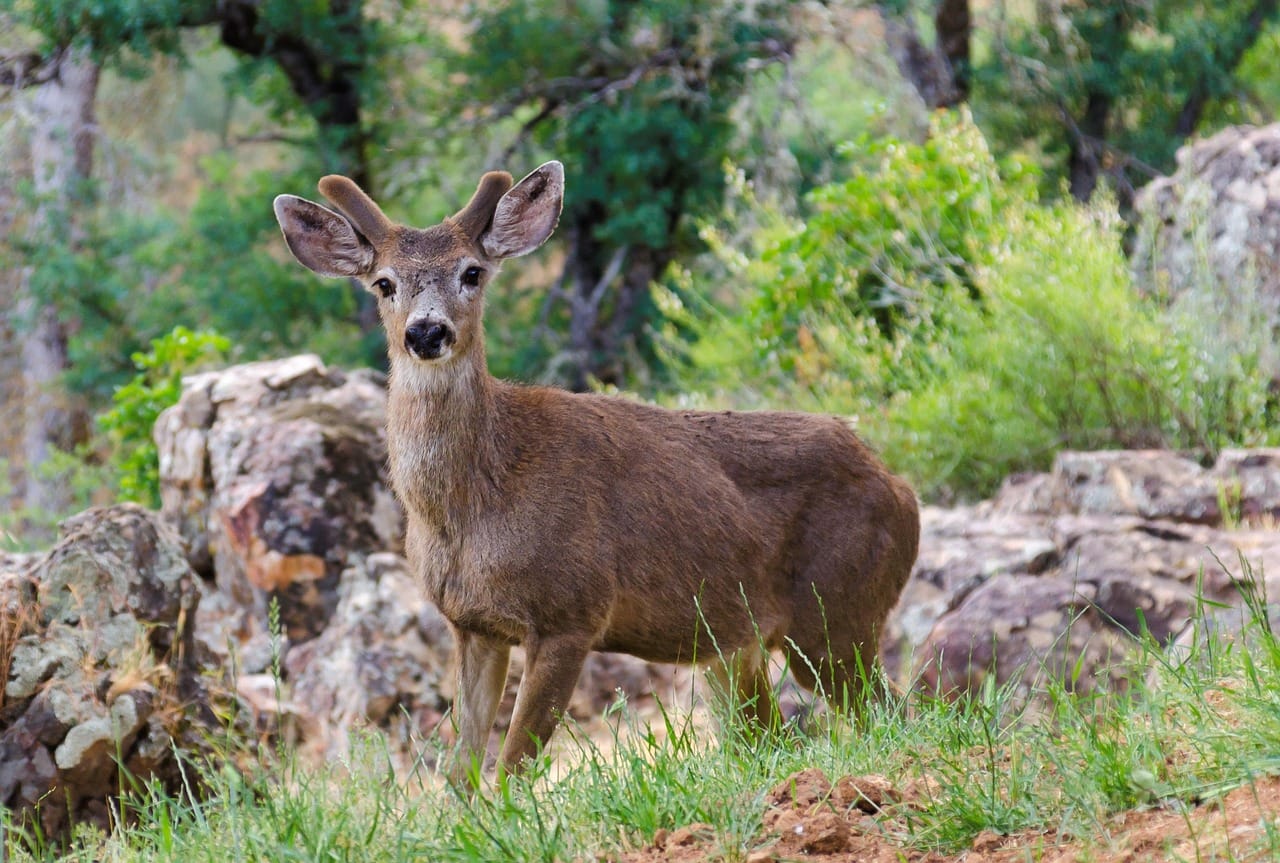
Catalina Island’s mule deer removal took 670 mule deer off about 5,300 acres of Conservancy land in the Middle Ranch area in September and October 2026, substantially more than the roughly 200 the Catalina Island Conservancy had expected (Conservancy Nov. 6 update). It was not a hunt. Trained wildlife management professionals did the work under a California Department of Fish and Wildlife restoration management permit. Safari Club International and other hunting groups had asked a court to stop the first phase, and SCI says it is still fighting the decision.
Key Takeaways
- The Conservancy removed 670 mule deer from Middle Ranch, against a projection of about 200. A 2025 spotlight survey had estimated about 2,040 deer in the island’s interior, excluding Avalon.
- The work was done by trained wildlife management professionals under a CDFW restoration management permit, not by public hunters. The Conservancy had already planned a separate, final locals-only recreational hunt for fall 2026.
- Mule deer are not native to Catalina. They were introduced for sport hunting in the late 1920s and 1930s. The Conservancy says they keep native plants from recovering after fire and help invasive grasses spread.
- SCI and partners sued over CDFW’s approval. A Los Angeles Superior Court judge issued a final ruling on Sept. 3, 2026, denying a request to halt the first phase. SCI says it has appealed and sought a stay.
- The Conservancy plans further removal operations beginning in mid-2027.
How many mule deer were removed from Catalina Island?
The Conservancy’s Nov. 6, 2026 update says crews removed 670 invasive mule deer from the Middle Ranch area in September and October. That first phase was limited to about 5,300 acres of Conservancy land and concluded in October (Conservancy Nov. 6 update). The Conservancy had projected roughly 200 deer from that area, based on 2025 spotlight surveys that estimated about 2,040 deer across the island’s interior, excluding Avalon.
Kate Wheeler, the Conservancy’s president and CEO, called the higher number “important information,” and said prior surveys give estimates, not exact counts. The Conservancy says the 670 figure suggests the island’s overall population is substantially larger than previously estimated, and that spotlight surveys “are not a census.” Field crews also reported that most of the deer were in poor physical condition.
SCI, in a statement published Nov. 18, 2026 by The Outdoor Wire, said the 670 deer were “more than three times the deer originally anticipated,” and that the gap “casts doubt on the Conservancy’s claims about the difficulty of controlling deer through hunting.” That is SCI’s argument, not a finding from the Conservancy or the court.
Was the Catalina Island deer removal a hunt?
No. These are mule deer, not whitetails, and the Middle Ranch operation was not a public hunt. The Conservancy says trained wildlife management professionals did the work under a restoration management permit CDFW approved in January 2026 (Conservancy court update). CDFW’s South Coast Region issued that permit on Jan. 30, 2026, according to the Notice of Exemption filed on CEQAnet. CDFW has also said the project qualifies as a statutorily exempt restoration project under CEQA.
The Conservancy’s operations notice said licensed professionals would use firearms, air rifles and tranquilizers, mainly at night, and that feeding stations would be set up in mid-August to prepare for the September work. After residents raised concerns about aerial shooting, the Conservancy said that method was dropped, and that under the permit, “only trained, ground-based professionals may conduct lethal deer removal.”
The Conservancy did keep a separate recreational hunt on the calendar. Its Jan. 30 announcement said, “Separately, a final locals-only, recreational hunting season will occur in fall 2026” (Conservancy permit announcement). The Los Angeles Times reported in September that recreational hunting has long been allowed on the island but has not controlled the deer’s numbers, and that it would end after this year’s season.
Why does the Conservancy want the mule deer gone?
Mule deer are not native to Catalina. The Conservancy says they were introduced in the late 1920s and 1930s for sport hunting, and that with no predators and no ability to migrate, the population grew quickly (operations notice).
The Conservancy’s case is ecological. It says deer eat native plants as they regrow, especially after wildfire, which lets invasive annual grasses spread. It puts that grass cover at about 35% of the island’s ecosystems, and says those grasses dry out early and ignite easily. A 2012 Catalina study, cited on its Nov. 6 page, found that 88% of resprouting toyon shrubs died in areas deer could reach after wildfire, compared with 11% inside protective fencing. Some of the harvested deer, the Conservancy says, were delivered to the California Condor Recovery Program as food for endangered condors.
Pepe Barton, the Conservancy’s director of communications, told the Los Angeles Times that the Conservancy fully evaluated other methods. “Complete removal of the non-native deer population is the only approach authorized by the California Department of Fish and Wildlife,” its court update says. Wheeler said, “There are many ways to love Catalina, and people don’t always agree about what caring for it requires.” She said the Conservancy does not dismiss how painful the removal is for many people, and that native habitats “cannot recover under current conditions with deer present on the landscape.”
Why did hunting groups go to court?
SCI and its partners went to court over CDFW’s approval of the project. In the Nov. 18 Outdoor Wire statement, SCI said it challenged CDFW for failing to meet California’s environmental review and public participation requirements, and also challenged the agency’s authority to authorize “the complete eradication of a longstanding game mammal population” through a Restoration Management Permit. The Los Angeles Times reported that the challenge was filed in Los Angeles Superior Court in March by hunting nonprofits and others, including SCI, the California Rifle & Pistol Association and the Coalition to Save Catalina Island Deer.
On Sept. 1, 2026, Superior Court Judge Curtis A. Kin tentatively denied a request for a preliminary injunction, the Times reported, saying the first work was a “pre-removal assessment” and that the “actual eradication phase is not set to occur until June 2027.” The Conservancy said a Los Angeles Superior Court judge issued a final ruling on Thursday, Sept. 3, denying the request to halt the initial phase (Conservancy court update; Times follow-up).
In a statement on its website, SCI said the court rejected its California Environmental Quality Act challenge as untimely and also rejected other claims about the permit. In the Nov. 18 statement, SCI said the court dismissed the coalition’s claims in September, and that it “appealed the lower court’s decision and sought a stay of any further eradication until the appeal is resolved.” That appeal and stay request are SCI’s account; this story did not review a court docket.
W. Laird Hamberlin, SCI’s CEO, said a result more than three times the number originally anticipated “warrants a closer examination of the information guiding these decisions.” He also said that once the deer are gone, “that resource cannot simply be restored,” and that Catalina would lose “a longstanding hunting opportunity for California sportsmen and women.”
What happens next?
The Conservancy says further deer removal operations are planned to begin in the middle of 2027 (Conservancy Nov. 6 update). SCI says it has asked for a stay of any further eradication until its appeal is resolved.
The other side of it
The 670-deer count can be read two ways. The Conservancy treats it as evidence that the island has more mule deer than the 2025 surveys showed. SCI treats the same number as a reason to doubt the Conservancy’s science and its claim that hunting could not control the herd.
There is also a fire argument that does not line up. The Conservancy says deer help turn the island toward flashy invasive grasses. Los Angeles County Fire Chief Anthony Marrone, in a memo reported by the Times, said removing the deer would reduce invasive plants but that full eradication would also increase chaparral fuel loads, which are harder to manage than grasses, and could raise wildfire risk near Avalon. Supervisor Janice Hahn has opposed a complete eradication on those and other grounds. Pepe Barton, the Conservancy’s communications director, told the Times that keeping a smaller herd is not a stable option because the deer “have a tendency to quickly repopulate.”
Sources
- Catalina Deer Removal Reveals Higher-Than-Expected Population In Middle Ranch Area, Catalina Island Conservancy
- Final Ruling Allows Catalina Island Mule Deer Removal to Proceed, Catalina Island Conservancy
- SCI Questions Court's Decision After 670 Deer Killed in Initial Catalina Island Operation, The Outdoor Wire
- Operations Notice: Invasive Species Removal in Middle Ranch Area, Catalina Island Conservancy
- State Approves Catalina Island Conservancy Restoration Permit, Catalina Island Conservancy
- Catalina Island Restoration Project (Project), California Department of Fish and Wildlife, South Coast Region 5 (via CEQAnet)
- SERP Concurrences | Catalina Island Restoration Project, California Department of Fish and Wildlife
- Killing of Catalina Island deer will go forward despite last-minute appeals, Los Angeles Times
- Killing of Catalina Island's mule deer has begun, official confirms, Los Angeles Times
- SCI Disappointed by Court Decision Upholding Catalina Island Deer Eradication, Safari Club International
Comments