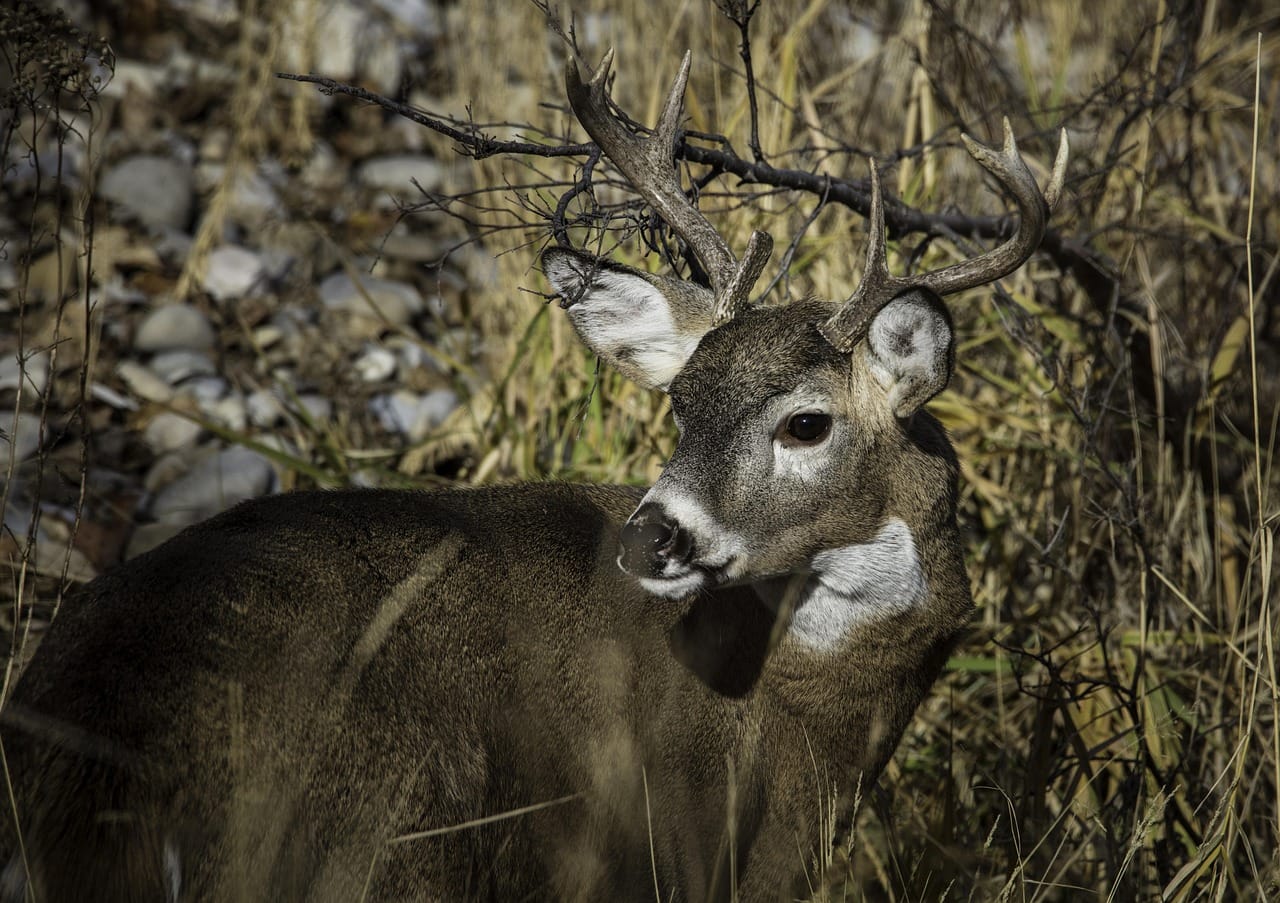
The deer rut is the whitetail breeding season, when does come into estrus and bucks go looking for them, and it happens when shortening daylight says so. The National Deer Association says peak breeding comes “at approximately the same time every year” in any given area, regardless of the moon or the weather. In much of the North and Midwest that peak lands in November, and in the South it can fall anywhere from October to February.
Key Takeaways
- Photoperiod, the length of daylight, triggers does to come into estrus, “and the does are what dictates rutting activity” (NDA).
- An individual doe is in heat for about 24 to 48 hours (Mississippi State University Deer Lab).
- University of Georgia researchers found no link between moon phase and breeding dates in data from more than 2,500 does across seven states (NDA).
- Southern peaks are scattered: October in east Texas, December in Arkansas, January in Mississippi and Alabama, February in the Florida panhandle (NDA).
- Does not bred in their first cycle come back into estrus about 28 days later, which helps explain a “second rut” (NDA; MSU).
What triggers the deer rut?
Daylight. MSU’s Deer Lab says peak rut “is synchronized by photoperiod,” which sets off the hormone changes that make does receptive to bucks (MSU). The NDA puts it bluntly: peak breeding “is not influenced by moon phase, weather changes or planetary alignments” (NDA).
So when somebody says a deer is “in rut,” what they’re really describing is a lot of does in heat at once. MSU says a single doe’s estrus lasts 24 to 48 hours, and “the cumulative effect of many females in the population entering estrus within a short period of time generates the fireworks we call ‘The Rut’” (MSU).
What month do deer go into rut?
It depends on where you hunt, but it holds steady from year to year on the same ground. The NDA’s example bell curve for many northern and midwestern states shows most breeding in the second and third weeks of November, starting as early as the second week of October and running into December (NDA).
Why is the rut so different in the South?
The research gives two reasons. MSU says mild winters and year-round forage give southern fawns a much wider window to be born and survive, so there’s less pressure to breed on a tight schedule (MSU). And the NDA, citing Dr. Karl V. Miller of the University of Georgia, says southern rut timing “is more influenced by genetics and maternal factors” (NDA).
A common theory among biologists ties that to restocking in the mid-1900s, when deer moved from one region carried their original day-length trigger with them (NDA). Even inside one state it swings. MSU found peak breeding in Mississippi runs from late November in the northwest to mid-February in the southeast (MSU).
Why does the rut seem early or late some years?
Because breeding dates aren’t sighting dates. The NDA is careful about this with its New Brunswick data: those are “the dates when does were actually bred,” not necessarily the days hunters saw the most chasing (NDA). Weather, food and hunting pressure can change what you see in daylight without moving the breeding peak at all. For your area, look for your state agency’s conception data.
Does the moon affect the rut?
Not the breeding dates. The NDA describes New Brunswick data where the average center of breeding fell in the same four-day window, Nov. 26-29, in eight of nine years despite shifting moon phases. University of Georgia researchers led by David Osborn and Karl Miller found no correlation between moon phase and breeding timing in data from South Carolina, Texas, Mississippi, Missouri, Maine, Minnesota and Michigan (NDA).
The NDA does note research showing the moon may shift daily deer movement slightly. That’s a different question from when does get bred.
How long does the rut last?
In Mississippi, MSU found breeding within a region runs about 30 to 45 days, “with most of breeding taking place within a 21-day period centered on the peak” (MSU).
Is the “second rut” real?
Yes, but it’s small. Does not bred in their first estrus cycle come back in about 28 days, and some doe fawns come into estrus later once they reach a certain weight (NDA). MSU describes “a second, much smaller peak of breeding 3-4 weeks later,” which hunters call the second rut (MSU).
How long does a buck stay with a doe?
Usually a day or two. The NDA says a doe’s estrus lasts “about 24 hours, though on the long end up to and sometimes beyond 48 hours.” Mississippi State’s Dr. Bronson Strickland told the NDA that tending, when a buck stays with one doe as she comes into heat, “might be 48 hours or more.” Wildlife photographer Tes Randle Jolly described the end of it: when the doe is done, the buck scent-checks her “and just walk[s] away” (NDA).
Does herd management change the rut?
It can change how hard it hits. Citing Miller, the NDA says herds with balanced sex ratios and older bucks have “tighter” or more synchronous ruts, with more rutting behavior and competition, while poorly balanced herds with young bucks miss out on that (NDA).
How do deer act during the rut?
Rougher with each other, and on their feet more. The NDA describes the chasing phase as bucks “aggressively pursuing does that are not ready to be pursued.” A tending buck “will aggressively run off any other bucks that come into the area,” according to photographer Matt Hansen (NDA).
They also move at odd hours. Iowa DNR biologist Jim Coffey said “as we enter the prime breeding time, deer move more all hours of the day.” The bigger risk to people is on the road. Iowa DNR says deer movement peaks “around the first week of November,” which means more deer-vehicle collisions (Iowa DNR).
What sounds do deer make in the rut, and does rattling work?
Whitetails “snort, grunt and bleat,” per Minnesota DNR, and Missouri’s conservation department says they use sounds to convey alarm, distress, social status and aggression. A snort is an alarm, often with foot stomping and head swaying. Buck fights “are often accompanied by grunts and snort-wheezes,” and MDC calls the snort-wheeze a fight challenge. Most of these sounds carry less than 100 yards to people, but a snort carries much farther (MDC).
MDC’s calling advice is to start soft with contact grunts and bleats and build up, since “once aggressive language is used, you cannot take it back” (MDC).
Rattling has field data behind it. In a study published by the Southeastern Association of Fish and Wildlife Agencies, 111 bucks responded to 171 rattling sessions. Loud rattling drew “nearly three times as many males as quiet rattling,” duration made no difference, and most bucks came in the first 10-minute segment (SEAFWA).
Timing mattered more than technique. Response peaked during the rut and was lowest pre-rut. Young bucks answered most in the pre-rut, middle-aged bucks in the rut and mature bucks in the post-rut, likely because mature bucks were busy with does during the peak. And bucks “apparently did not learn to avoid rattling” (SEAFWA).
Can you eat a buck killed in the rut?
Yes. The Missouri Department of Conservation says older deer are “absolutely” edible. It also says the meat of rutting bucks “may have a ‘stronger’ flavor because of the stress of breeding season and a buck’s production of strong glandular secretions.” MDC’s advice for better venison is to cool the carcass to 50 degrees within six hours and trim off as much fat as possible (MDC Conservationist, 1998).
Related reading on RAD:
The other side of it
Lots of experienced hunters swear the rut runs “early” or “late” some years, and they’re not making it up: what they see changes. Warm spells push movement into the dark, a bumper acorn crop keeps deer in the timber, and pressure makes bucks nocturnal. The research just says the breeding calendar itself barely moves. Of course, if your moon-phase rut forecast keeps missing, maybe it’s time to stop blaming the deer.
Keep reading
Latest deer news
Sources
- NDA (deerassociation.com)
- Ecology of the Rut | Deer Ecology & Management Lab | Mississippi State University
- NDA (deerassociation.com)
- NDA (deerassociation.com)
- NDA (deerassociation.com)
- NDA (deerassociation.com)
- Deer movements increase as peak of breeding season nears | Department of Natural Resources
- Enjoying the Harvest | Missouri Department of Conservation
- Natural history of deer in Minnesota | Minnesota DNR
- Deer Dialogue | Missouri Department of Conservation
- Behavioral Responses of Male White-tailed Deer to Antler Rattling
Comments