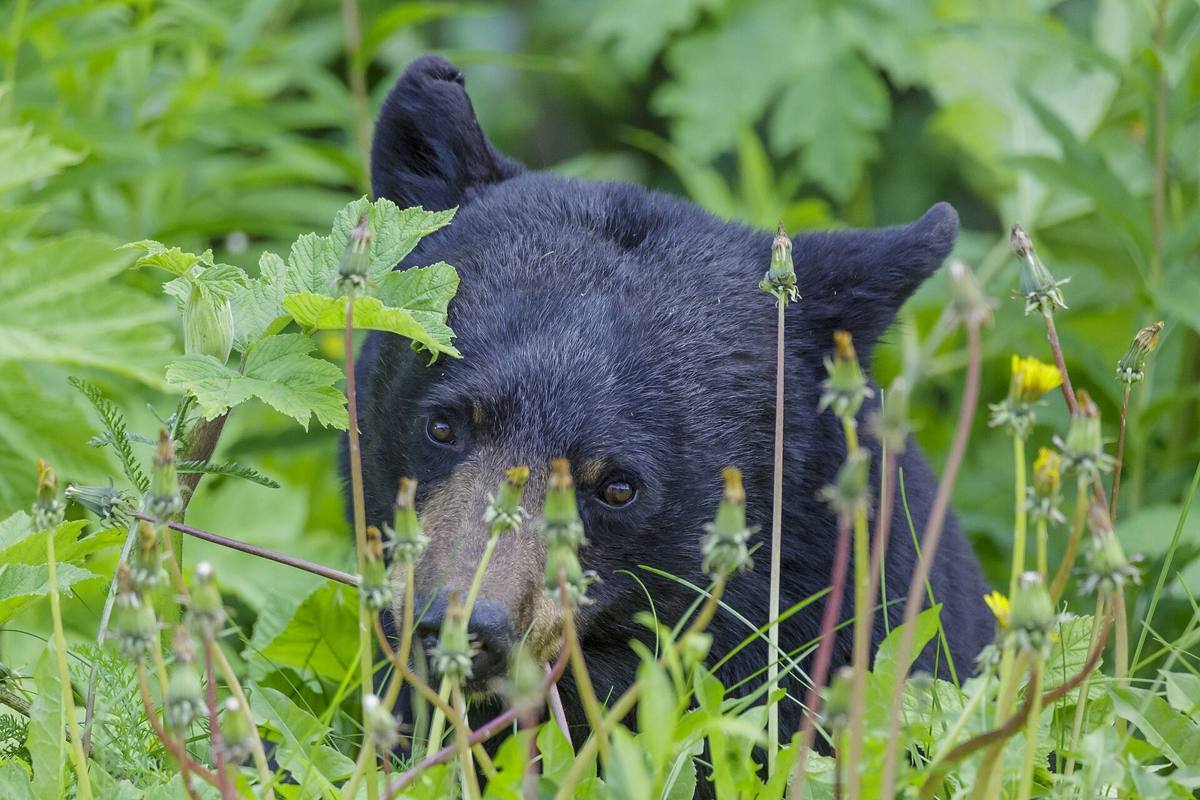
Where black bears are common, they can dominate fawn kill tallies. A Journal of Wildlife Management study of 100 Upper Peninsula Michigan neonates (2013-2015) in a four-predator system found six-month fawn survival of 36 percent; coyotes and black bears were the leading mortality sources because their densities (about 23.8 coyotes and 25.9 bears per 100 km2) dwarfed bobcats and wolves despite lower per-individual kill rates (Journal of Wildlife Management). A western Virginia JWM study (2019-2020) attributed 48.6 percent of neonate mortalities and 64.2 percent of predation events to black bears among 57 neonates (Journal of Wildlife Management). Predation is the dominant mortality source for white-tailed deer under six months across North America (Journal of Wildlife Management).
Key Takeaways
- UP MI: 100 fawns; 6-mo survival 36%; bears+coyotes led kills via density (Journal of Wildlife Management).
- Mean densities: 25.9 bears and 23.8 coyotes per 100 km2 vs 3.8 bobcats, 2.8 wolves (Journal of Wildlife Management).
- VA Bath County: bears = 48.6% of neonate deaths, 64.2% of predation events (Journal of Wildlife Management).
- VA neonate survival to 12 weeks 0.310; adult female annual survival 0.871 (Journal of Wildlife Management).
- More predator species is not purely additive on fawn survival (Journal of Wildlife Management).
Michigan’s four-predator design
Researchers monitored survival and cause-specific mortality from birth to six months while estimating concurrent densities of deer, black bear, coyote, bobcat, and wolf (Journal of Wildlife Management). Mean annual densities included about 334 fawns, 25.9 bears, 23.8 coyotes, 3.8 bobcats, and 2.8 wolves per 100 km2 (Journal of Wildlife Management). Fawn mortality risk was not related to birth mass, birth date, or sex in that analysis (Journal of Wildlife Management). Few prior fawn studies had paired four predators with simultaneous density estimates (Journal of Wildlife Management).
Density beats per-capita kill rate
Despite lower estimated per-individual kill rates, coyotes and black bears led fawn mortality because they were far more abundant than bobcats and wolves (Journal of Wildlife Management). Authors conclude that adding predator species is not entirely additive in its effect on fawn survival (Journal of Wildlife Management). Managers reading only “bears kill fawns” without density context miss why bears outrank rarer predators on the landscape (Journal of Wildlife Management).
Virginia Appalachian contrast
In Bath County, Virginia, researchers captured 57 neonates using GPS-collared pregnant females, vaginal implant transmitters, and transect searches (Journal of Wildlife Management). Thirty-seven neonates died; 28 deaths were predation and 9 were other causes such as abandonment, malnutrition, or disease (Journal of Wildlife Management). Black bears caused 18 predation events - 48.6 percent of all neonate mortalities and 64.2 percent of predation - ahead of bobcats (5) and coyotes (3) (Journal of Wildlife Management). Neonate survival to 12 weeks was 0.310; adult female annual survival was 0.871 (Journal of Wildlife Management).
Landscape nuance and population growth
Virginia models found elevation raised neonate mortality risk about 20 percent per 100 m; survival was higher near fertile valley bottoms than on infertile forested ridges with limited early successional cover (Journal of Wildlife Management). Population growth still modeled as increasing (lambda about 1.10) under observed vital rates, so heavy bear predation did not equal a collapsing herd in that study (Journal of Wildlife Management). Authors suggested modest room for increased female harvest under those vital rates (Journal of Wildlife Management).
Hunter and manager reading
Expect bears to matter most where bear density is high relative to other predators (Journal of Wildlife Management; Journal of Wildlife Management). Fawn recruitment problems need density and vital-rate context before predator-control talk (Journal of Wildlife Management; Journal of Wildlife Management). Habitat that improves valley-bottom fawning cover may buffer predation risk even when bears remain (Journal of Wildlife Management).
Bottom line
Black bears can lead fawn kill counts where they are dense - UP Michigan and western Virginia studies show density-driven impact, not automatic herd collapse (Journal of Wildlife Management; Journal of Wildlife Management).
The other side of it
Two studies, 100 fawns in Michigan and 57 in Virginia, over a few seasons, is a thin base for a whole region’s bear question. A hunter in bear country could also say that a herd modeled as growing doesn’t change what 36 percent six-month survival looks like from his stand. Of course, the guys loudest about bears eating every fawn are rarely the ones buying a bear tag.
Keep reading
Latest deer news
Comments