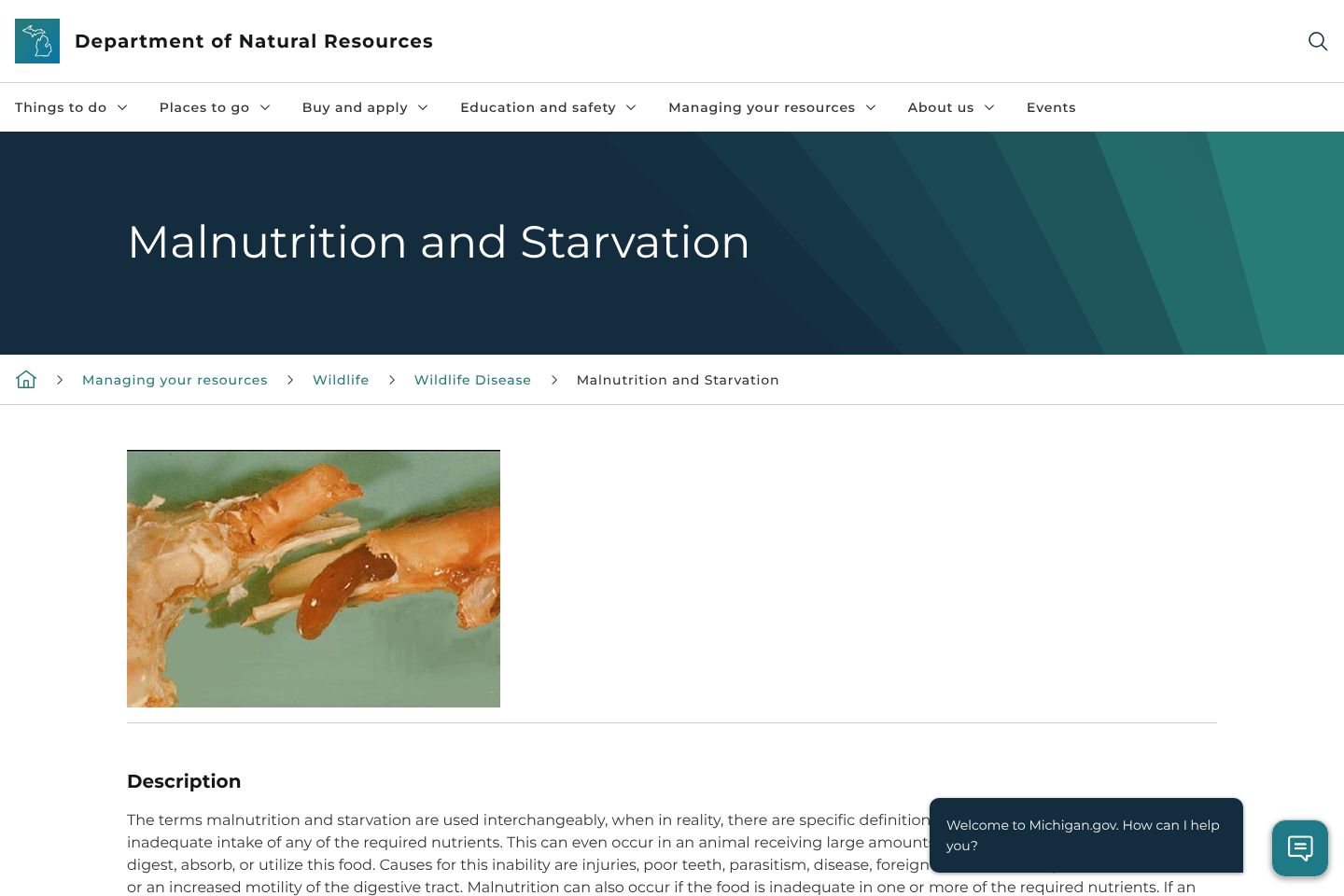
Winterkill is energy failure written on the carcass. Michigan DNR’s malnutrition and starvation guidance describes fat depots emptying until bone marrow is last, then cellular protein is burned, with ketosis (ketones in blood and urine) common in malnourished animals (Michigan DNR). SEAFWA condition work found kidney fat the best index and femur marrow alone unreliable - so hunters reading only white marrow without chemistry can mis-rank animals (SEAFWA Stockle et al.). UNH notes older or smaller deer with fewer fat reserves die more often when winter outlasts the tank, and that adults may still lose about 20 percent of body weight even when food is present while drawing as much as 40 percent of daily winter energy from fat (UNH Extension).
Key Takeaways
- Marrow is the last fat depot before protein catabolism (Michigan DNR).
- Ketosis appears as animals derive energy from stored fat and protein (Michigan DNR).
- Kidney fat outperforms marrow-alone scores for condition (SEAFWA Stockle et al.).
- Adults can lose ~20% body weight in winter even with food present (UNH Extension).
- Small/old deer with low reserves die first when winter runs long (UNH Extension).
The depletion sequence
Michigan describes progressive loss of fat deposits with marrow last, then cytoplasm protein as the final energy source (Michigan DNR). Ketosis accompanies that shift because the animal must fuel itself from stored fat and protein (Michigan DNR). After fat is gone, protein catabolism accelerates toward death if green-up is late (Michigan DNR). Nitrogen excretion rises as protein is burned (Michigan DNR).
What hunters actually see
Emaciated frames, little subcutaneous or kidney fat, and soft gelatinous marrow are the classic winterkill picture (Michigan DNR; SEAFWA Stockle et al.). Stockle et al. caution that marrow color alone correlated poorly with percent fat in some studies, while consistency tracked better - so white equals healthy is too crude (SEAFWA Stockle et al.). Pair marrow notes with kidney-fat scores when possible (SEAFWA Stockle et al.). Heart and pericardial fat can supplement kidney scores outside midwinter, and limited data support tail fat in winter and spring (SEAFWA Stockle et al.).
Why feeding rarely reverses late pathology
UNH states adult deer lose weight in winter regardless of food quantity or quality offered, because physiology prioritizes cover and fat already stored (UNH Extension). About 40 percent of daily winter energy can come from fat tissue in northern adults (UNH Extension). Emergency piles can also create disease and grain-toxicity risks without restoring a depleted marrow account overnight (UNH Extension; Michigan DNR). Deer seek softwood yards to cut snow, wind, and cold costs while fat does the caloric work (UNH Extension).
Who dies first
UNH flags older or smaller deer, especially those entering winter with fewer fat reserves, as more likely winter mortalities (UNH Extension). Deep snow that forces yarding without softwood intercept multiplies the energy deficit (UNH Extension). Does that nursed hard into autumn may enter winter with thinner accounts (SEAFWA Stockle et al.; UNH Extension).
Reporting and management
Report suspected winterkill clusters to state wildlife agencies; distinguish starvation from CWD or EHD by necropsy when officials request samples, because clinical signs alone do not diagnose CWD (Michigan DNR; CWD-INFO.ORG). Habitat work that raises autumn kidney-fat indices prevents more winterkill than February corn (SEAFWA Stockle et al.; UNH Extension). Protect deer wintering softwoods as starvation infrastructure for the herd that already banked fat in October (UNH Extension).
Bottom line
True winterkill shows emptied kidney fat, last-ditch marrow use, and often ketosis - prevent it with autumn condition and winter cover, not late feed piles (Michigan DNR; SEAFWA Stockle et al.; UNH Extension).
The other side of it
The article leans on northern sources, and UNH’s energy numbers describe northern adults, so a thin deer found in a mild-winter state may be telling a different story. It also concedes marrow color alone reads poorly, which makes most hunters’ field calls rough at best, and it sends you to a necropsy to separate starvation from disease. The neighbor who swears his February corn pile saved the herd has never once been asked to show the marrow.
Keep reading
Latest deer news
Comments