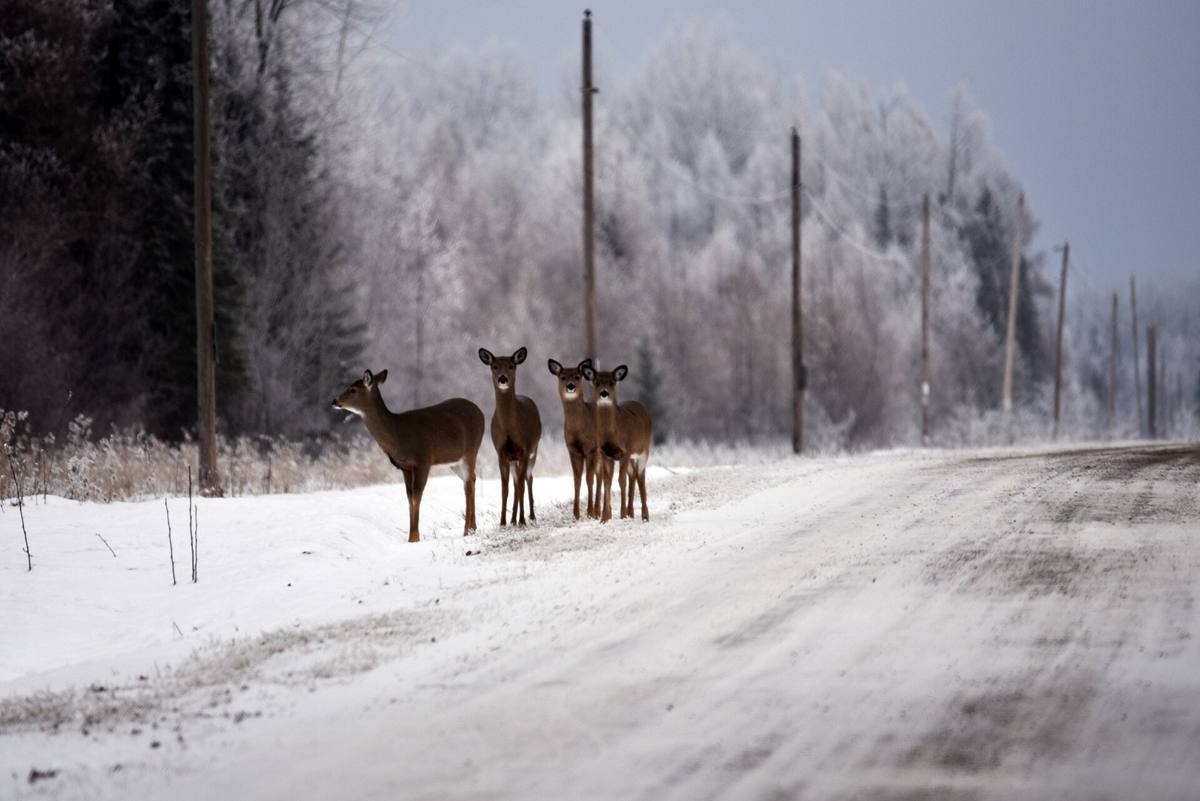
Deer freeze in headlights mostly because their eyes are built for low light and bright beams overwhelm them, and because a car approaching at night doesn’t look like the threat it is. University of Georgia researchers found deer eyes “cannot change focus as objects move closer,” which explains why deer often stand still as a vehicle approaches, UGA Research Magazine reported. USDA researchers later showed that lighting up the front of the car makes deer freeze less.
Key Takeaways
- Deer have eyes adapted for night, which makes them very sensitive to light; a UGA researcher said that “may be why deer are ‘blinded’ by headlights” (UGA).
- In a USDA study, a rear-facing LED light bar plus headlights cut dangerous deer-vehicle interactions from 35% to 10% of approaches, mainly because deer froze less (USDA APHIS).
- Deer reactions to cars are very inconsistent, so speed is the variable drivers control (PLOS ONE).
What happens to a deer’s eyes in headlights?
The UGA team, studying deer at Berry College and the UGA Deer Research Facility, found deer have far fewer cones, the cells for daylight and color vision, than people do, and those cones sit in a horizontal band that’s good for spotting movement across the horizon but not fine detail (UGA). “Their nocturnal eyes also make them much more sensitive to light,” said researcher Gino D’Angelo, “which may be why deer are ‘blinded’ by headlights.”
Why doesn’t the deer just run?
Part of the answer is how deer judge something coming at them. When an object “looms,” it gets steadily bigger, which tells the animal it’s approaching rather than standing still (USDA APHIS). At night, a pair of headlights may not give a deer that clear looming image. USDA’s lead author, Travis DeVault, said the team predicted that light reflected off the vehicle’s front surface “would provide a more reliable looming image to deer, thus encouraging the deer to move out of the path of the approaching vehicle.”
Why do deer eyes shine in headlights?
A mirror layer behind the retina. The National Deer Association explains that deer have a tissue called the tapetum lucidum that reflects light the retina didn’t absorb back through it a second time; that reflection is the shine you see. The same setup helps explain the freeze: deer rods are packed with rhodopsin, a low-light pigment that breaks down when suddenly hit with light and is slow to regenerate, and with large pupils, large lenses and the tapetum amplifying the light, headlights “can overwhelm their vision, leaving them disoriented or temporarily frozen until recovery” (NDA). For which colors deer see best in the dark, see can deer see red light.
Can different lights stop deer from freezing?
In USDA’s National Wildlife Research Center experiments with free-roaming whitetails, a rear-facing LED light bar lit up more of the vehicle’s front than headlights alone. With the bar plus headlights, dangerous interactions dropped from 35% to 10% of approaches, and the drop “appeared to be driven by fewer instances of immobility or ‘freezing’ behavior” (USDA APHIS). USDA applied for a patent and was looking for a company to build it, so this isn’t something you can bolt on from a parts store yet.
How close does a car get before a deer reacts?
Closer than you’d like. Blackwell, Seamans and DeVault drove at free-ranging deer in low light at speeds from 20 to about 90 km/h (12 to 56 mph). Median flight-initiation distance was 40% of the starting distance, whatever the speed, and median time-to-collision when deer moved was 4.6 seconds. Deer that reacted earlier were no less likely to cross in front of the vehicle (PLOS ONE). Because deer didn’t adjust for speed, the authors concluded collisions should be more likely as vehicle speeds rise, and recommended slowing traffic where deer collisions are common.
Do deer whistles or reflectors stop them?
UGA’s tests found they didn’t. Deer basically ignored roadside warning reflectors, and wild deer weren’t deterred by any frequency the team tested, including the “ultrasonic” sounds from bumper-mounted deer whistles (UGA). Karl Miller said most devices “were designed with little or no reference to the sensory capabilities of deer.”
What should you do when a deer freezes on the road?
The research points to one thing you control: speed. Deer reactions are so variable that more speed simply means less time (PLOS ONE). Slow down where you see deer, especially in low light.
Related reading on RAD:
The other side of it
“Freezing” isn’t the whole story. In the Blackwell, Seamans and DeVault trials at NASA’s Plum Brook Station in Ohio (PLOS ONE), many deer did move, just late and unpredictably, sometimes straight into the car’s path. And the UGA vision work is from 2007; we didn’t find newer field data on headlight blinding itself. A deer standing in your lane at 55 mph isn’t being brave, it’s being a deer, and it has never once read the yellow sign.
Keep reading
Latest deer news
Comments