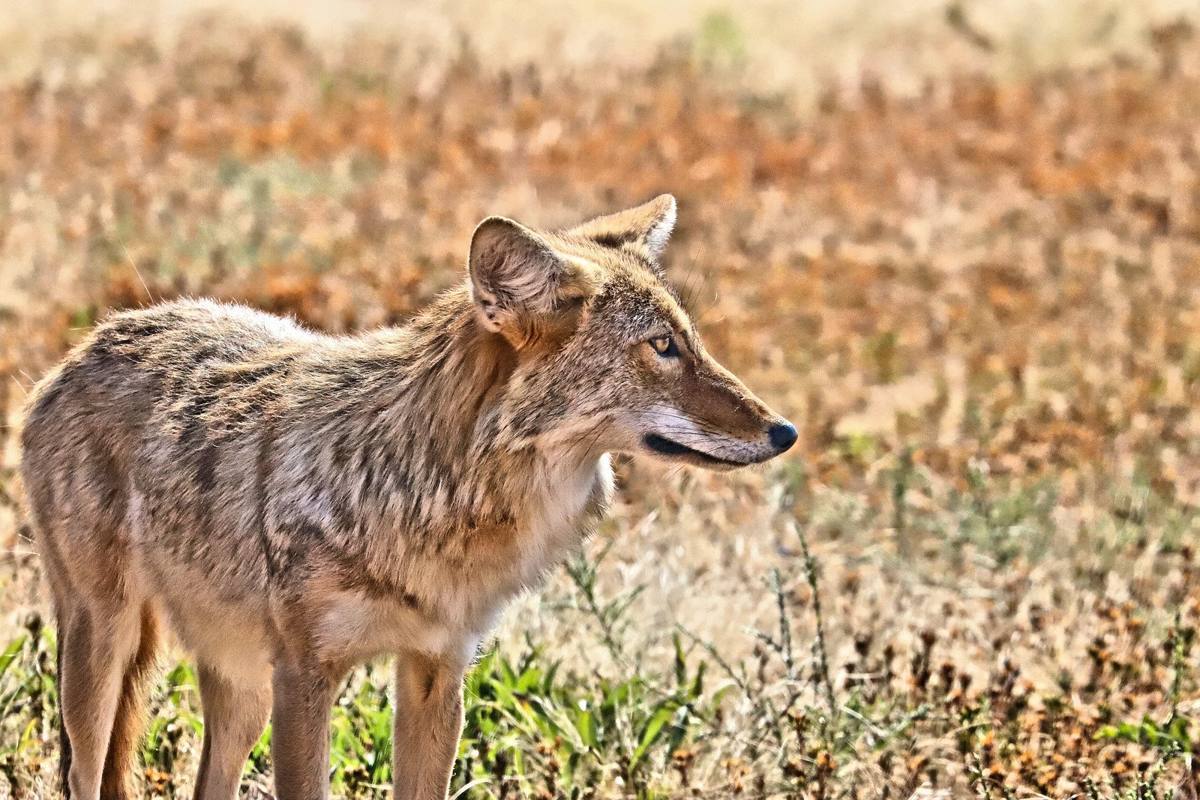
Do coyotes kill deer? Yes, and mostly fawns. In parts of the Southeast they kill a lot of them: at two well-studied sites in South Carolina and North Carolina, fewer than one fawn in four lived to 16 weeks, and coyotes were the top killer. The harder question is whether that shrinks the herd you hunt, and whether killing coyotes fixes it. The research says “sometimes” to the first and “not for long” to the second.
Key Takeaways (checked 2026-11-05)
- Fawns take the hit. At the Savannah River Site in South Carolina, 2006 to 2009, fawn survival to 16 weeks was about 23%, and coyotes caused at least 37% of deaths and possibly up to 80% (Kilgo et al. 2012, USDA Forest Service).
- North Carolina looked worse. At Fort Bragg, 14% of 65 collared fawns survived 16 weeks, and coyotes made 30 of 35 predator kills (Chitwood et al. 2015, PLOS ONE).
- Trapping helped for one year. Removing 474 coyotes at Savannah River pushed fawn survival from 23% to 51%, then it fell back to 20% the next year (Kilgo et al. 2014).
- Region-wide, no crash. Harvest data from 384 counties in six eastern states showed no consistent drop after coyotes arrived (ScienceDaily, 2019).
What are we actually arguing about?
Most camp arguments about coyotes mash three questions together.
- Do coyotes kill deer? Settled. They do.
- Do they lower deer numbers where you hunt? Depends on where you hunt, and how many does are getting shot.
- Will killing coyotes bring the deer back? This is where the research gets uncomfortable for both sides.
Will a single coyote take down a deer?
Coyotes mostly hunt alone, according to Georgia’s DNR, which describes them as living in small family groups but “primarily solitary hunters” that eat whatever is easiest, from mice and voles to berries and acorns (Georgia DNR fact sheet). A newborn fawn hiding in the grass is an easy meal for one coyote.
Adults are rarer prey but not off the menu. The Fort Bragg researchers documented four coyotes killing adult does (NC State). None of the studies we read said how many coyotes were involved in each adult kill, so we won’t guess.
The strongest case that coyotes are hurting deer
Start with timing. Coyotes are newcomers in the East. South Carolina’s deer herd peaked around 1.1 million between 1992 and 1997, then slid to about 750,000 as coyotes spread, a decline that “closely tracks the growth of the coyote population,” according to a 2010 paper co-written by SCDNR’s Charles Ruth (Kilgo et al. 2010). In May 2005 and 2006, 31% and 38% of coyote scats at Savannah River contained fawn remains.
Then the fawn studies. Savannah River and Fort Bragg both found coyotes as the leading cause of fawn death, and the Savannah River removal study concluded that coyote predation was “additive,” meaning those fawns weren’t going to die of something else anyway. In northeast Alabama, removing 22 coyotes and 10 bobcats was followed by fawn-to-doe ratios jumping from 0.41 to 1.20.
And habitat didn’t save them. Fort Bragg found “only weak support for bedsite cover,” and Savannah River found understory cover had no link to survival.
The strongest case that coyotes get too much blame
Zoom out and the crash disappears. Eugenia Bragina, Roland Kays and colleagues looked at deer harvests across 384 counties and found that harvests “generally increased over time,” with “no consistent crash” after coyotes showed up. Their conclusion: coyotes aren’t controlling deer populations at a region-wide scale in the East.
The same 2010 paper that raised the alarm also listed other suspects for South Carolina’s drop: a landscape filling up with 15- to 30-year-old pine plantations that offer “limited forage for deer,” plus development in the Piedmont and on the coast. The authors said their evidence “does not establish cause and effect.”
Landscape matters too. A Penn State analysis of 29 fawn-survival studies across 16 states found fawn survival rose almost 5% for every 10% increase in farmland cover. “It seems that predators are not as efficient at finding fawns in grasslands or croplands,” Penn State’s Duane Diefenbach said (Phys.org, 2018).
Does killing coyotes actually help deer?
Here’s where both sides have to swallow something.
| Study | What was done | What happened to fawns |
|---|---|---|
| Savannah River, SC (Kilgo et al. 2014) | 474 coyotes removed, 78% fewer coyotes | Survival 23% before, 51% year one, 20% year two, 43% year three. “Modest” overall. |
| Central Georgia (Gulsby et al. 2015) | Professional trapping on two sites, 2011 | One site went from 0.63 to 1.01 fawns per doe. The other: 0.84 to 0.85. |
| Northeast Alabama (Vangilder, cited in Kilgo et al. 2010) | 22 coyotes, 10 bobcats removed | Fawn-to-doe ratio 0.41 to 1.20 |
Sources: Kilgo et al. 2014; Gulsby et al. 2015 summary, Conservation Evidence; Kilgo et al. 2010.
The reason results fade is that coyotes refill the hole. Genetic work at Savannah River found coyotes bounced back from intensive trapping through both reproduction and immigration (Kierepka et al. 2017, OSTI). The NDA’s Will Gulsby and Karl Miller put it plainly: vacated territories get refilled by transient coyotes, so “coyote removal should be conducted every year” (NDA, 2014). Penn State’s deer blog worked the Savannah River cost out to $123 per coyote (Penn State Deer-Forest Study).
The Savannah River authors’ own management takeaway: neither coyote control nor habitat work looked effective for raising recruitment, and cutting the antlerless harvest “may be necessary.”
What changes the answer?
- Where you hunt. Most older coyote-deer research came from the West or the Northeast, “where winter severity contributes” to predation, according to Kilgo’s 2010 paper. The Southeast’s mild winters and thick cover are a different system. Penn State’s review found coyotes out-killed bears and bobcats, especially in the Southeast, though black bears matched or beat coyotes in several studies.
- How many does you shoot. NDA says where hunters already struggle to kill enough does, coyote control “is simply adding fuel to a fire.” Where harvest is heavy and recruitment is low, it can make sense.
- Timing and effort. NDA advises trapping “just before and during fawn drop,” every year, at $100 to $200 a day for professional trapping on 1,000-plus acres.
- State rules. Alabama lists the coyote as a furbearer with no closed season (Outdoor Alabama). Georgia calls it non-native and allows year-round harvest on private land. South Carolina tags 16 coyotes a year and has paid $3,000 for each tagged one taken since July 2023 (SCDNR). SCDNR’s program page doesn’t say the incentive is meant to cut coyote numbers.
What kills the most deer?
It depends on the deer’s age. For fawns, predators: Penn State’s review found predation was the biggest cause of fawn death in every landscape type. For grown deer in hunted herds, it’s us. U.S. hunters killed 6,194,659 deer in the 2024-25 season by NDA’s count, a little over half of them antlerless (NDA, Jan. 9, 2026). That’s why biologists keep circling back to doe harvest. It’s the one mortality source you fully control.
Your call
Coyotes kill fawns, and in some southeastern herds enough to matter. Region-wide, deer kept climbing anyway, and trapping gains tend to vanish when the next coyote moves in. NDA’s first step is boring and right: count your fawns before you blame anything. A trail camera survey is how most of these studies did it.
So here’s ours for you: if your fawn-to-doe ratio tanked, would you start trapping or start passing does, and which one would you actually stick with for five years?
Related reading on RAD:
- Colosseum: Are hunters killing enough does, or too many?
- Trail cameras for deer: setup and surveys
- Colosseum: Why is GrowingDeer.tv so popular?
The other side of it
If you think coyotes are overblown, sit with Fort Bragg: 14% fawn survival, with coyotes doing most of the killing, and a researcher saying the herd there was “inevitably” declining. A county-level harvest trend can hide a single property where coyotes really are eating the fawn crop. But the guy who shoots every doe he sees in November and then blames coyotes in June may want to check the meat in his own freezer first.
Sources
- Predation by coyotes on white-tailed deer neonates in South Carolina | US Forest Service Research and Development
- Do Biological and Bedsite Characteristics Influence Survival of Neonatal White-Tailed Deer? | PLOS One
- Coyote removal, understory cover, and survival of white-tailed deer neonates | US Forest Service Research and Development
- The recent spread of coyotes across North America did not doom deer populations | ScienceDaily
- Georgia DNR fact sheet (georgiawildlife.com)
- A New Top Dog in North Carolina | NC State News
- Kilgo et al. 2010 (research.fs.usda.gov)
- Phys.org, 2018 (phys.org)
- - Conservation Evidence
- Effect of compensatory immigration on the genetic structure of coyotes (Journal Article) | OSTI.GOV
- NDA, 2014 (deerassociation.com)
- Predator Control: Who is Wile E. Coyote and who is the Roadrunner? | Penn State Deer-Forest Study
- Trapping in Alabama | Outdoor Alabama
- SCDNR - Wildlife - Coyotes Biology and Control Program
- NDA, Jan. 9, 2026 (deerassociation.com)
Comments