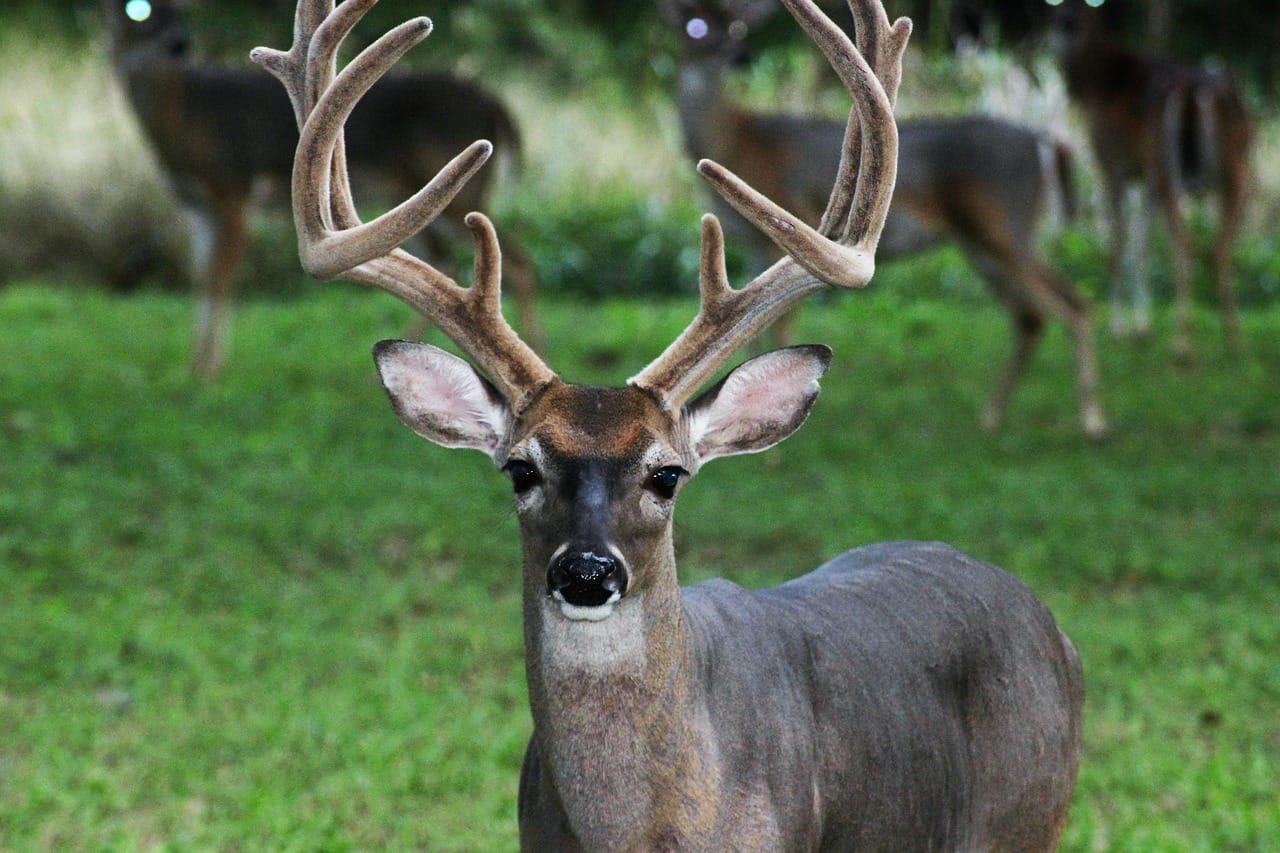
What color are deer antlers? It depends on when you look. Growing antlers are covered in dark, fuzzy velvet. When the velvet comes off, the bone underneath is mostly white. Within days, rubbing stains it brown. Utah’s Division of Wildlife Resources puts it plainly: “When velvet comes off, most antlers are very white, but stained by blood. A brown compound in tree bark called tannin, along with residual blood, stain antlers with their familiar brown color” (Utah DWR). Maryland’s wildlife agency says “Rack color varies from white to brownish” (Maryland DNR).
Key Takeaways
- In velvet: Utah DWR describes velvet as “dark, velvet-like skin” full of blood vessels.
- Fresh out of velvet: mostly white, with blood stains.
- Hunting season: shades of brown, from blood and tree bark tannin rubbed into the bone.
- Late winter and sheds: sunlight and moisture bleach antlers lighter, and leaf litter can stain them.
- Experts point to blood, the trees a buck rubs, age, genetics and weather.
What color are deer antlers in velvet?
During the summer, antlers are wrapped in living skin. Utah DWR calls it “dark, velvet-like skin” that “is full of blood vessels.” The U.S. Fish and Wildlife Service says “Immature antlers are covered in skin with a short, dense fur called velvet” and that “Velvet allows oxygen rich blood to reach growing antlers, which start as cartilage and are calcified into bone” (USFWS).
That blood supply is why the velvet stage matters for color later. Maryland DNR explains that in late summer “the arteries and veins at the base of the rack constrict. This cuts off the supply of blood to the tissue allowing the velvet to dry. Beneath the velvet is the bony material observed in the fall.”
Velvet doesn’t stay long once it starts to go. Utah DWR says “Shedding velvet occurs rapidly once it’s started, usually within 24-48 hours.”
Why do deer antlers turn brown?
Two things stain the white bone: blood from the velvet and juices from the trees and shrubs a buck rubs. Utah DWR names the compound: tannin, “A brown compound in tree bark.”
Timing matters. The National Deer Association’s chief conservation officer, Kip Adams, cites antler researcher Dr. George Bubenik, who says color comes partly from “oxidized blood on the antlers (from velvet shedding)” and partly from “a chemical reaction between the blood and juices from plants on which the antlers are rubbed.” Adams writes: “If a buck begins rubbing his antlers before the velvet and blood have completely dried, the blood stains the antler and gives it a darker color” (National Deer Association).
Maryland DNR describes the same split. “A white rack can result from the blood enriched velvet drying rapidly and not causing a stain from frequent rubbing. A brown stain may result when the velvet dries slowly and the rubbing causes a stain.”
Do the trees a buck rubs change antler color?
Probably, though the evidence is softer here. Adams says “The predominant species of trees in an area also influence the color,” and that “Pines allegedly cause darker antlers, likely from bucks rubbing on exposed sap.” Northern Woodlands magazine calls it “speculation” that “rubbing and smearing an antler with softwood pitch may cause darker staining than hardwood sap” (Northern Woodlands). Maryland DNR adds: “Many claim the brown stain occurs when deer rub certain types of trees and shrubs.”
So the tree effect is widely repeated, but the sources describe it as likely rather than proven.
Does antler color change with age or season?
Yes, in both directions. Adams says color can shift over a single season: “antlers generally lighten over time due to the bleaching effect of moisture and sunlight.” He cites Dr. Mickey Hellickson of Orion Wildlife Management Services, who says antlers “begin lightly colored immediately after velvet shedding,” then “darken with rubbing,” with that color “lasting until winter when they lighten from prolonged exposure to the sun.”
Across years, Hellickson says “antlers gradually become darker as an individual buck increases in age, likely due to increased rubbing behaviors as his dominance standing improves.” For what antler size does and doesn’t tell you about age, see our guide to deer age and antlers.
Genetics may play a role too. Adams writes that “Some bucks are predisposed to having lighter or darker antlers.” Maryland DNR is more cautious: “Possibly, the coloration is affected by heredity.”
What color are shed antlers?
Sheds keep changing after they drop. Northern Woodlands says “the color of a shed is also dictated by exposure to the sun, which bleaches it, and exposure to the leaf litter, which stains it.” So two sheds from the same buck can look different depending on where each one lay. If you’re heading out to look, check the rules first with our guide to whether shed hunting is legal.
FAQ
Are deer antlers white or brown? Both. Utah DWR says most antlers are “very white” when the velvet comes off, then blood and tannin stain them brown.
Why are some deer antlers so dark? NDA’s Kip Adams says rubbing before the velvet and blood dry stains antlers darker, and pine sap may darken them further.
Why are some bucks’ antlers white? Maryland DNR says a white rack can result when the velvet dries fast and frequent rubbing doesn’t stain it.
Do antlers get lighter over the winter? Yes. NDA says moisture and sunlight bleach them over time.
The other side of it
Some hunters swear antler color tells you something about a buck’s health or diet. None of the sources here make that claim. They point to blood, bark, sun and behavior, and they hedge on the tree and genetics effects. Color is a nice detail on a mount and not much else. The hunter who passes a mature buck because his rack looked too pale is grading the wrong test.
Keep reading
Latest deer news
Sources
- Mule Deer Antler Development (Fact Sheet #27), Utah Division of Wildlife Resources
- Antlers Tell Much about Deer, Maryland Department of Natural Resources
- What Determines a Buck's Antler Color?, National Deer Association (Kip Adams)
- "Part 2: A Close Look at an Antler", Northern Woodlands (Resilient Forest Series)
- Eight points about antlers, U.S. Fish and Wildlife Service
Comments