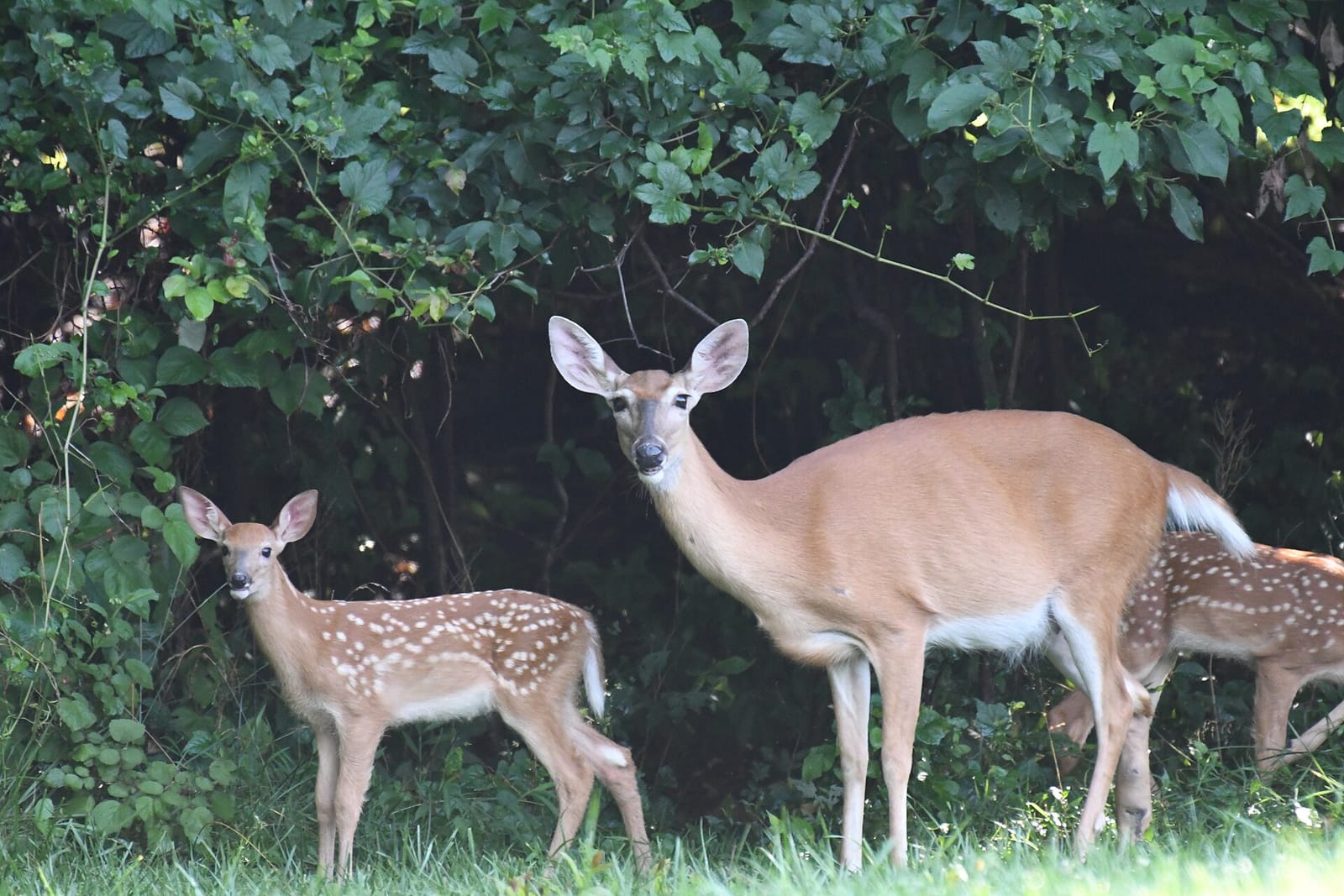
Whitetail does often live in related female groups - mothers, daughters, and sisters sharing overlapping ranges. Biologists call these matrilines. That social pattern shapes where deer bed, how they respond when a doe is shot, and why a single stand can go dead after one harvest even though “the deer are still there” on the next property (Nelson and Mech home range classic; National Deer Association social behavior). Hunters who treat every doe as an interchangeable tag miss the local map those families draw.
Key Takeaways
-
Related does commonly share overlapping home ranges and travel routes, so removing one animal can temporarily shift an entire family’s daylight pattern (National Deer Association social behavior; Nelson and Mech).
-
Yearling bucks usually disperse away from natal matrilines; doe fawns more often stay near the maternal range (National Deer Association yearling dispersal).
-
Camera grids that catalog the same doe group across years reveal traditional bedding and feeding circuits that outlast any one hunting season (National Deer Association social behavior).
-
Heavy doe harvest on a small tract can create a local vacuum that neighboring matrilines fill slowly, which feels like “the deer left” to the hunter who only watches one food plot (Nelson and Mech).
-
Management that balances doe harvest with recruitment should track fawn-at-heel rates inside known family groups, not only county-wide harvest totals (National Deer Association social behavior).
What a matriline is on the ground
A matriline is a related female lineage using shared space. Adult does, their doe fawns, and often yearling daughters travel, feed, and bed with high spatial overlap compared with unrelated females (Nelson and Mech; National Deer Association social behavior). Bucks leave that arrangement. National Deer Association dispersal summaries emphasize that yearling bucks commonly leave the natal area while many doe offspring remain philopatric (National Deer Association yearling dispersal).
For a hunter, the practical unit is the group you recognize on camera: the older doe with a limp, her twin fawns, and last year’s doe yearling. That cluster is your local matriline proxy even without DNA.
Why stands go quiet after one doe
When you kill a lead doe on a trail, surviving relatives may shift to parallel cover for days or weeks. Classic home-range and social-organization work documents how related females structure space use; disturbance to one animal can ripple through the shared map (Nelson and Mech). National Deer Association behavior primers remind hunters that deer are not randomly sprinkled across a section - they use learned circuits (National Deer Association social behavior).
That is not mysticism. It is why rotating stands and leaving pressure gaps matters more after a doe harvest than after shooting a transient yearling buck that was already leaving (National Deer Association yearling dispersal).
Cameras as matriline census tools
Build a simple ID sheet: ear notches, scars, coat quirks, and which fawns walk with which doe. Revisit the same camera points across summers. National Deer Association behavior guidance supports reading social patterns from consistent observation rather than from one viral night photo (National Deer Association social behavior).
If fawns disappear from a known doe by late summer, ask predation or nutrition questions before you blame the neighbor’s rifle. Local recruitment inside matrilines is a finer metric than state harvest graphs (National Deer Association social behavior).
Harvest planning on small acreages
On 40 to 200 acres, one aggressive doe weekend can remove most of a resident female group. Neighboring matrilines expand slowly into emptied space (Nelson and Mech). Clubs that want steady encounters should spread doe tags across the season and across parcels rather than cleaning one plot in two sits.
Coordinate with adjoining landowners when possible. Shared matrilines do not respect lease lines, and neither should the harvest plan if the goal is stable daylight movement (National Deer Association social behavior). Michigan State Extension points out that deer home ranges are bigger than most ownerships (MSU Extension Wildlife Habitat). So a doe group can bed on your side and feed on the neighbor’s. Hard pressure can empty your piece of that range while the rest of the family carries on next door. If a few neighbors share the same doe groups, set antlerless targets together, pick doe days together, and run cameras across the line so everyone is counting the same families.
Bucks, breeding, and the female map
Rut hunting still rides female space. Bucks cruise doe bedding and feeding areas; if your doe groups abandon a ridge after pressure, buck daylight traffic there drops too (National Deer Association social behavior). Protecting a quiet doe sanctuary while hunting edges can keep both sexes using the property.
Dispersing yearling bucks add temporary chaos in fall. Do not confuse a new 1.5-year-old on camera with a failure of the local matriline system - he is often just passing through (National Deer Association yearling dispersal).
What not to claim
Matriline research does not prove that shooting any particular doe permanently ruins a county. It does show that local female social structure is sticky and that hunters feel that stickiness on small properties (Nelson and Mech; National Deer Association social behavior). Avoid genetic folklore. The operational lesson is spatial: know your doe groups, pressure lightly, and measure recruitment where you hunt.
Bottom line
Doe matrilines create the neighborhood map bucks and hunters both use. Catalog the families, harvest does with that map in mind, and expect temporary stand shutdowns after removing a lead female (Nelson and Mech; National Deer Association social behavior; National Deer Association yearling dispersal).
Dispersal and the female neighborhood
Yearling buck dispersal removes many males from the natal matriline each fall, while doe fawns often remain near maternal ranges (National Deer Association yearling dispersal; National Deer Association social behavior). That sex difference is why a camera card full of new young bucks does not prove your doe family vanished. It often proves the opposite: the female core is still producing animals that then leave.
Hunters managing for mature bucks still need those resident does. Breeding opportunity concentrates where female home ranges overlap travel corridors bucks already know (Nelson and Mech; National Deer Association social behavior). Blow up the doe map with careless midseason pressure and you also scatter the rut traffic you wanted.
Practical lease rules that respect matrilines
Write three rules into the club book. First, no stacked doe harvests on the same trail the same weekend. Second, after a doe kill, leave that stand cold for several sits while hunting a parallel ridge. Third, keep a shared photo album of known doe groups so new members do not reinvent pressure on the same family (National Deer Association social behavior; Nelson and Mech).
None of those rules require DNA. They require recognizing that female social structure is local and sticky, which classic home-range ecology already showed (Nelson and Mech). Pair that with modern camera discipline from National Deer Association behavior guidance and small properties hunt more consistently year to year (National Deer Association social behavior; National Deer Association yearling dispersal).
Related: Yearling buck dispersal and Whitetail home range size.
The other side of it
The specific claims, like a stand going cold for weeks after a lead doe falls or neighbors filling the gap slowly, rest on a classic home-range paper and general behavior primers rather than anything that measured those exact effects. A landowner trying to knock numbers down might say a slow-filling vacuum is the whole point. Of course, the hunter who names every doe on his camera card tends to find it awfully hard to fill a doe tag.
Keep reading
Latest deer news
Comments