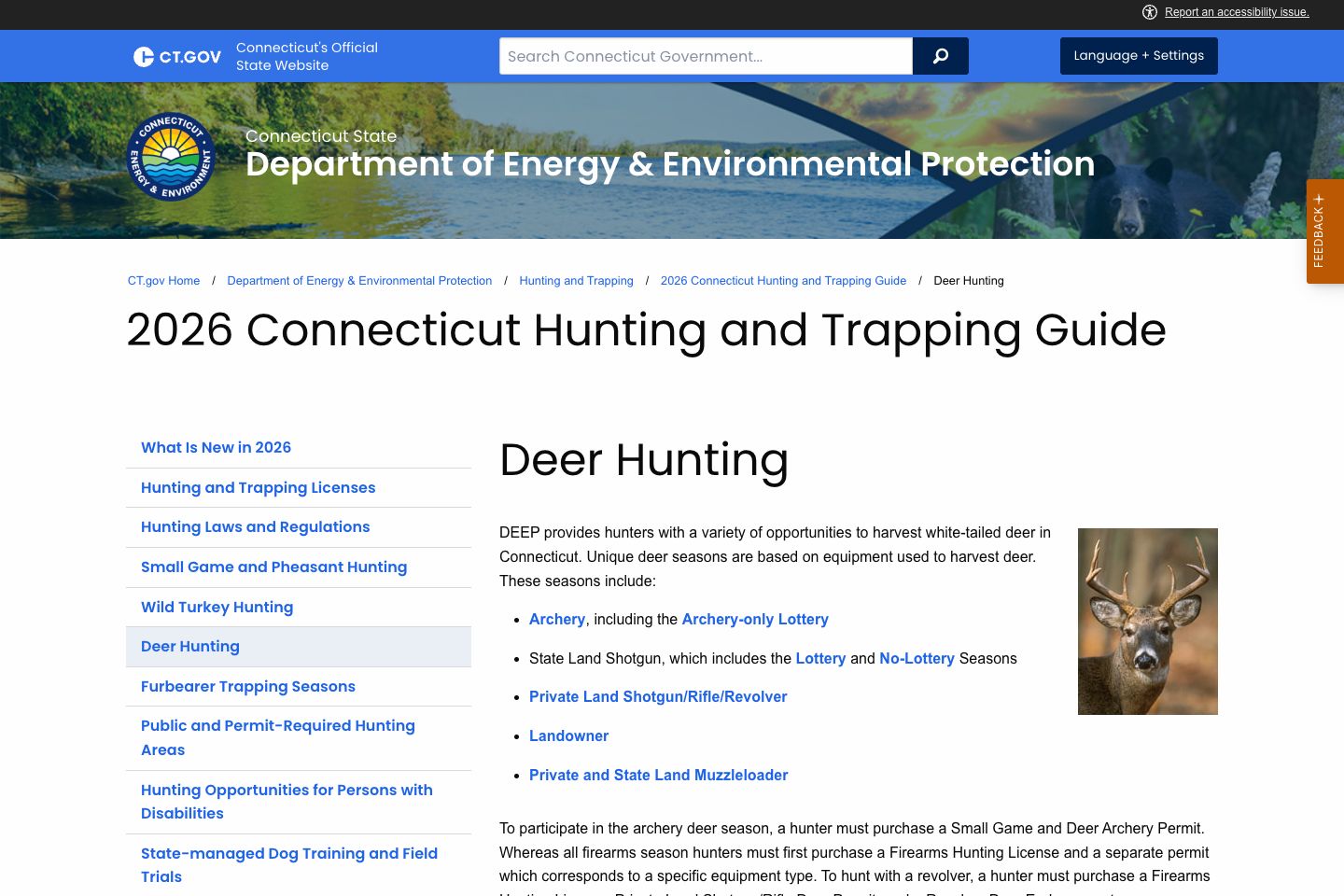
Deer senses don’t line up with yours. A whitetail hears frequencies well above the roughly 20 kHz where human hearing tops out, and its dichromatic eyes favor motion and low light over color (D’Angelo et al. 2007; MU Extension). On smell, the research on whether scent-control clothing actually beats a deer’s nose is thin and mixed.
Key Takeaways
- Deer heard every frequency University of Georgia researchers tested, 0.25 to 30 kHz, with their best sensitivity from 4 to 8 kHz (D’Angelo et al. 2007).
- Whitetails have dichromatic color vision, with cone peaks near blue and green wavelengths (Jacobs et al. 1994).
- A 2014 lab test of 12 trail camera models found the sounds they make fall within the hearing range of most mammals, and the infrared flash on many units is visible (Meek et al. 2014).
- The only published test of scent-adsorbing clothing that Penn State’s Duane Diefenbach knew of found the suits didn’t stop trained search dogs from finding a person (Penn State Deer-Forest Study).
How well can deer hear?
In a similar range to people, shifted higher. Using auditory brainstem response testing, University of Georgia researchers found white-tailed deer heard across all frequencies tested, 0.25 to 30 kilohertz, with best sensitivity from 4 to 8 kHz (D’Angelo et al. 2007).
The upper limit of human hearing is about 20 kHz. Deer picked up frequencies to at least 30 kHz, so they pick up sound you’ll never notice. The authors said that justifies research on ultrasonic (above 20 kHz) deterrents to cut down on deer-human conflicts (D’Angelo et al. 2007).
Can deer hear trail cameras?
Probably, at close range. A 2014 lab study tested 12 trail camera models in an anechoic chamber and found the sounds they made fall within the hearing range of most mammals (Meek et al. 2014).
The same study found that the infrared flash of many units is visible. So a camera can give itself away by its noise or by its glow.
How do deer see?
Ask whether deer hear or see better and the answer is that the two senses do different jobs. Eye work by Jacobs and colleagues found dichromatic color vision, with cone peaks near blue and green wavelengths (Jacobs et al. 1994).
MU Extension notes deer detect motion across a wide field and are believed to be dichromatic, with rod-heavy eyes that favor low light (MU Extension G9479). That’s the setup for dawn and dusk, which is when you’re up a tree.
University of Georgia Deer Research summarizes the vision work hunters lean on when they argue about UV brighteners in detergents and clothing dyes (UGA Deer Research vision). We dig into color in Can deer see colors?. Still, motion busts more sits than any hue debate.
Does scent control work on deer?
The research is thin and mixed. The only published test of scent-adsorbing clothing that Penn State’s Duane Diefenbach knew of found the suits did not stop trained search dogs from finding a person, or even slow them down (Penn State Deer-Forest Study).
Pulling the other way, a small DePauw University camera study found bucks visited “unscented” camera sites more during the day (DePauw). One test used dogs and the other was small, so neither settles it.
Can deer smell bug spray?
Likely, if it’s still wet or scented. Sawyer says its permethrin fabric treatment is 100% odorless after drying, and that the smell during treatment comes mostly from aerosol propellants. It says to let treated items dry at least 2 hours (Sawyer).
Thermacell calls its MR300 repeller scent-free, DEET-free and smoke-free (Thermacell). Keep in mind those are the makers’ own claims, not tests run on deer.
How do you keep deer from smelling you on the way in?
Start with wind and access, not a bottle. Enter downwind of bedding when you can, keep the blind clean of food trash, and limit the scent you leave on the approach.
Build entry and exit paths that keep your scent and noise out of bedding. Creek beds, field edges and existing tractor lanes that come at the stand from downwind are good bets. Approach with the wind in your face, and keep your exit route off bedding cover too. Mark the trail once, then use the same quiet route every sit so you don’t cut new sign. Quit early rather than walking the ridge deer use at last light.
How do thermals change the plan on steep ground?
Cold air sinks at first light and rises after the slope warms, so plan stands where your scent drains into dead space instead of bedding. On morning sits, come in from below or across the hollow so falling air carries you away from the ridge. On evening sits, favor high seats, since rising thermals pull scent uphill. Pair the wind forecast with the slope, and if a swirl dumps into the bed you’re hunting, get down early.
The other side of it
Scent control isn’t as dead as the wind-first crowd likes to think. The suit test Penn State cited used trained dogs, not deer, and the one small DePauw camera study actually leaned toward unscented sites drawing more daytime bucks, so the honest read is thin evidence both ways. Meanwhile somebody washes every layer in special detergent and then lights a cigarette at the base of the ladder.
Keep reading
Latest deer news
Sources
- Hearing Range of White‐Tailed Deer as Determined by Auditory Brainstem Response
- Dollars and Scents | Penn State Deer-Forest Study
- "Deer and human scent" by Mitch Strobl and Vanessa Fox
- Jacobs et al. 1994 (neitzvision.com)
- Camera Traps Can Be Heard and Seen by Animals | PLOS One
- Permethrin Fabric Treatment | Sawyer Products
- Fuel-ZoneGuard Extreme Mosquito Repeller Hunt Pack | Thermacell
- Ecology and Management of White-Tailed Deer in Missouri | MU Extension
- UGA Deer Research vision (ugadeerresearch.org)
Comments