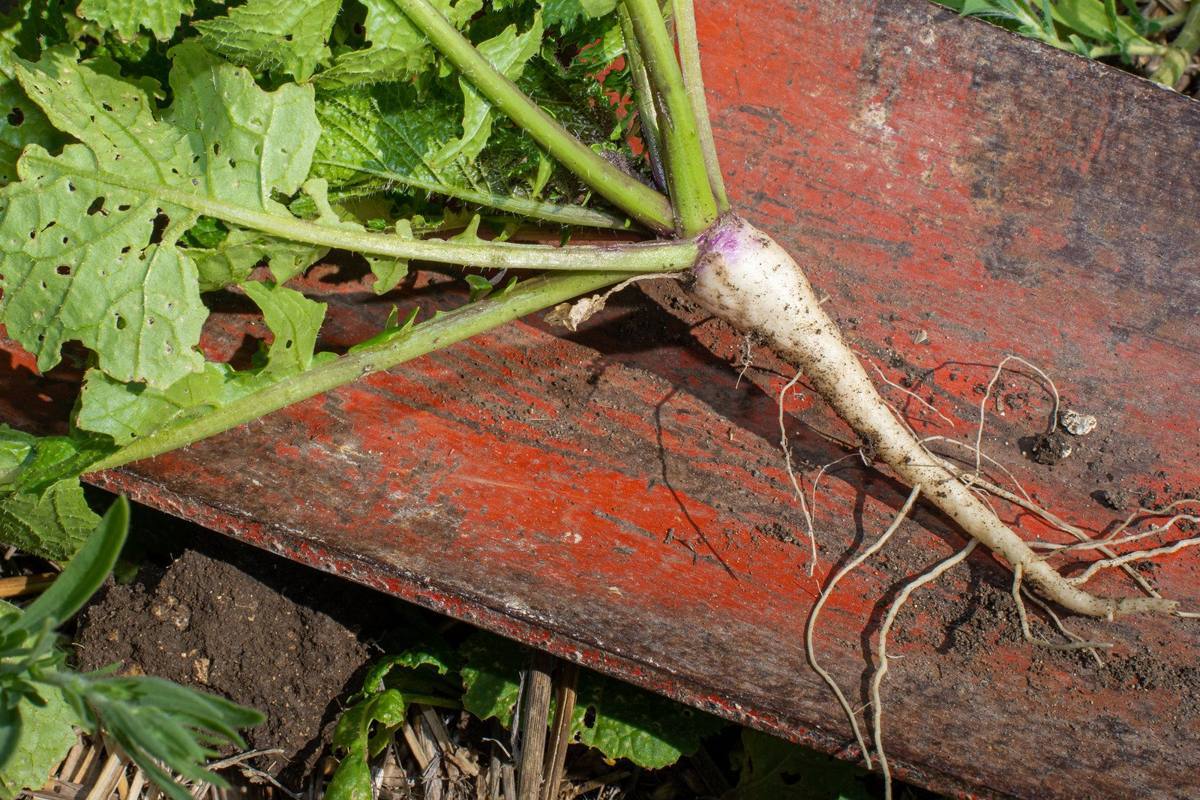
A good brassica food plot mix is some blend of turnips, radishes, rape and kale, and the right blend depends on when you hunt and when your first frost lands. Turnips and radishes give deer leaves plus a root to dig in winter, while rape and kale are all leaf. Plant 70 to 80 days before your average first frost (NDA), and don’t count on frost to sweeten the crop, because University of Tennessee researchers tested that and it didn’t hold up.
Key Takeaways
- “Plant brassicas 70 to 80 days prior to the average date of first frost in your area,” writes Oklahoma State Extension wildlife specialist Mark Turner, who puts the window at late July to early August in the North and late August to early September in the Deep South (NDA).
- In samples from North Carolina and Tennessee plots, leaf sugars rose only “slightly” after frost and taproot sugar didn’t change. The researchers’ verdict: “No, brassicas do not get sweeter after frost” (NDA).
- Every brassica leaf sample in that study tested above 32% crude protein and under 19% acid detergent fiber, before and after frost (NDA).
- Mississippi State Extension’s Southeast guide lists brassicas (rape, kale, turnip, canola) at 10 lb/acre broadcast or 5 lb/acre drilled, Sept. 1 to Oct. 15 (MSU M1591).
- Turner says allowing at least two years between brassica plantings lets fungal spore levels in the soil drop substantially (NDA).
What’s actually in a brassica mix?
Four plants show up in nearly every blend. Certified wildlife biologist Ryan Basinger broke them down for the NDA (NDA):
| Brassica | What deer eat | Strength | Weak spot |
|---|---|---|---|
| Rape (Dwarf Essex is common) | Leaves only | Grows very fast; tolerates cold, heat and dry spells | No root for winter |
| Kale | Leaves only | Most productive, 3–4 tons/acre dry weight; best cold tolerance | Not well adapted to hot weather |
| Turnips | Leaves and bulb | Leaves about 25% crude protein, bulb 12–15%; bulbs carry into winter | Deer use of tops and bulbs varies |
| Radishes (Daikon-type) | Leaves and taproot | More attractive before frost than the others | Least cold tolerant; “can be killed when temperatures get down in the teens” |
Arkansas Extension’s seeding table splits turnips by job: seventop for forage, purpletop for root growth, both at 1.5–4 lb/acre broadcast in September, ¼ to ½ inch deep. It lists kale at 3.5–4 lb/acre broadcast from Aug. 1 to Sept. 15 (UA FSA9096). Those are Arkansas numbers. MSU’s 10 lb/acre is a Southeast rate for a full brassica stand.
Should you buy a blend or mix your own?
We don’t rank seed brands. What the sources agree on is this. Basinger says brassicas do best planted alone or with other brassicas, and that they crowd out smaller forages like clover when mixed. University of Georgia Extension’s Bob Westerfield drops turnips from 5 lb/acre alone to 2 lb/acre in a blend for the same reason (NDA). Turner goes further and suggests planting brassicas and clovers in separate strips of the same field, since mixed stands tend to end up with shaded-out clover or sparse greens (NDA).
So read the tag. If the blend is mostly one species at a full rate plus a sprinkle of clover, you’re buying a brassica plot with clover as decoration.
When do deer eat brassicas?
Often later than you’d like, and nobody can fully say why. Basinger calls deer use “variable” and points to deer density, other available food and drought. He also suggests deer may need time to find a new crop, so use can climb in later years.
The common explanation is frost. Westerfield’s 2012 turnip profile repeats it: young leaves are bitter, and deer seldom eat the tops until the plants mature or get a good frost (NDA). The first part may be true on your farm. The sugar part didn’t survive testing. Turner and Bonner Powell, working under Craig Harper at Tennessee, sampled turnips, radishes and kale before frost in early November and again after several frosts in early December. Leaf sugars barely moved and root sugars didn’t (NDA).
Their best guesses for the late-season switch are about what else is out there. Brassicas are still green when other plants go dormant, and cold-weather deer want digestible carbohydrates and fat, which may send them to the taproots. The authors admit they “may never know exactly why.” They also note that early-season leaf browsing isn’t unusual in some areas.
How much of your “late-season brassica magic” is really the acorns running out?
When should you plant a brassica food plot?
Count back from your first frost. Turner’s windows (NDA):
| Region | Brassica window |
|---|---|
| North | Late July to early August |
| Mid-South | Early to mid August |
| Deep South | Late August to early September |
MSU’s Southeast guide runs Sept. 1 to Oct. 15 (M1591). Westerfield gives turnips 75 to 90 days to mature.
What if you miss the window?
Turner’s advice is to save the brassica seed for next year rather than plant it late. Plan B is wheat and annual clovers. Plan C is cereal rye, or wheat in the South. If a brassica stand comes up patchy, he suggests no-till top-sowing a cereal grain into the gaps. Our winter rye guide covers that backup crop.
What soil do brassicas need?
Well-drained loam. Basinger says poorly drained heavy clay performs poorly. He sets the target pH at about 6 to 6.5, with lime, phosphorus and potassium per your soil test. Keep the seed shallow. He says planting depth “should not exceed ½ inch.” Turner notes brassicas have high nitrogen needs, which is why they fit after a clover plot (NDA). For nitrogen numbers and how to read a bag, see our food plot fertilizer guide.
Why did my brassica food plot fail?
If the leaves spotted up and died, think fungus before deer. Turner lists cercospora, anthracnose, alternaria leaf spot and downy mildew. He points to warm, wet weather, early planting, heavy seeding rates that shade and dampen the soil, and replanting the same ground (NDA). “More seed is not always better!” he writes. Cruciferous weeds such as wild mustard, wild radish, shepherd’s purse and pennycress carry the same diseases. Basinger caps it at “two to three consecutive years” in one spot.
If the plants just vanished, Arkansas Extension suggests a small wire exclusion cage. It shows whether deer ate the plot or it never grew (UA FSA9096).
Related reading on RAD:
The other side of it
A brassica food plot mix is a hunting-season crop with a short shelf life. When the bulbs are gone, the ground is bare until you replant, and a clover-and-grain plot would still be feeding deer in April. The Tennessee team’s own advice is to plant some brassicas for late-season chances but not to expect deer to flock to them just because it froze. And the guy who swears his turnips “sweetened up overnight” usually noticed it the same week the last white oak quit dropping.
Keep reading
Latest deer news
Sources
- NDA (deerassociation.com)
- NDA (deerassociation.com)
- Deer Food Plot Planting Guide for the Southeast | Mississippi State University Extension Service
- NDA (deerassociation.com)
- NDA (deerassociation.com)
- Grasses and Forbs for Wildlife: Fall/Winter Wildlife Food Plots - FSA-9096
- NDA (deerassociation.com)
- NDA (deerassociation.com)
Comments