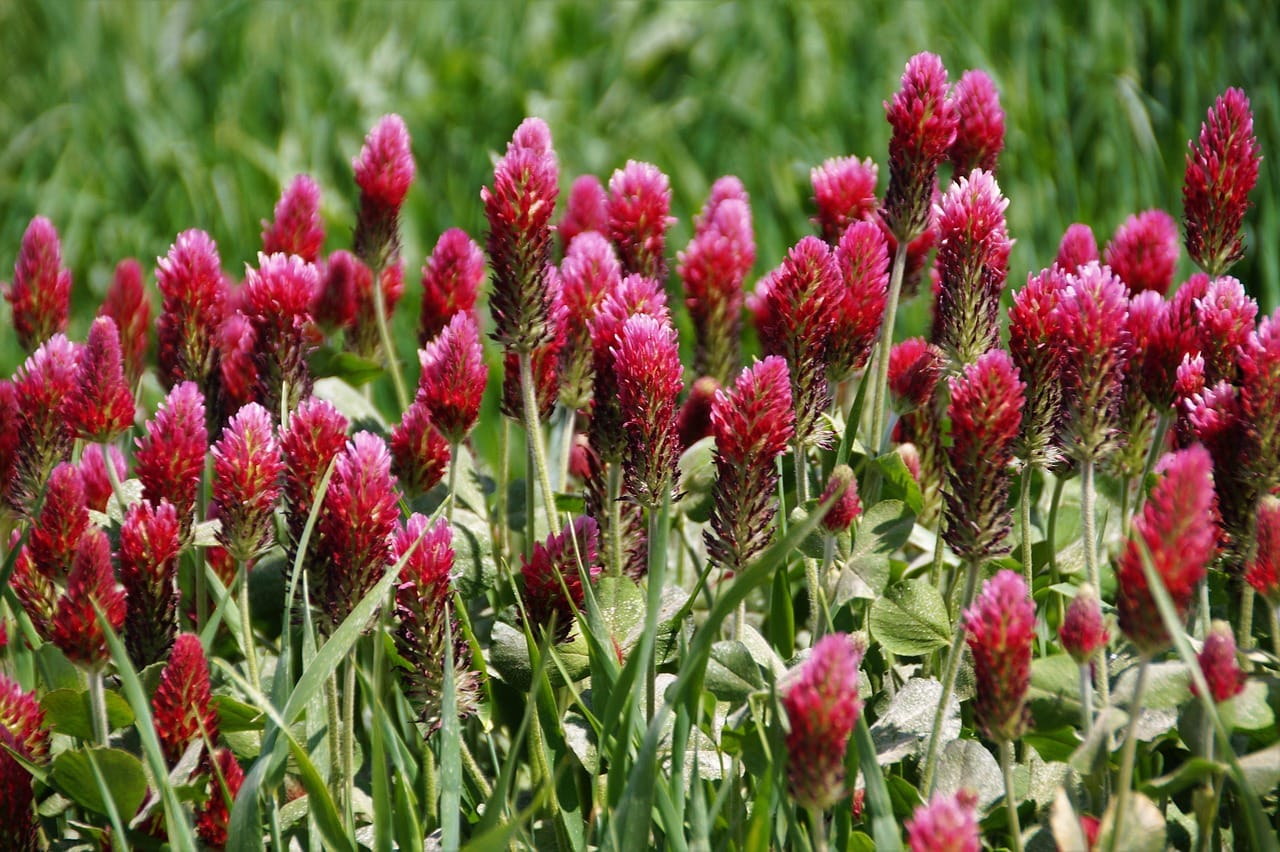
When to cut clover food plots has a clearer answer than it used to, thanks to University of Tennessee research. Mark Turner, Bonner Powell and Craig Harper found that frequent summer mowing cut forage and deer use without reducing weeds, and they now “recommend you consider mowing your plots once per year in late summer prior to applying the appropriate herbicide to control incoming coolseason weeds.” And even Whitetail Institute, which favors more frequent mowing, says not to mow clover that’s stressed by hot or dry weather.
Key Takeaways
- University of Tennessee researchers recommend mowing perennial clover once a year in late summer, when warm-season weeds flower.
- Mowing every three to four weeks in spring and summer reduced weed height but not weed coverage in their trials.
- Mowed sections had 53% fewer deer detections and less forage eaten than unmowed sections.
- Whitetail Institute says not to mow forage plants lower than about 6 to 8 inches tall.
- Whitetail Institute recommends mowing a few times in spring and summer whenever anything starts to flower. Sources disagree.
- Whitetail Institute says skip mowing during excessively hot or dry weather.
The research: why less mowing works better
The UT team mowed parts of a ladino and red clover and alfalfa plot monthly from May to August 2020 and left other parts alone. Their findings, published in the National Deer Association’s Quality Whitetails (University of Tennessee):
- Weeds: “Mowing as frequently as once every three to four weeks during spring and summer reduces weed height but fails to reduce weed coverage. In fact, regular mowing actually may result in more weed problems over time.”
- Forage: “there is more biomass of selected plant parts in unmowed than in mowed plots.”
- Nutrition: For the plant parts deer actually eat, “there is little or no difference in nutrient concentration or digestibility between mowed or unmowed perennial forages.”
- Deer use: “we actually saw 53% fewer deer detections in the mowed sections,” and “deer consumed 608 pounds/acre less forage in the mowed sections” (UT study).
The authors write that “mowing does not get rid of most weed species, but rather just makes them shorter for a short time.” They also warn that “Mowing during July and August may reduce coverage of perennial forages and allow warm-season broadleaf and grass” weeds to take advantage of the open space.
When to cut clover food plots: late summer
The UT recommendation is one cut a year: “We typically mow perennial plots once per year in late summer, which is when most warm-season weeds flower and produce seed. Mowing at this time can prevent or at least reduce weed seed production.” The timing also sets up fall weed control, because “Mowing in late summer also provides shorter plant height which facilitates a fall herbicide application.”
The exact calendar date depends on where you are. Watch the weeds, not the calendar: when warm-season weeds start flowering, that’s your window, as long as the forecast isn’t hot and dry.
Exceptions: when you may need to mow more
The UT authors don’t say never: “if you are not able to spray the appropriate herbicide at the appropriate time, you will have increased weed pressure, and you may need to mow more than once per year simply to prevent your perennial forages from being overtaken and shaded-out by various weeds.” Just don’t expect it to fix the weed problem.
Their weed control program pairs the single mowing with herbicides, typically treating “twice per year, once in spring to control incoming warm-season weeds, and once in fall to control incoming cool-season weeds.” Read and follow the label for any herbicide you use. See our guide on herbicide carryover risks.
The other camp: mow when anything flowers
Seed company Whitetail Institute takes a different approach for its perennials: “Generally, mow your Whitetail Institute perennial food plots a few times each spring and into summer any time you see anything growing in the plot (forage plants, weeds or grasses) starting to flower or make seeds” (Whitetail Institute). Its goal is to “stop the flowering process before the seeds in weed flowers and seed heads become viable.”
Whitetail Institute’s advice on height and stress is less controversial. It says “don’t take more than a couple of inches off the tops of the forage plants, and don’t mow them lower than about 6 to 8 inches tall,” and “don’t mow the forage plants when they’re stressed, such as during periods of excessively hot or dry weather.”
How to cut when you do
- Height: leave about 6 to 8 inches, per Whitetail Institute.
- Weather: skip hot, dry spells. Mowing removes leaf and, Whitetail Institute says, “can also speed up the rate at which moisture evaporates from the soil.”
- Follow-up: plan your fall herbicide after the late-summer cut.
More reading: clover food plot basics, ladino white clover grazing heights and clover fertilizer and soil tests.
FAQ
When should I cut my clover food plot? Once in late summer when warm-season weeds are flowering, before a fall herbicide application, per University of Tennessee research.
How short should I mow clover? Not below about 6 to 8 inches.
Should I mow clover in summer heat? No. Whitetail Institute warns against mowing stressed plants during excessively hot or dry weather, and the UT authors warn that mowing in July and August may reduce coverage of perennial forages.
Does mowing make clover more attractive to deer? Not in UT’s trial, which recorded 53% fewer deer detections in mowed sections.
The other side of it
The UT study is one well-designed trial on one plot in one summer, and the seed industry still recommends more frequent mowing. Plot managers who mow often swear their plots look cleaner, and in the short term they do. But looking cleaner isn’t the same as more forage or more deer. If you’re going to mow more than once, do it for a specific weed problem, not out of habit. The guy who mows his clover every Saturday in July so it looks like a golf course is mostly feeding the weeds and his own sense of accomplishment.
Keep reading
Latest deer news
Sources
- Considerations for Mowing & Managing (Quality Whitetails, Summer 2021), University of Tennessee (Mark Turner, Bonner Powell and Craig Harper; published in NDA's Quality Whitetails)
- Don't Cut Corners with Perennial Forage Maintenance (May 2019), Whitetail Institute (seed company blog)
Comments