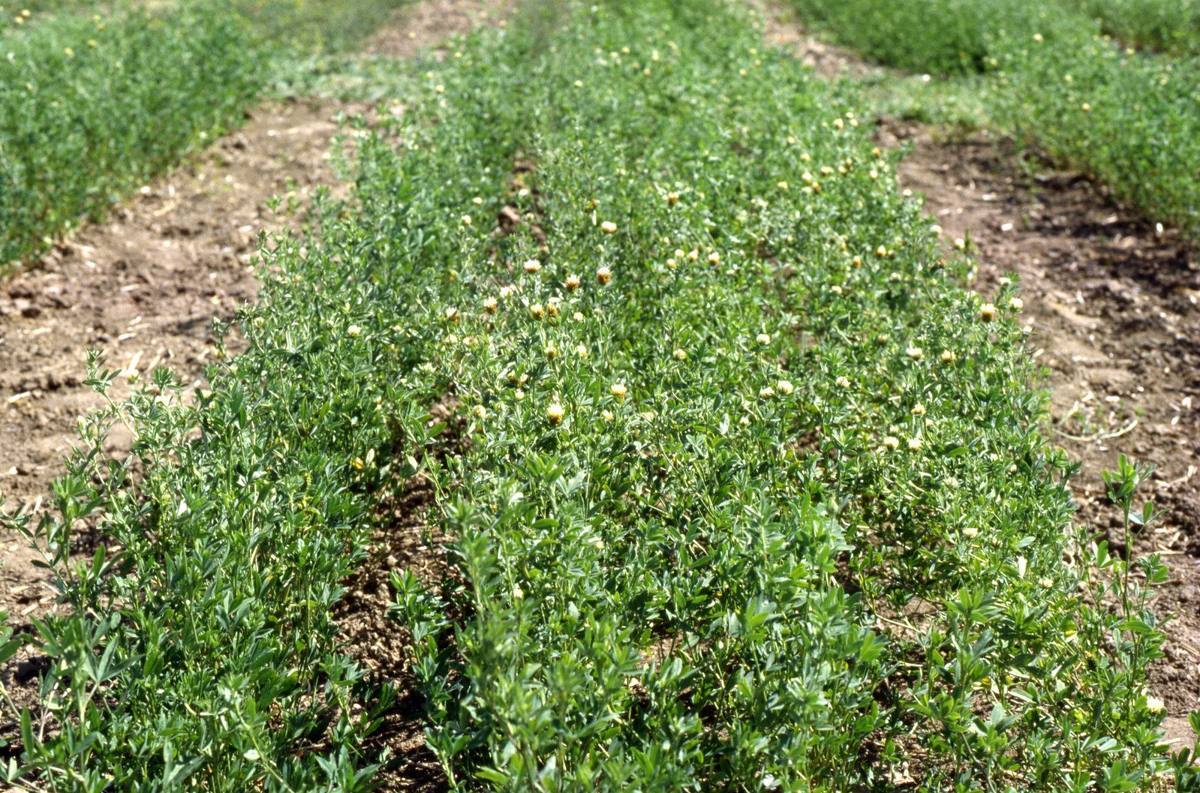
Mississippi State University Extension’s Deer Food Plot Planting Guide (M1591) lists arrowleaf clover as L/A (legume/annual) with cultivars Meeche, Yuchi, Amclo, Apache, and Osceola, planted Sept. 1-Oct. 15 at 8 lb/acre drilled or 12 lb broadcast PLS (Mississippi State University Extension). The forage-class letter A means the poster treats arrowleaf as an annual, not as an L/P perennial like ladino white (4/8) or red clover (10/15) on the same table (Mississippi State University Extension). Multi-year arrowleaf cover therefore cannot be planned as if a perennial crown will hold the plot; managers either reseed annuals on the cool-season calendar or partner reduced-rate L/P clovers from M1591 for longer crowns (Mississippi State University Extension). Hard-seed folklore is not a substitute for reading that L/A class on the guide (Mississippi State University Extension).
Key Takeaways
- Arrowleaf: L/A annual; Meeche, Yuchi, Amclo, Apache, Osceola (Mississippi State University Extension).
- Window: Sept. 1-Oct. 15 (Mississippi State University Extension).
- Pure stand: 8 drilled / 12 broadcast PLS (Mississippi State University Extension).
- Contrast: ladino and red are L/P on the same poster (Mississippi State University Extension).
- Multi-year plans need reseeds or perennial partners (Mississippi State University Extension).
- Footnote 2 mixture cuts; PLS not coated weight; inoculant C (Mississippi State University Extension).
Annual class drives the multi-year decision
M1591’s footnote 1 defines A as annual and P as perennial (Mississippi State University Extension). Arrowleaf’s L/A row is the sourced basis for treating it as a cool-season annual planting, not a set-and-forget perennial stand (Mississippi State University Extension). If a plot must stay clover-covered across summers without reseeding, the guide points you toward L/P rows (ladino, red), not arrowleaf’s annual line (Mississippi State University Extension). Berseem and persian clovers are also L/A on the same block if you are comparing annual options (Mississippi State University Extension).
Rate context unique to arrowleaf
At 8/12 lb PLS, arrowleaf sits between balansa’s 5/10 and crimson’s 15/25 on the clover block (Mississippi State University Extension). A multi-year program that reseeds arrowleaf each Sept. 1-Oct. 15 window should budget that middle rate - not crimson bags and not ladino’s lighter 4/8 perennial column (Mississippi State University Extension). Footnote 5 still requires pure-live-seed math on coated seed (Mississippi State University Extension). Broadcast always uses the higher 12 lb column when you are not drilling (Mississippi State University Extension).
Building multi-year cover without pretending it is perennial
Options consistent with M1591: (1) reseed arrowleaf on the published cool-season dates each year at reduced rates if blended; (2) mix a reduced arrowleaf fraction with reduced ladino or red for perennial crowns after the annual dies; (3) accept a grain-plus-annual clover rotation and replant (Mississippi State University Extension). Footnote 2’s complete-stand warning applies whenever arrowleaf shares the drill with oats, wheat, or other clovers (Mississippi State University Extension). Keep cultivar bags labeled Meeche, Yuchi, Amclo, Apache, or Osceola so reseeds match the extension list (Mississippi State University Extension).
Inoculation and companions
Arrowleaf’s inoculant column is C; most clover seed is sold pre-inoculated, or inoculate before planting (Mississippi State University Extension). Austrian winter peas (30/50 lb, Sept. 1-Nov. 1) can widen the companion window if a pea-legume mix is planned, still with rate cuts (Mississippi State University Extension). Small grains remain 90-100 drilled or 120-150 broadcast if used as a nurse crop that must be cut back for clover success (Mississippi State University Extension).
Bottom line
Plan arrowleaf as M1591’s L/A annual at 8/12 lb PLS on Sept. 1-Oct. 15 - reseed or add L/P partners for multi-year cover rather than assuming a perennial crown from the annual row (Mississippi State University Extension).
The other side of it
The whole case rests on one letter in one extension poster’s table. That A says the plant is an annual; it doesn’t say a stand can never drop seed and come back, and the article offers no reseeding data either way. A manager who has watched arrowleaf return on his own ground has a fair point. Still, the folks most certain their clover reseeds itself are usually the same ones who can’t remember what they planted a few falls ago.
Keep reading
Latest deer news
Comments