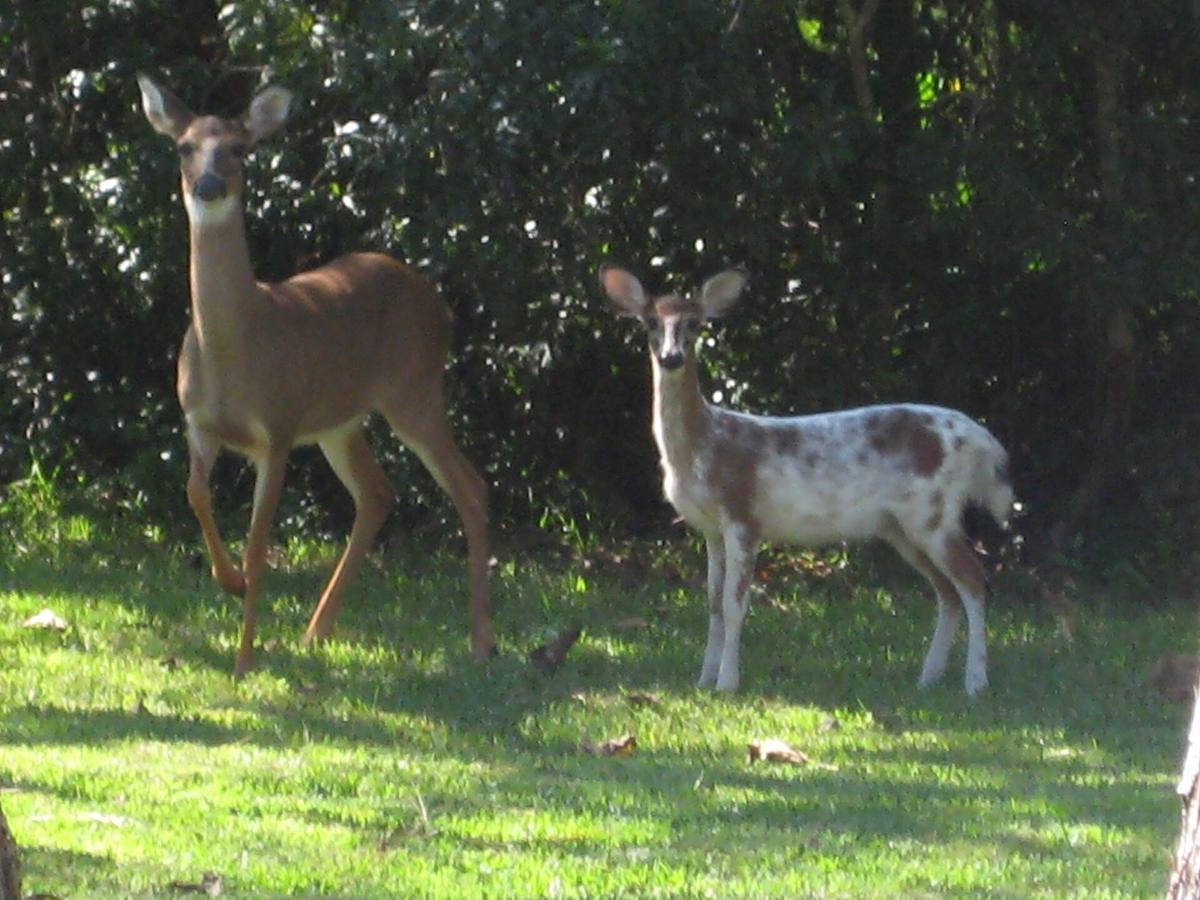
Albino and leucistic deer both look pale, but they are different pigment conditions. National Deer Association coat-color guides separate true albinism (little to no melanin, typically pink eyes) from leucism (partial pigment loss with normally colored eyes) and from piebald patches (NDA deer color phases; NDA melanistic feature). Hunters who use “albino” for every white deer muddy legality debates and camp ID.
Key Takeaways
- Albino: white or near-white coat with pink/red eyes and often pink nose/hooves from absent melanin (NDA deer color phases).
- Leucistic: reduced pigment with dark eyes; coat may be white, cream, or patchy without classic pink eyes (NDA deer color phases).
- Piebald: white patches on an otherwise brown deer, sometimes with skeletal anomalies in severe cases (NDA deer color phases).
- Melanistic is the opposite problem - excess dark pigment (NDA melanistic feature).
- Most states treat color-anomaly deer under ordinary season rules; a few protect “albino” animals - verify the digest before you shoot folklore (NDA deer color phases).
Genetics without the lab coat
Albinism blocks melanin production pathways; leucism reduces pigment in skin/hair while often sparing eye color (NDA deer color phases). Both can be inherited. Neither is a separate subspecies. Camera flash and mud create false “white deer” every week - demand daylight video before rewriting genetics (NDA melanistic feature; NDA deer color phases).
Field ID checklist
Eyes first: pink suggests albino; dark suggests leucistic or piebald white patches on a normal deer (NDA deer color phases). Soft parts next: nose and hooves. Pattern last: uniform white versus islands of brown. Winter coats and frost can pale ordinary deer in photos - wait for sun.
Legality and ethics
NDA notes free-ranging pigment anomalies are rare and that harvest choices do not measurably change landscape genetics (NDA deer color phases). Some jurisdictions historically protected animals labeled albino; never assume. Search the current regulations for “albino,” “white deer,” or color protections. Public opinion may still punish a legal shot on a local celebrity deer - that is social, not biological.
Reporting and management
Agencies sometimes welcome georeferenced daylight photos of unusual coats. Report disease-like hair loss separately from genetic white coats (NDA deer color phases). Do not confuse mange or winter stress with leucism.
Hunting decisions
Identify sex, weapon, and season first. Color is not a tag class unless statute says so. If you pass for preference, fine; if you shoot, tag and recover like any other deer. Travel hunters should ask outfitters whether local culture or law treats white deer specially.
Look-alike table in prose
Albino equals white coat plus pink eyes. Leucistic equals pale coat plus dark eyes. Piebald equals patched coat. Melanistic equals dark coat plus dark eyes (NDA deer color phases; NDA melanistic feature). Wet mud is none of the above.
Bottom line
Call pink-eyed white deer albinos and dark-eyed pale deer leucistic; confirm ordinary or special rules before the shot (NDA deer color phases). Precision beats campfire labels.
Related: Melanistic whitetails and Piebald whitetail genetics.
Why hunters mislabel white deer
Trail-camera IR washout, snow glare, and piebald patches all get called “albino” in group texts (NDA deer color phases; NDA melanistic feature). That slang matters when a statute protects animals described as albino but not leucistic. If your state uses the word albino in a protection clause, pink eyes are the practical field filter - and you should still read the exact text (NDA deer color phases).
Rarity and management irrelevance
True albinos and leucistic deer are uncommon relative to ordinary coats. NDA’s coat-color materials emphasize that hunter pass/shoot decisions do not steer free-ranging allele frequencies in meaningful ways at landscape scale (NDA deer color phases). Local celebrity white deer can still create enforcement headaches if someone shoots against a special local rule or against loud public sentiment. Document legal harvest carefully.
Photography protocol for reports
Take daylight video showing eyes and soft parts, note GPS, and avoid stressing the animal for a selfie. Agencies comparing melanistic, piebald, and albino reports need comparable evidence (NDA melanistic feature; NDA deer color phases). Night flash alone is not enough for a classification argument at camp.
Related anomalies in one sentence each
Piebald equals patched white on brown, sometimes with facial deformity stories. Melanistic equals excess dark pigment. Dilute or brown morphs appear in some discussions but lack the pink-eye signature of albinism (NDA deer color phases). Keep the vocabulary tight so disease hair loss is not filed under genetics.
State-rule homework before a white-deer sit
Search the current digest PDF for albino, white deer, and color. If silence, ordinary tags apply (NDA deer color phases). If a protection clause exists, assume wardens use pink-eye cues and written definitions - ask the agency before inventing your own. Private leases may add house rules stricter than statute; follow the stricter line.
Camp education script
Show three photos: pink-eyed albino, dark-eyed leucistic, patched piebald. Add one melanistic for contrast (NDA deer color phases; NDA melanistic feature). Make new hunters say the eye color first. That five-minute drill prevents winter arguments and illegal shots where protections exist.
Taxonomy myths to retire
White deer are not a different species. They are not spirits, and they are not automatically diseased. Genetic pigment errors are not mange. Keeping those myths out of youth hunts matters as much as the ID key (NDA deer color phases).
The other side of it
Eye color is the hardest thing to see from a stand in fading light, so a pink-eye filter asks a hunter to make a call he usually can’t. This piece already admits flash and frost fool cameras. If a protection clause exists where you hunt, the safer move is passing any white deer, not running genetics through a scope. Of course, the guy most confident about eye color usually made the call off a night flash photo.
Keep reading
Latest deer news
Comments