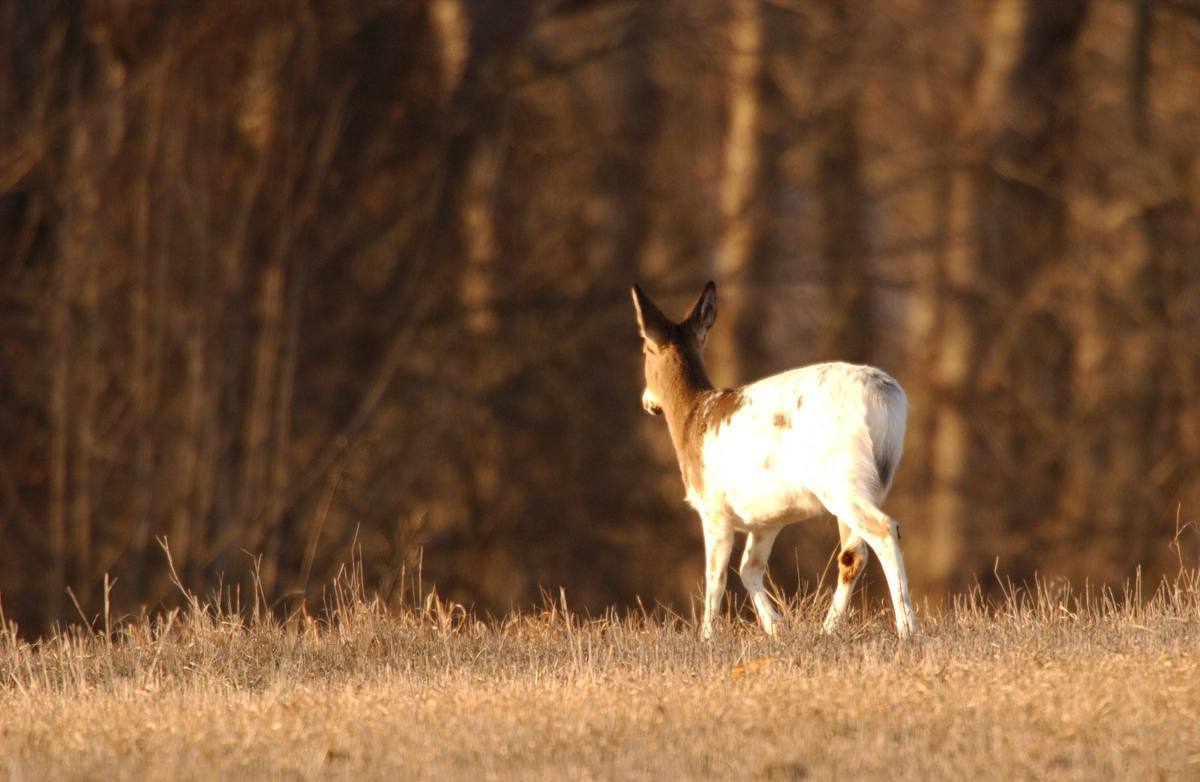
A piebald whitetail is not diseased and not the same as a true albino. Maryland DNR describes the piebald anomaly as a genetic variation that produces white-and-brown pinto-like coats, sometimes nearly all white, and notes that many affected deer also show skeletal traits such as a Roman nose, short legs, scoliosis, or a short lower jaw (Maryland DNR piebald). The condition is rare - typically less than one percent of whitetails (Maryland DNR piebald).
Key Takeaways
- Piebald is genetic leucism, not a parasite or infection (Maryland DNR piebald; Illinois Extension leucism).
- Associated skeletal defects can occur with the coat pattern (Maryland DNR piebald; NDA piebald).
- Recessive inheritance means both parents must carry the trait for a piebald fawn to appear (NDA piebald).
- Harvest legality usually matches normal deer rules unless a digest protects white deer - verify before you shoot (Virginia DWR deer FAQ).
- Passing a healthy piebald is preference. NDA says harvest choices in free-roaming herds have no measurable impact on the trait, though protecting piebald adults can make it slightly more common locally (NDA coat colors; NDA piebald).
Genetics vs disease vs other white coats
Agency wildlife pages list piebald under anomalies precisely because it is not a pathogen (Maryland DNR piebald). Do not confuse white patches with mange, EHD scarring, or bleach from age. National Deer Association explains piebaldism as partial leucism: patches of skin lack pigment cells, so white hair and the skin beneath it stay unpigmented, while eyes usually keep normal color (NDA coat colors; NDA piebald). Albino deer lack pigment production entirely and show pink eyes; melanistic deer overproduce pigment and look very dark (NDA coat colors). Illinois Extension frames leucism the same way for wildlife generally: partial pigment loss with normal eye color, distinct from albinism (Illinois Extension leucism). Field identification therefore starts with eye and nose color, then coat pattern, then any skeletal quirks - not with folklore about sacred or cursed animals.
How rare, and why local rates shift
NDA cites Southeast Cooperative Wildlife Disease Study veterinarians estimating piebaldism in under 1% of whitetails, with one population near 2% after temporary hunting restrictions on affected deer (NDA piebald). Across the range, rough order-of-magnitude estimates put piebalds near one in 1,000 deer, albinos near one in 30,000, and melanistic deer rarer still (NDA piebald; NDA coat colors). Enclosed or locally protected white herds (the Seneca white deer are the classic leucism example) can raise trait frequency without changing free-ranging genetics elsewhere (NDA coat colors). Because the trait is recessive and many severely deformed fawns die young, piebald coats are unlikely to become common on open landscapes even when hunters pass every spotted deer (NDA piebald). Illinois Extension also notes that human selective pressure can make conspicuous pale animals more common where people protect them, while poor camouflage raises predation and harvest risk where they are not protected (Illinois Extension leucism).
Inheritance hunters actually see
Both parents must carry the recessive gene for a chance at piebald offspring (NDA piebald). A piebald doe can still birth normal fawns, and a normal-looking doe can twin a piebald and a normal fawn in one litter (NDA piebald; NDA coat colors). That is why trail-camera “mystery white deer” often appear once and never again - the genetics sit quietly in brown-coated carriers. SCWDS notes that many mammal species show piebaldism, with whitetails among the more frequently reported hosts in the Southeast (NDA piebald).
Legality pattern
Most states treat piebald and white deer as legal game when the hunter holds a valid tag for that sex and age class. Some jurisdictions historically protected all-white deer by statute or local custom. Virginia’s deer FAQ and similar agency pages are the place to confirm before you shoot (Virginia DWR deer FAQ). Never assume a social-media “sacred white deer” rule overrides the printed digest. If white deer are protected where you hunt, the burden is on you to identify coat class in legal light before releasing an arrow or cartridge. When in doubt, treat the animal as a normal deer of that sex until the digest says otherwise, then obey the digest.
Defects, recovery, and ethics
The same developmental pathways that drop pigment can alter bone and soft tissue. Maryland lists Roman nose, short legs, scoliosis, and short lower jaws among common companions to the coat (Maryland DNR piebald). NDA notes the spectrum runs from tiny white patches on otherwise sound deer to severe dwarfism and arched spines (NDA piebald). Mild cases live normal wild lives; extreme cases may not. If you shoot a piebald with obvious deformity, wanton-waste and retrieval duties still apply - coat color does not create a special discard exception (Maryland DNR piebald). Passing a healthy piebald is preference, not population genetics management. NDA says harvesting or passing one in a free-roaming herd “will have no measurable impact on the frequency of these traits” (NDA coat colors). Its piebald page adds one exception: where piebald adults are protected from harvest, “the trait can become slightly more common” in that local herd (NDA piebald).
What to do when one steps out
- Confirm sex and legal weapon/season rules first (Virginia DWR deer FAQ).
- Check whether your state or unit protects white or piebald deer by name (Virginia DWR deer FAQ).
- Judge shot opportunity and recovery terrain the same way you would for any deer (Maryland DNR piebald).
- If you pass for ethics, record the observation; if you shoot, finish recovery and tagging under normal rules (Maryland DNR piebald).
Bottom line
Piebald means genetic white patches (partial leucism), sometimes with skeletal quirks, almost never a disease (Maryland DNR piebald; NDA piebald). Confirm white-deer rules in your digest, then decide whether the animal in the scope meets your own standard for a clean kill and good meat (Virginia DWR deer FAQ).
Related: melanistic whitetail and wanton waste laws.
The other side of it
The claim that passing piebalds changes nothing sits awkwardly next to the article’s own example, a population that climbed near 2% after hunting restrictions on affected deer, plus Illinois Extension’s note that protection makes pale animals more common. Where enough hunters pass them, it can matter locally. Then again, the guy who lets a piebald walk for luck and shoots its brown-coated twin hasn’t exactly settled the genetics question either.
Keep reading
Latest deer news
Comments