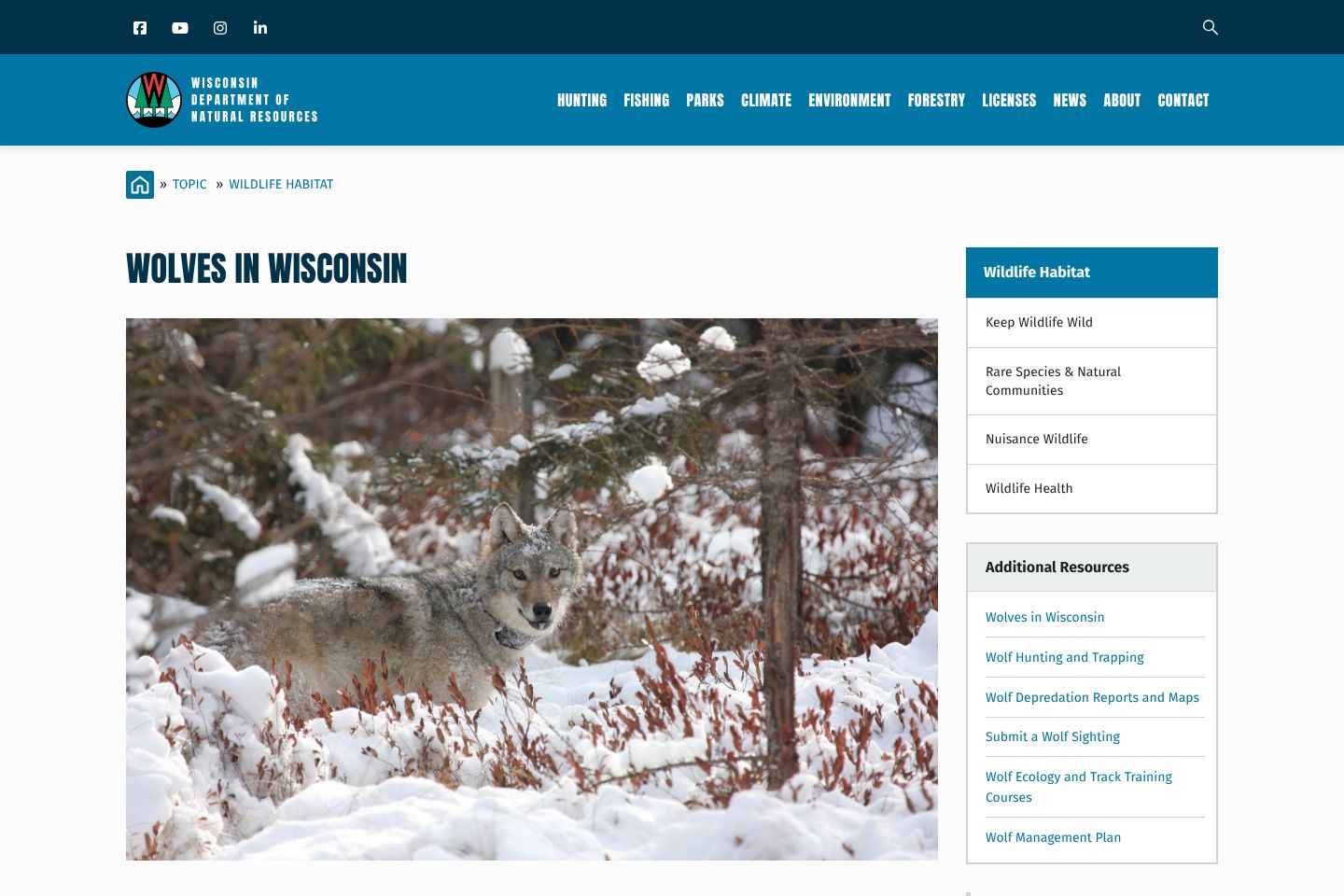
Gray wolves and white-tailed deer share northern Minnesota and northern Wisconsin forests, and hunter frustration often outruns the statewide evidence. Wisconsin DNR wolf pages and USFWS gray wolf biology materials describe wolves as predators that take deer among other prey without turning every township into a deer desert (WI DNR wolves; USFWS gray wolf biology Q and A). International Wolf Center analysis of northern Minnesota deer hunting under wolf expansion finds no easy single answer - local deer behavior, winter severity, and habitat can matter as much as wolf density (International Wolf Center deer hunting MN). News features on northwoods hunter frustration show the lived experience of quieter stands even when managers urge caution about blaming wolves alone (Northern News Now deer frustration; MN DNR wolf management plan). Expect overlap, expect local variation, and manage your hunt with current deer data - not folklore extinction stories.
Key Takeaways
-
Wolves and whitetails overlap across northern MN and WI; wolves eat deer among other foods (WI DNR wolves; USFWS gray wolf biology Q and A).
-
Statewide herd trends are multi-factor - winter, habitat, and harvest matter beside wolves (International Wolf Center deer hunting MN).
-
Local deer may shift habitat use and timing under predation risk - scouting must update yearly.
-
Follow current wolf status and regulations; do not freelance lethal control.
-
Use agency harvest and registration data for the unit you hunt before rewriting camp mythology.
Biology without panic
USFWS biology Q and A materials describe gray wolves as flexible predators. Deer are important prey in Midwestern range, especially where moose are scarce, but wolves also take beavers and other animals (USFWS gray wolf biology Q and A). WI DNR wolf topic pages orient hunters to coexistence realities rather than eradication fantasies (WI DNR wolves).
What hunters notice on the ground
Northern hunters report fewer daylight deer, more wolf sign on bait or gut piles, and trails that feel empty after deep snow winters. Those observations can be true locally. International Wolf Center analysis cautions against simple statewide blame narratives when winter severity and habitat also crash deer (International Wolf Center deer hunting MN; Northern News Now deer frustration).
Behavior changes worth hunting
Predation risk can push deer into thicker cover, different travel times, and tighter refuge habitats near human activity in some systems. That means your 2010 stand may be wrong in 2026 even if wolves are only one pressure among logging changes and hunter density. Scout fresh tracks after snow, move cameras, and accept shorter shots in cover.
Bait and carcass ethics
Where baiting is legal, wolves may use bait sites. That creates conflict photos and sometimes dangerous familiarity. Gut piles draw wolves and eagles alike. Consider copper bullets and pile placement away from stands you must revisit at dark. Do not shoot wolves where illegal - know the current federal and state status before you leave the truck (MN DNR wolf management plan; WI DNR wolves).
Reading agency data
Pull unit-level deer harvest, winter severity indexes, and wolf pack maps when published. If harvest and winter data already explain a crash, adding wolf rage does not improve your hunt plan. If local deer metrics stay high while your ridge is empty, change ridges before changing politics.
Safety around wolves
Wolves rarely threaten adults but may investigate dogs. Keep dogs leashed or close in wolf range. Haze boldly if a wolf approaches a dog; report bold behavior to the agency. Do not feed wolves intentionally or via sloppy camp food.
Bottom line
Northern hunters should expect wolf-deer overlap and local behavior shifts without assuming wolves alone erased the herd - combine USFWS and DNR biology with unit harvest data and fresh scouting (USFWS gray wolf biology Q and A; WI DNR wolves; International Wolf Center deer hunting MN).
Winter severity is the silent co-author
Deep snow and late springs kill fawns and exhaust adult deer regardless of wolf presence. When a hard winter follows a high wolf year, camps blame fangs for what ice started. Check winter severity indexes published with deer reports before you rewrite the villain list (International Wolf Center deer hunting MN; MN DNR wolf management plan).
Habitat fragmentation and logging
Large clearcuts can briefly boost forage then leave deer exposed. Mature dense conifer offers thermal cover wolves also use for travel. Hunting plans should track timber sales as carefully as pack territories. A new cut can move both predator and prey in one summer (WI DNR wolves).
Camera evidence without folklore
Photograph wolf tracks next to deer tracks if you find them, but do not invent a pack estimate from one trail. Share geotagged wolf photos with agency reporting portals when requested. Accurate observations help managers; exaggerated campfire counts do not (USFWS gray wolf biology Q and A).
Adjusting hunt style
Hunt tighter cover, shorten all-day sits that blow scent across a basin, and consider midday movements when deer relocate between wolf-travel corridors and feeding pockets. Bring better optics for small windows in thickets. Accept that success rates in some northern units are structurally lower than farmland Wisconsin - that can be ecology, not personal failure (Northern News Now deer frustration; International Wolf Center deer hunting MN).
Policy vs hunt prep
Argue policy in comment periods with data. Prep hunts with boots and maps. Mixing the two on opening morning wastes daylight. Know current legal wolf status before any encounter so you do not commit a federal or state violation in anger (MN DNR wolf management plan; WI DNR wolves).
Related: Crop damage economics and WI DNR wolves.
The other side of it
Telling a frustrated hunter to read the data can sound like waving off what he sees, and the article concedes quieter stands can be real locally. Unit-level numbers are only as fine-grained as the unit, so a camp sitting in the middle of one pack’s territory may be living a different story than the harvest table tells. And ‘change ridges’ is easy advice on public land, but a lot harder for a family that has hunted the same ground for generations.
Keep reading
Latest deer news
Sources
- Wolves in Wisconsin | | Wisconsin DNR
- USFWS gray wolf biology Q and A (fws.gov)
- No Easy Answers: Effects of Wolf Population Expansion on Deer Hunting in Northern Minnesota | International Wolf Center
- Special Report: Where’d the deer go? Hunter frustration grows in Minnesota Northwoods
- Minnesota Wolf Management Plan
Comments