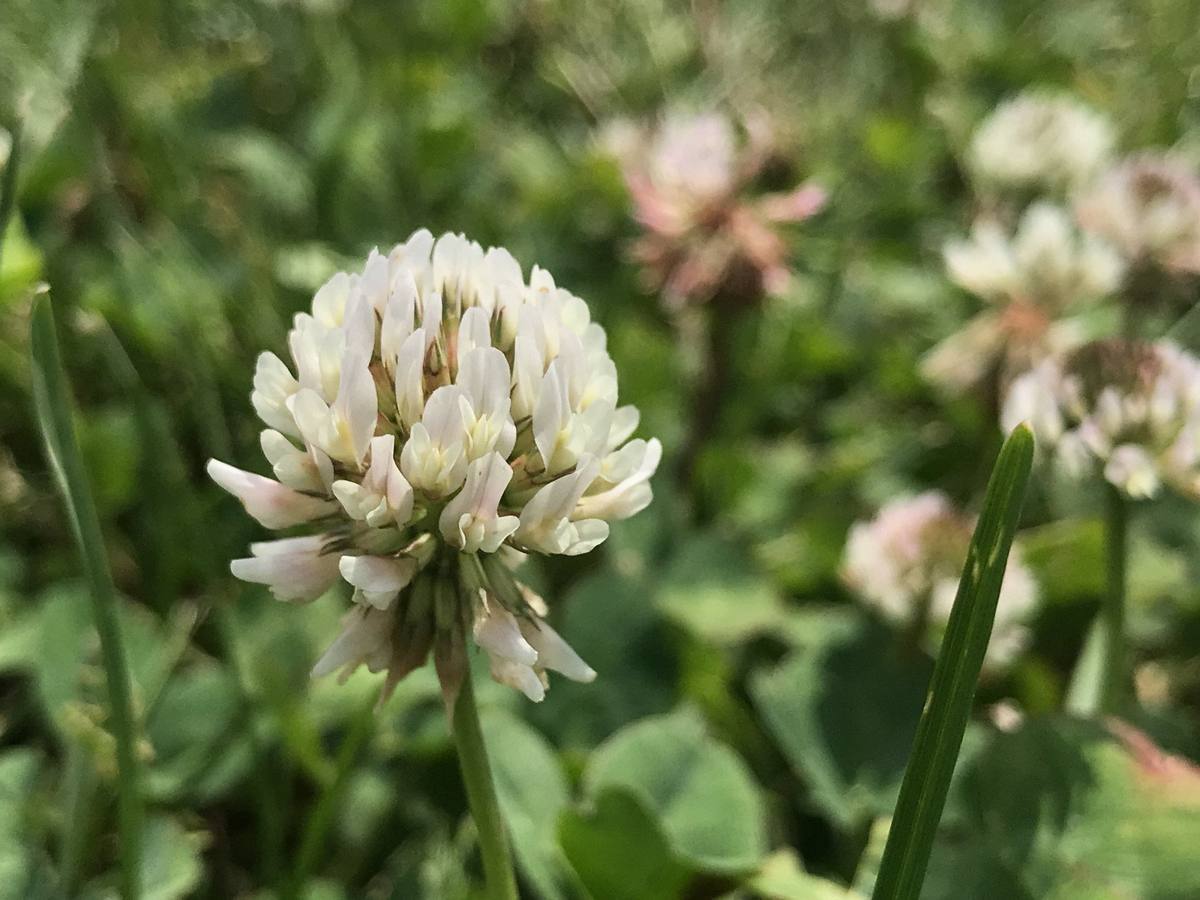
Bottle searches for “clover food plot liquid fertilizer” skip the step that actually decides rates: a soil test. University of Minnesota Extension’s wildlife food-plot nutrient guide starts with pH and lime, then nitrogen, phosphorus, and potassium keyed to test results - not to a product label alone (UMN Extension fertilizing food plots). Well-nodulated clovers fix their own nitrogen, so pouring nitrogen-heavy liquids on a pure clover stand is usually the wrong spend (UMN Extension; UGA cool-season food plots). Spec: brand comparisons of liquid vs granular products belong on labeled Spec reviews; this page stays Extension process.
Key Takeaways
- Soil-test before you buy fertilizer (UMN Extension).
- Nodulated clover typically needs little or no maintenance nitrogen (UMN Extension; UGA).
- Fix pH with lime when tests call for it - often before seeding (UMN Extension).
- Match P and K pounds per acre to the test tables, then choose liquid or dry as a delivery method.
Soil pH and lime before “liquid feed”
UMN notes legumes such as alfalfa and alsike clover want higher pH than many grasses, and forest-soil food plots often test acidic (UMN Extension). Lime rates can run on the order of 2 to 3 tons per acre of material, so you must decide whether you can haul and incorporate lime before planting (UMN Extension). UMN suggests liming to about pH 6.0 when equipment allows, using buffer-index tables that translate lab results into ENP pounds or Ag lime tons per acre (UMN Extension). Red clover and some grasses can tolerate pH under 6.0 better than fussier legumes - species choice can reduce liming needs when yield is not a cash-crop target (UMN Extension). Mississippi State Extension likewise treats soil fertility and pH as foundational for red clover forage stands (MSU red clover).
Nitrogen: why clover rarely wants a nitrogen liquid
UMN is blunt: well-nodulated alfalfa and clover can produce enough nitrogen for their own needs; grasses cannot, so grass plots need fertilizer N (UMN Extension). UGA’s cool-season wildlife food-plot guidance similarly warns against unnecessary nitrogen on clover-only plantings after establishment, with only modest establishment N considered on some sandy soils (UGA). If your plot is a legume/grass mix, nitrogen management follows the grass demand - UMN suggests roughly 30 to 60 pounds of N per acre for maintaining grass-driven growth depending on planting timing (UMN Extension). A “clover liquid fertilizer” marketed as high N is mismatched to a clover monoculture.
Phosphorus and potassium from the soil test
Because food-plot forage is usually not hauled off like hay, UMN notes P and K recycle more than in harvested agronomic crops, and it suggests reduced rates versus maximum economic yield tables (UMN Extension). Example broadcast phosphate guidance for legume/grass mixes runs from about 35 lb/acre at very low Bray-P1 down toward 0 once tests clear roughly 16+ ppm Bray-P1 (Olsen thresholds listed alongside) (UMN Extension). Potash for legume/grass mixes similarly steps from about 40 lb/acre at 0-40 ppm K down to 0 above 121 ppm (UMN Extension). Convert those nutrient pounds into product gallons or bags using the analysis on the label - that is where liquid vs dry is a logistics choice, not a magic biology difference.
Secondary nutrients and liquids
UMN says most wildlife food-plot crops do not need micronutrient packages; sandy soils may need about 10 to 15 pounds of sulfur per acre with nitrogen on legume/grass mixes, which can come from ammonium sulfate or gypsum (UMN Extension). Gypsum supplies sulfur without a liming effect (UMN Extension). Liquid fertilizers can deliver S, P, or K when tests call for them, but they do not replace lime incorporation on strongly acid soils.
Practical sequence for a clover plot
- Sample soil the season before seeding; follow lab depth instructions (UMN Extension).
- Apply and incorporate lime if pH is below target and hauling is feasible (UMN Extension).
- Inoculate clover seed for nitrogen fixation (UGA; MSU).
- Apply P and K to hit the Extension table for your test category (UMN Extension).
- Skip routine nitrogen liquids on pure clover; fertilize N only if grass dominates the mix (UMN Extension; UGA).
- Re-test every few years rather than dosing by habit.
Timing liquid vs dry applications
UMN describes nitrogen for grass-driven plots as a single surface application at or before rapid growth, with late plantings needing less N (UMN Extension fertilizing food plots). Phosphate and potash tables assume broadcast applications keyed to parts-per-million soil-test classes (UMN Extension). Liquids can ride on the same timing if you convert label analysis to the Extension pound rates. Do not “spoon feed” weekly nitrogen on clover alone - that fights the point of inoculation (UMN Extension; UGA cool-season food plots).
Reading a soil-test report for clover
Look for pH and buffer index first, then P and K methods (Bray-P1 vs Olsen, and K ppm) that match the UMN table headers (UMN Extension). If pH is low and lime is impractical, UMN suggests choosing more tolerant species such as red clover or grasses rather than forcing alsike or alfalfa without lime (UMN Extension). When P or K already tests high, the tables go to zero additional fertilizer - another reason not to buy liquid “deer plot” products on autopilot (UMN Extension).
Liquid fertilizer without the marketing
If you prefer liquids for even coverage on small plots, calculate from the soil-test nutrient rates first, then pick a product analysis that supplies those nutrients. Do not assume “deer plot” branding beats Extension numbers. Keep fertilizer and seed legal relative to baiting definitions in your state - nutrients meant to be eaten by deer can be regulated as bait in some jurisdictions even when agronomic fertilizing of plots is allowed.
Related: clover food plot and food plot herbicide.
The other side of it
Most of the hard numbers here come from Minnesota’s tables, and a hunter on different dirt should check whether his own lab reads those classes the same way. The bigger catch is practical: if the test calls for tons of lime on a plot you reach by four-wheeler, the advice turns into planting something you didn’t want. Liquids earn a place on small, hard-to-reach plots, even if they can’t fix pH. Strange how the shed with the fanciest fertilizer jugs never seems to have a soil test in it.
Keep reading
Latest deer news
Comments