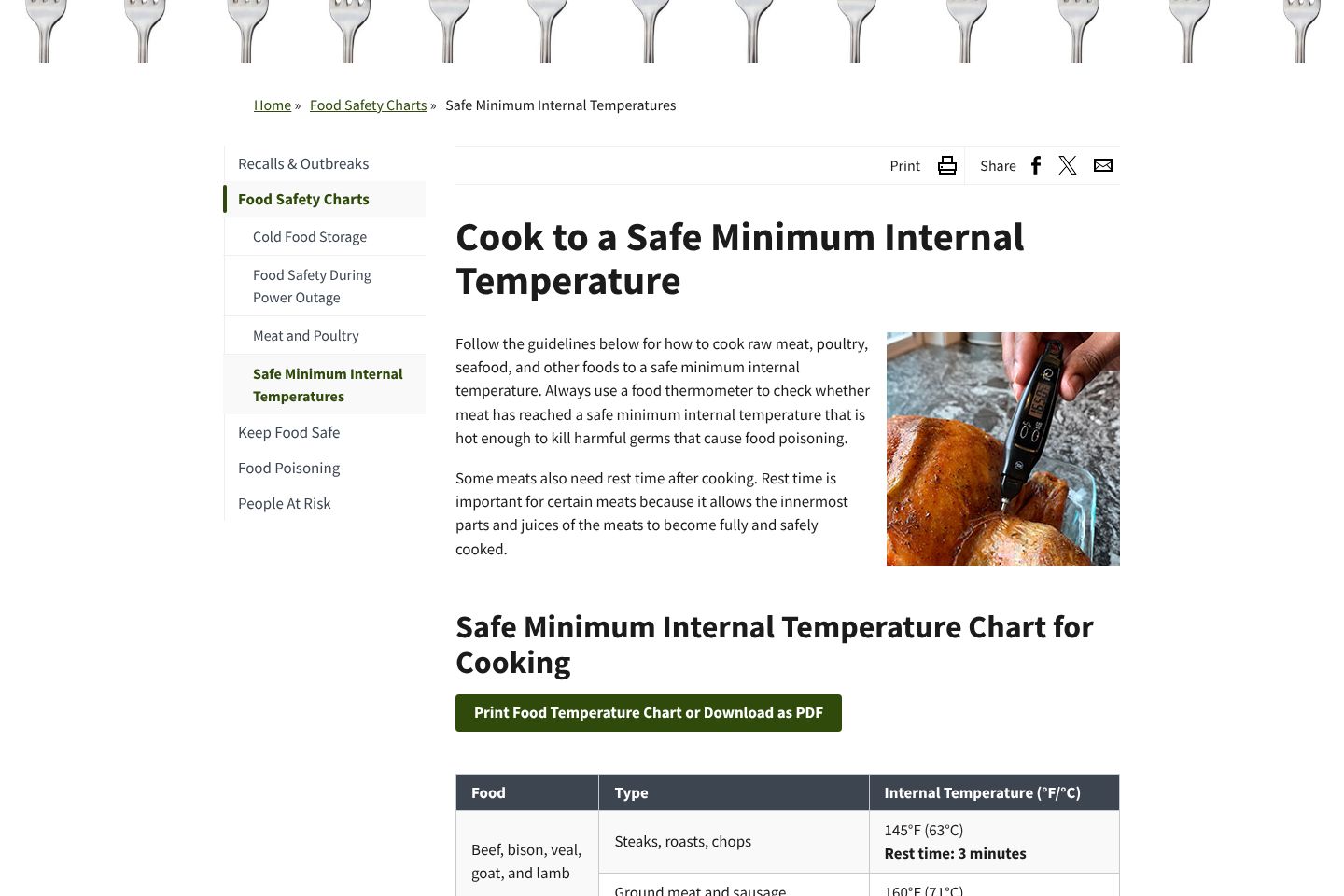
Heavy lungworm burdens can contribute to coughing and poor condition in deer, especially under stress. Agency disease pages ask hunters to report unusual sick animals (Wisconsin DNR EHD). A coughing deer in August could also be other respiratory insults or early systemic disease - do not assume parasites alone (Wisconsin DNR EHD). Healthy harvested deer still cook to 160 deg F (FoodSafety.gov).
Key Takeaways
- Report chronically sick deer (Wisconsin DNR EHD)
- Gloves at gut pile (FSIS Food Safety Basics)
- Cook venison 160F (FoodSafety.gov)
- Poor condition may mean discard (FSIS Food Safety Basics)
- EHD is a separate acute syndrome (Wisconsin DNR EHD)
- CWD testing when required (USGS NWHC CWD)
Field clue
Persistent cough with weight loss deserves a report (Wisconsin DNR EHD).
Carcass check
Inspect lungs when curious; parasites alone may not condemn all muscle (FSIS Food Safety Basics).
Quality decision
Emaciated carcasses are often discard (FSIS Food Safety Basics).
Season overlap
Late summer HD can coexist with parasite backgrounds (Wisconsin DNR EHD).
Dogs/scavengers
Dispose of offal where rules require (Wisconsin DNR EHD).
Bottom line
Take coughing, wormy deer seriously enough to report and to judge carcass condition honestly - kept meat still hits 160 deg F (Wisconsin DNR EHD; FoodSafety.gov).
The other side of it
The honest gap here is that none of the cited sources is actually a lungworm study, and the article itself warns that a coughing deer could be dealing with something else entirely. Most hunters will never hear a deer cough anyway, so the useful part is the reporting and the carcass check, not the diagnosis. There’s always somebody at camp ready to name the parasite from the tailgate without a microscope anywhere in the county.
Keep reading
Latest deer news
Comments