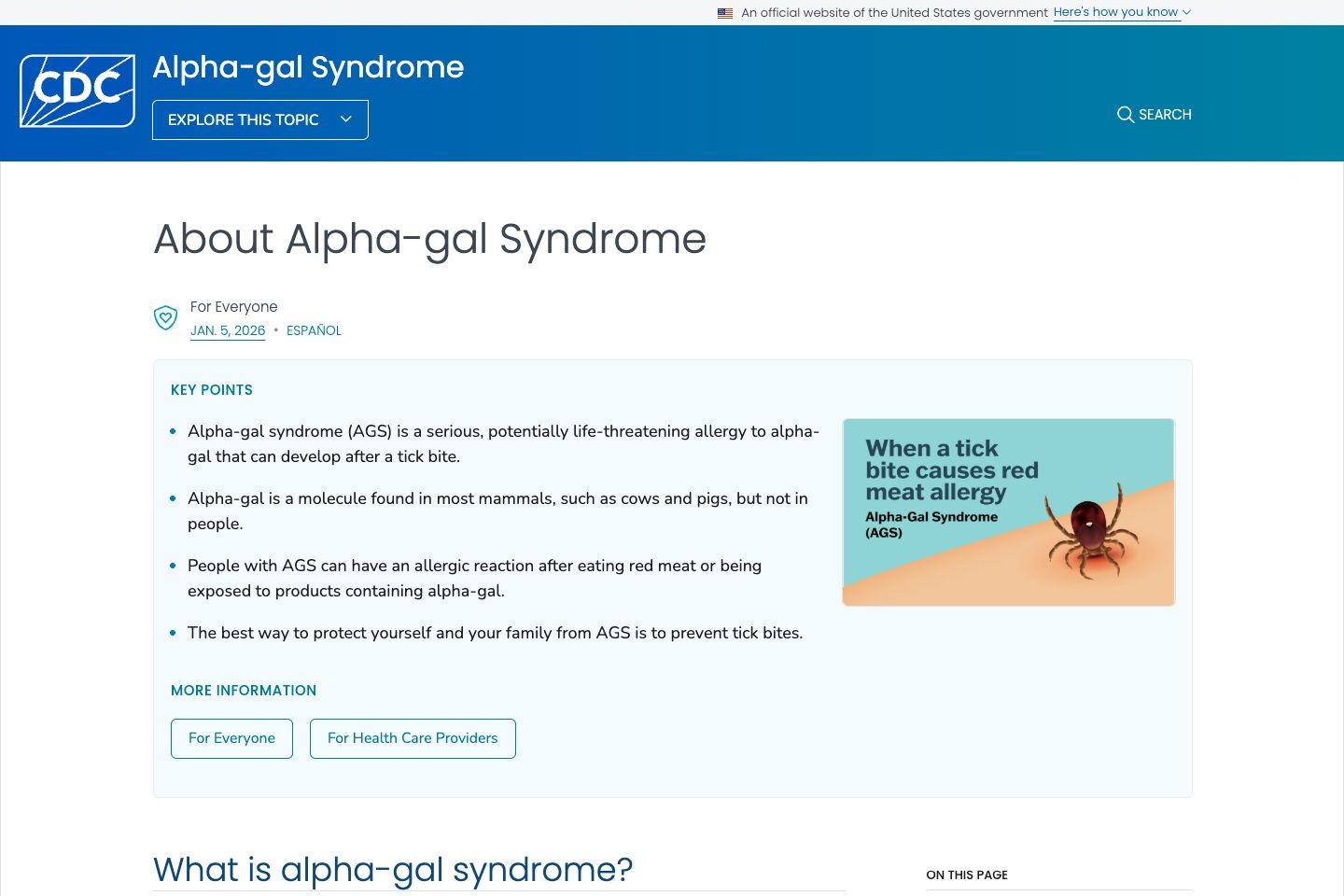
Deer hunters should identify the tick species most tied to the diseases they actually face: lone star ticks for alpha-gal syndrome risk messaging, blacklegged (deer) ticks for Lyme and other pathogens, and American dog ticks in many regions (CDC about alpha-gal syndrome; CDC ticks; CDC hunter AGS brochure PDF). CDC tick pages and AGS materials both stress prevention over folklore (CDC ticks; CDC hunter AGS brochure PDF).
Key Takeaways
- Lone star tick: primary U.S. tick CDC associates with alpha-gal syndrome (CDC about alpha-gal syndrome).
- Blacklegged / western blacklegged ticks: also linked to some AGS cases and to Lyme-group diseases (CDC about alpha-gal syndrome; CDC ticks).
- Prevention toolkit: EPA-registered repellent, 0.5% permethrin on clothing/gear, tick checks, prompt tweezer removal (CDC hunter AGS brochure PDF).
- Fall and warm winter days still produce bites (CDC hunter AGS brochure PDF).
- Dogs need tick prevention too when they ride to the property (CDC hunter AGS brochure PDF).
Lone star versus blacklegged at a glance
Lone star adults often show a single white spot on the female’s back and are aggressive daytime biters in many South/East/Central states (CDC about alpha-gal syndrome; CDC hunter AGS brochure PDF). Blacklegged ticks are smaller nymph threats in leaf litter and are the classic Lyme vector (CDC ticks). Hunters encounter both in edge habitat (CDC ticks; CDC about alpha-gal syndrome).
Field ID habits that help
Save engorged ticks in a bag for clinician ID if you later develop fever or delayed meat allergy symptoms (CDC ticks; CDC about alpha-gal syndrome). Phone photos next to a coin help (CDC ticks).
Removal without folk remedies
CDC hunter AGS guidance: fine-tipped tweezers, grasp close to skin, pull upward steadily without twisting, clean the bite with alcohol or soap and water (CDC hunter AGS brochure PDF). Do not burn or coat ticks with nail polish as a removal plan (CDC ticks; CDC hunter AGS brochure PDF).
Tie-in to venison allergy
If you hunt lone star country and later react to venison or beef, tell a clinician about tick exposure and ask about AGS testing pathways (CDC about alpha-gal syndrome; CDC hunter AGS brochure PDF).
Field notes
Write repellent products used, permethrin treat date on boots/clothes, tick species if identified, and bite calendar (CDC hunter AGS brochure PDF; CDC ticks).
Nymph season mindset
Blacklegged nymphs are easy to miss on dark clothing; hunters in Lyme country should assume leaf-litter sits mean tick checks even when no adult tick is seen (CDC ticks). Pair that habit with AGS prevention in lone star range (CDC about alpha-gal syndrome).
Clothing color and tuck-in
Tuck pants into socks or use gaiters, and consider light-colored layers that make crawling ticks obvious during midday checks (CDC ticks; CDC hunter AGS brochure PDF). Permethrin-treated boots and pants remain the higher-leverage step (CDC hunter AGS brochure PDF).
After the butcher weekend
Ticks hitch on capes and quarter bags; check the garage and dogs again after processing day (CDC hunter AGS brochure PDF; CDC ticks).
Official checks
Keep CDC tick and AGS hunter pages bookmarked on your phone for camp Wi-Fi checks (CDC ticks; CDC hunter AGS brochure page).
Stand locations and tick density
Brushy edges, tall grass walk-ins, and dragging deer through leaf litter raise encounter rates with both lone star and blacklegged ticks (CDC ticks; CDC about alpha-gal syndrome). Do a tick check after the drag, not only after the sit (CDC hunter AGS brochure PDF).
Kids and mentors
Youth hunters need the same permethrin-treated outer layers and adult-supervised tick checks after the hunt (CDC hunter AGS brochure PDF; CDC ticks). CDC notes people of all ages can develop AGS (CDC about alpha-gal syndrome).
The other side of it
Species ID matters less in the field than this suggests, because the prevention steps are identical whichever tick climbs your boot, and the article admits blacklegged nymphs are easy to miss anyway. The ID mostly pays off later, in a clinician’s office. Then again, the hunter who swears ticks quit after the first frost is usually the one scratching after the late-season sit.
Keep reading
Latest deer news
Comments