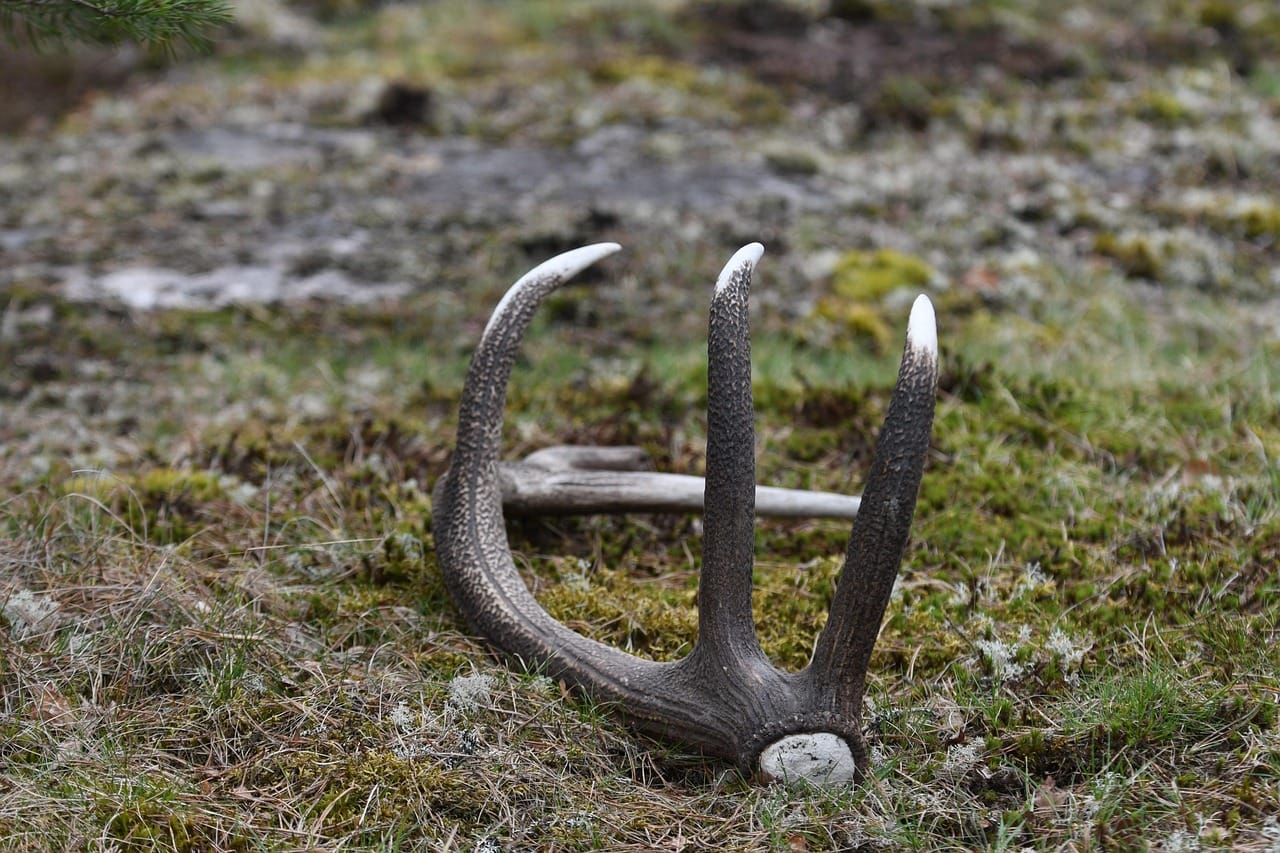
Can you eat deer antlers? Not in any way you’d recognize as a meal. A finished antler is bone. The U.S. Fish and Wildlife Service says “Antlers are branched bones that are shed every year” (USFWS). People do swallow one form of antler, though: velvet antler, the growing stage, which is dried and sold as a supplement. The evidence for it is thin, and a CDC journal study found low levels of chronic wasting disease (CWD) prions in velvet from infected elk. Meanwhile, plenty of animals in the woods eat hard antler without a second thought.
Key Takeaways
- Hard antler is bone. USFWS says growing antlers “start as cartilage and are calcified into bone.”
- Velvet antler is the growing stage, and it is what gets sold as a supplement.
- Arthritis UK says two trials found “no evidence to suggest that antler velvet is effective in treating rheumatoid arthritis.”
- A study in the CDC’s Emerging Infectious Diseases journal found CWD prions in velvet from infected elk.
- Rodents, porcupines and other wildlife gnaw shed antlers for calcium and other minerals.
Can you eat deer antlers once they harden?
A hard antler is not meat. USFWS explains that velvet “allows oxygen rich blood to reach growing antlers, which start as cartilage and are calcified into bone.” It also notes how fast that happens: “antlers are the fastest bone growth in the world.”
Once the antler is full size, the velvet comes off. USFWS says “Once antlers reach their final size, the velvet dries and becomes itchy,” and that white-tailed deer “can remove all their velvet in as little as 24 hours.” What is left on the buck’s head through the rut, and on the ground after he sheds, is bone.
We could not find a health agency or extension guide that treats hard antler as human food, so we won’t give you a recipe. Hard antler shows up in other uses instead. New York’s Conservationist magazine, published by the state’s environmental agency, says antlers “can be made into knife handles, buttons, coat racks, candlestick holders, and a variety of other craft items,” and that “many antlers are sold to Asian markets” (NY DEC). If you’re curious what antler size says about a buck, see our guide to deer age and antlers.
What is velvet antler, and do people eat it?
Velvet antler is the growing antler, taken before it hardens. Arthritis UK, a British health charity, describes it this way: “Antler velvet is a nutritional supplement made from deer or elk antlers” (Arthritis UK). It says velvet comes from antlers “in early stages of their growth (during the velvet stage),” that “In ancient China, antler velvet was used as a sexual tonic,” and that “The powdered form is now available in most western countries.”
The evidence is weak. Arthritis UK reviewed two randomized trials and found “no evidence to suggest that antler velvet is effective in treating rheumatoid arthritis.” On safety, it says “No major side-effects have been reported in previous studies on humans lasting six months.” It adds that “Androgenic (male hormone type) side-effects have been noted in animal studies,” and that “The effect antler velvet might have on other medication hasn’t been well studied.” If you are thinking about velvet antler for a health reason, talk to your doctor first. This page is general information, not medical advice.
Can velvet antler carry CWD?
This is the part hunters should know. CWD is described by researchers in the CDC’s Emerging Infectious Diseases journal as a “contagious, fatal prion disease of deer and elk that continues to emerge in new locations.” In a 2009 study, they tested antler velvet from CWD-infected elk in lab mice. They found that velvet “contains low, but detectable, amounts of CWD prions” (Emerging Infectious Diseases).
The authors drew a direct line to supplements: “Humans who consume antler velvet as a nutritional supplement are at risk for exposure to prions.” That is a statement about exposure, not about anyone getting sick. The study used elk, not whitetails, and it measured low levels. But it is a reason to think twice before eating velvet from a deer killed in a CWD area, and to ask where a supplement’s velvet came from. For what the CDC says about eating venison from CWD areas, read our explainer on CWD and human health.
What eats deer antlers?
Plenty of animals do, and they get real nutrition from them. USFWS says “Rodents in particular love shed antlers - mice, squirrels and porcupines will gnaw on antlers for their nutrients and to wear down their ever growing teeth.” It adds: “Even bears, foxes, opossums and otters have been known to eat antlers.”
Virginia’s wildlife agency says “Antlers are a great source of calcium and phosphorous, which is a huge draw for many small mammals,” and warns shed hunters that “squirrels, chipmunks, groundhogs, and mice may gnaw away at the sheds” (Virginia DWR). Nevada’s wildlife department adds bigger animals to the list. It says cast-off antlers are a source of minerals for “mice, porcupines, coyotes, bison, elk, and deer,” which chew “the tips and softer portions throughout the year” (NDOW).
Rodents can finish the job. The New York Conservationist piece says rodents “gnaw on antlers to obtain minerals, and can completely consume them,” and describes a large set where “A porcupine had eaten the rest.”
Can you pick up antlers to use or sell?
Sometimes, but check first. USFWS warns that “antler shed hunting is illegal in many places” and says “If you buy antler products make sure they are legally sourced.” Rules vary by state and by type of land. Our guide on whether shed hunting is legal covers the basics.
FAQ
Can humans eat deer antlers? Hard antler is bone, and we found no health agency guidance treating it as food. Velvet antler is sold as a supplement, with weak evidence behind it.
Is deer antler velvet safe? Arthritis UK says no major side effects were reported in human studies up to six months. A CDC journal study found low levels of CWD prions in velvet from infected elk.
What eats deer antlers in the woods? USFWS lists mice, squirrels and porcupines, plus bears, foxes, opossums and otters.
Why do animals chew antlers? For minerals. Virginia DWR says antlers are rich in calcium and phosphorus, and USFWS says rodents also gnaw them to wear down their teeth.
The other side of it
Velvet antler goes back to ancient China, per Arthritis UK, and supporters will say a couple of trials is not enough to write it off. That’s fair. The research is limited both ways, and Arthritis UK’s review covers arthritis, not every claim on the label. But limited evidence of benefit plus a published prion finding is not a strong sales pitch. Leave the hard antler to the porcupines. They have the teeth for it, unlike the hunter who tests a fresh shed with his molars to prove it’s real.
Keep reading
Latest deer news
Sources
- Eight points about antlers, U.S. Fish and Wildlife Service
- Searching for sheds (New York State Conservationist, April 2005), New York State Department of Environmental Conservation
- Antler velvet, Arthritis UK
- Chronic Wasting Disease Prions in Elk Antler Velvet (Emerging Infectious Diseases, May 2009), Centers for Disease Control and Prevention (Emerging Infectious Diseases journal)
- Searching for Sheds, Virginia Department of Wildlife Resources
- Mule Deer, Nevada Department of Wildlife
Comments