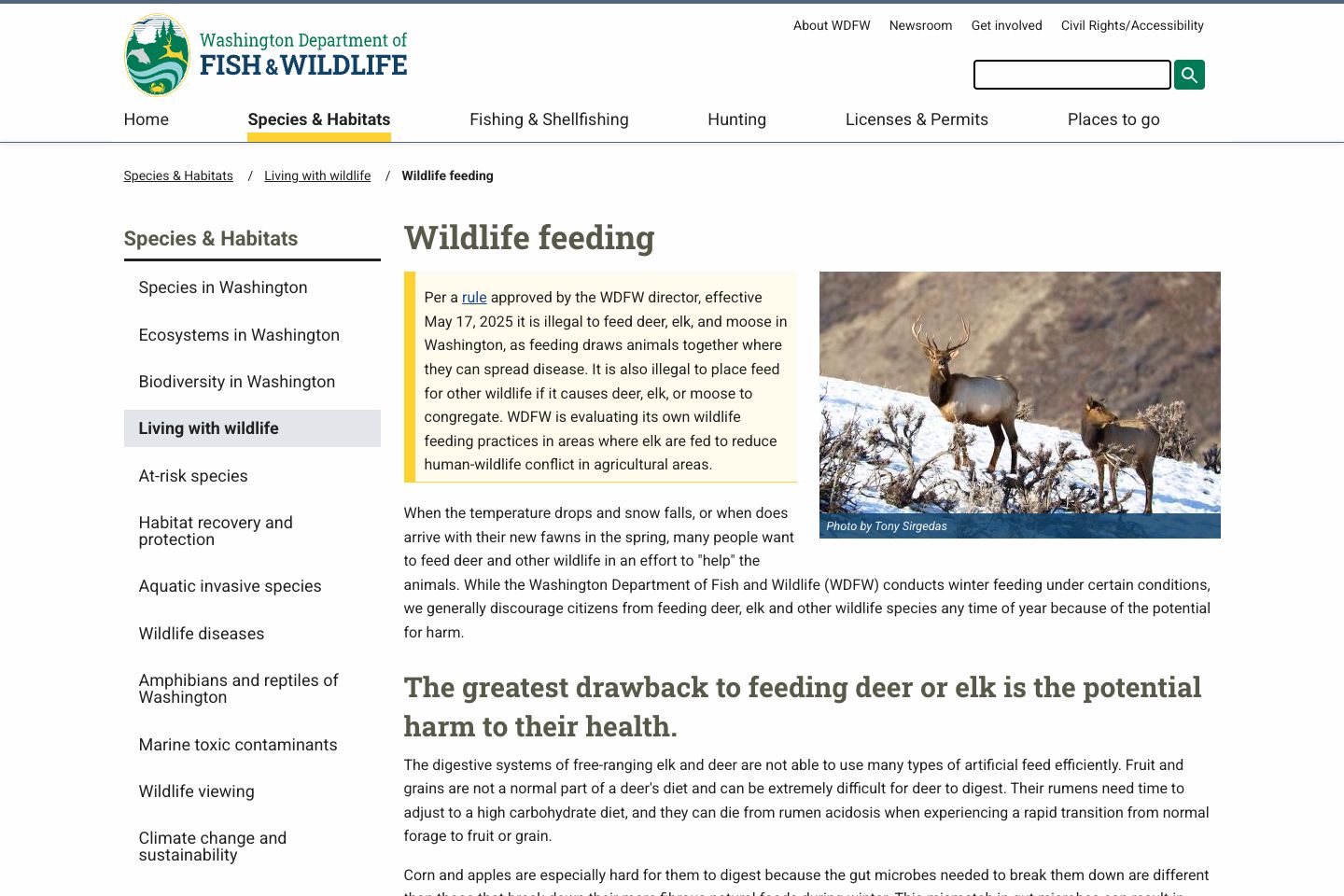
Do deer like bananas? Probably, in the sense that a whitetail will try almost anything soft and sweet in its path. But nobody has studied it, and no wildlife agency we could find recommends feeding deer fruit of any kind. The reason is the stomach. A rumen tuned to twigs and leaves can be thrown into acidosis by a sudden load of sugar or starch, and state agencies group fruit with corn and grain as the foods that do it. Add that putting food out for deer is restricted or illegal in a lot of places, and the banana question deserves a better answer than yes or no.
Key Takeaways
- Whitetails “regularly sample many species,” which is how they find new food, though most of their diet comes from a short list of plants (MSU Deer Lab).
- Washington’s wildlife agency says deer “can die from rumen acidosis when experiencing a rapid transition from normal forage to fruit or grain,” and that diet changes need to happen gradually, over weeks, so gut microbes can adjust (WDFW).
- The mechanism, in WDFW’s words: “The high amount of sugars in fruit, grain, and corn rapidly ferments in the stomach, causing an over-production of acid and damage to the stomach lining” (WDFW brochure, May 2021).
- Wisconsin DNR warns that “even a single feeding can cause rumen acidosis,” and notes that deer feeding is illegal in more than three-quarters of its counties (Wisconsin DNR, March 2023).
- In Washington, feeding deer, elk and moose became illegal statewide under a rule effective May 17, 2025 (WDFW).
Will a deer actually eat a banana?
We can’t point you to a study where a biologist handed deer bananas and counted. What is documented is the habit that makes the answer “probably.” Mississippi State’s Deer Lab describes whitetails as constant samplers that test unfamiliar plants, and says they readily use agricultural crops because those tend to be “nutritious, palatable, and digestible” (MSU Deer Lab). Soft fruit is already part of the summer menu: soft mast like berries makes up roughly 11 percent of the diet in summer (MSU Deer Lab).
So a banana on a stump in August? A curious deer will likely investigate it. That’s as far as the evidence goes. Anyone telling you deer “love” bananas is reporting what their backyard deer did, not what the species does.
Why do agencies say not to feed deer fruit?
Because a deer is a ruminant, and the rumen doesn’t take surprises well.
Think of the rumen as a fermentation vat run by microbes, and the mix of microbes matches whatever the deer has been eating. In winter that’s fibrous, woody browse. Wisconsin DNR explains that deer get through winter on a slower metabolism and a gut microbiome that shifts to handle winter foods (Wisconsin DNR). Washington’s agency says any change in diet has to be gradual, over weeks, so those microbes can catch up (WDFW).
What is rumen acidosis, and can a banana cause it?
Dump readily fermentable sugar or starch into a rumen that isn’t set up for it and the microbes that thrive on it multiply fast. Here’s how WDFW puts the result: the sugars “rapidly ferment in the stomach, causing an over-production of acid and damage to the stomach lining. Acid and bacterial toxins can then leak into the bloodstream, causing a painful death” (WDFW brochure). Wisconsin’s language is blunter: “Even a single feeding can cause rumen acidosis,” which can kill otherwise healthy deer (Wisconsin DNR).
Neither agency names bananas. They name fruit, grain and corn as a category, and a banana is a sugar-heavy fruit. One banana won’t drop a deer. A pickup bed of overripe produce dumped at the wood line in January is a different story.
| Food | What the agencies say | Source |
|---|---|---|
| Woody browse, forbs, acorns | The natural diet; more than 85% of what deer eat | MSU Deer Lab |
| Corn, grain | Not a normal diet; can cause acidosis, even from a single feeding | Wisconsin DNR, WDFW |
| Fruit (apples named; bananas not studied) | Grouped with grain as a rapid-transition acidosis risk | WDFW |
WDFW adds that fruit and grain lack the vitamins, minerals and fiber a deer needs, and compares it to feeding kids nothing but candy bars (WDFW).
Is it legal to feed deer bananas?
Depends on where you’re standing, and this is where the backyard question turns into a citation. Feeding and baiting rules run state by state and sometimes county by county. Washington banned feeding deer, elk and moose statewide in 2025 (WDFW). Wisconsin prohibits deer feeding in more than three-quarters of its counties and limits how much can go out where it’s allowed (Wisconsin DNR). Other states allow feeding but not hunting over it, or allow both.
Both rules were verified against the agency pages on November 4, 2026. Before you put out anything, check your own state. RAD is building a state-by-state baiting and feeding hub, and the argument over whether any of it should be legal lives in the Colosseum.
What should you feed deer instead?
Nothing, if you ask the agencies. WDFW: “The best way to help wild animals survive a severe winter is to promote year-round quality habitat” (WDFW). Wisconsin points landowners to habitat programs instead of feed piles (Wisconsin DNR). If you own the ground, that means browse, cover and native mast trees rather than a bunch of bananas.
Here’s the question to sit with: if the deer in your yard would eat a banana out of your hand, does that make the banana good for it, or just make the deer easy to kill?
Related reading on RAD:
- Is hunting deer over bait really hunting?
- Deer baiting laws by state
- Do deer like persimmons?
- Do deer eat meat?
The other side of it
To be fair to the banana crowd, the acidosis warnings are written for winter feed piles, not one piece of fruit tossed to a yard deer in July when its rumen is already running on soft, sugary growth. There’s no documented case of a banana killing a deer, and a whitetail that browses wild persimmons all fall is no stranger to sugar. The deer will probably be fine. The hunter who builds his whole season around a pile of produce from the discount bin, though, should at least admit he’s not pattern-hunting a buck. He’s running a fruit stand.
Keep reading
Latest deer news
Comments