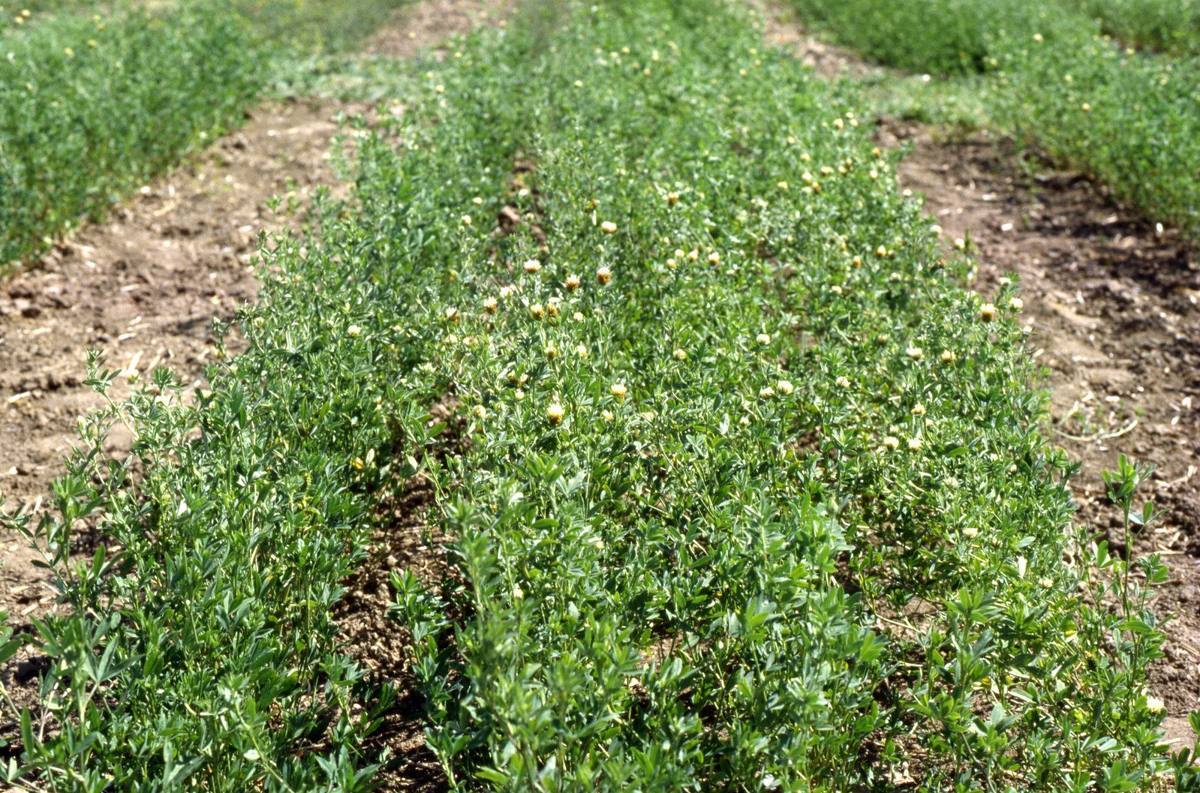
Red clover’s reputation as a multi-year deer plot hinges on where you plant it and how hard animals hit the crowns. Mississippi State University Extension’s forage profile calls red clover a short-lived perennial lasting about two years in the upper central and northern parts of Mississippi, while in the southern part of the state it behaves as an annual winter forage (Mississippi State University Extension Forages). The deer food-plot guide (M1591) still lists it L/P perennial with Kenland, Cherokee, Freedom, Starfire II, Cinnamon Plus, Dynamite, Q Medium Red, Redland, and Bulldog for September 1 through October 15 at 10 lb drilled or 15 lb broadcast pure live seed (Mississippi State University Extension). Longevity under heavy deer browse is therefore a management question: MSU says red clover has low tolerance to continuous grazing pressure and should be used on a rotational schedule with a September to early-October rest so root reserves rebuild (Mississippi State University Extension Forages). Skip that rest on a high-traffic kill plot and the “perennial” label expires in one hard season (Mississippi State University Extension Forages).
Key Takeaways
- About 2-year perennial life in northern/upper-central MS; annual habit in southern MS (Mississippi State University Extension Forages).
- M1591: L/P; 10 drilled / 15 broadcast PLS; Sept 1-Oct 15 (Mississippi State University Extension).
- Rotational grazing required; low tolerance to continuous pressure (Mississippi State University Extension Forages).
- Rest September and early October for winter survival and disease resistance (Mississippi State University Extension Forages).
- Peak productivity March-June; tolerates wet soils and acidity better than many legumes (Mississippi State University Extension Forages).
- Three grazings protect third-year stands better than four harvests (Mississippi State University Extension Forages).
Geography sets the ceiling
Northern and upper-central Mississippi managers can budget roughly two productive years from a well-managed red clover stand; southern Mississippi managers should treat it as a winter annual and plan reseeds (Mississippi State University Extension Forages). That regional split matters more than catalog copy promising multi-year plots everywhere (Mississippi State University Extension Forages). M1591’s L/P label is still correct for the species class, but local climate shortens the clock (Mississippi State University Extension; Mississippi State University Extension Forages).
Browse pressure and harvest counts
MSU states red clover should be used on rotational grazing because of low tolerance to grazing pressure (Mississippi State University Extension Forages). Removing forage with three grazings produces better third-year stands than four grazing harvests (Mississippi State University Extension Forages). Translating to deer plots: leave sanctuary rest periods, avoid keeping the same stand as the only green acreage all winter, and do not mow or hunt-pressure it into a continuous short carpet (Mississippi State University Extension Forages). Most productivity falls between March and June, so late-summer overuse steals the reserves the plant needs for the next winter (Mississippi State University Extension Forages).
September rest is non-negotiable
Rest the pasture in September and early October. If plants bloom before September 10, remove livestock so root reserves accumulate for winter survival and disease resistance (Mississippi State University Extension Forages). Grazing during August is the practical way to prevent premature bloom when hay or seed is not the goal (Mississippi State University Extension Forages). Deer plots that stay hammered through September trade away the second year MSU says is possible farther north (Mississippi State University Extension Forages).
Establishment that supports longevity
MSU notes red clover tolerates wet areas and soil acidity well and withstands more seedling shade than most legumes, easing sod seedings with tall fescue, orchardgrass, dallisgrass, or johnsongrass (Mississippi State University Extension Forages). Prepared seedbeds: plant about August 15 to September 30 at 1/4 to 1/2 inch; broadcast 12 to 15 lb; mixtures 4 to 8 lb (Mississippi State University Extension Forages). M1591’s deer complete-stand columns of 10/15 lb PLS sit in the same neighborhood for Sept 1-Oct 15 plantings (Mississippi State University Extension). Keep pH above 5.5 and fertilize from soil test; powdery mildew, southern anthracnose, and yellow mosaic risk is higher than for many other clovers (Mississippi State University Extension Forages).
Quality while the stand lasts
At about 50% bloom, MSU reports crude protein roughly 12 to 16% with TDN near 59 to 67% (Mississippi State University Extension Forages). Cut or graze on a schedule that protects crowns rather than chasing every leaf - quality drops if disease and continuous defoliation collapse the stand early (Mississippi State University Extension Forages).
Longevity decision rule
Expect about two managed years in northern Mississippi only if you rotate pressure and enforce the September rest; treat southern plantings as annuals; seed at M1591 10/15 lb PLS; and reseed when crowns thin instead of waiting for a phantom third year under continuous deer use (Mississippi State University Extension Forages; Mississippi State University Extension).
Bottom line
Red clover lasts near two years in northern Mississippi only with rotational rest and a September recovery window; under continuous deer pressure or in southern Mississippi, plan annual reseeds at M1591’s 10/15 lb PLS rates (Mississippi State University Extension Forages; Mississippi State University Extension).
The other side of it
The rest schedule comes straight from livestock management, and you can pull cows off a pasture in September, but nobody has figured out how to tell deer the plot is closed. The three-grazings-versus-four finding was about planned harvests, not a herd that shows up every night. On a farm with one green field, a September rest may be wishful thinking. Meanwhile the guy who hunts his clover every evening in September will blame the seed bag.
Keep reading
Latest deer news
Comments