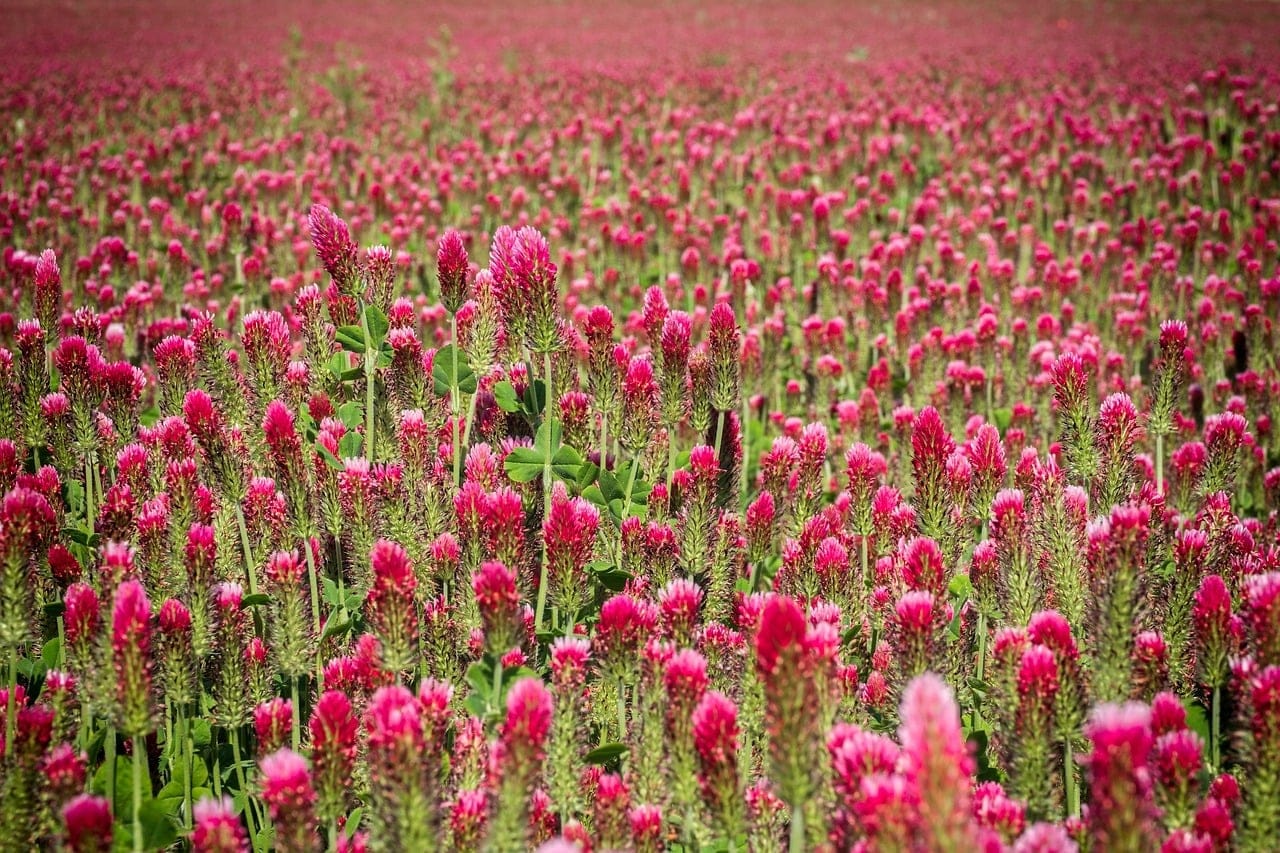
Mississippi State University Extension’s liming and fertilizing guide for wildlife food plots starts with a soil test - not a preference for manure or a blended bag (MSU Extension lime guide). When pH sits below about 6.0, a significant share of any fertilizer, organic or commercial, cannot be used efficiently by forages (MSU Extension lime guide). Manure can supply nitrogen, phosphorus, potassium, and organic matter, but nutrient ratios are variable and nitrogen can suppress clover nodulation if rates are high - the same caution Extension gives when legumes should be fixing their own nitrogen (MSU Extension lime guide; Mississippi State University Extension). Commercial fertilizers let you match the soil-test N-P-K recommendation precisely after lime is correct (MSU Extension lime guide). For clover deer plots, the winning sequence is soil test, lime, then the nutrient source that hits the report without drowning rhizobia in spare nitrogen (MSU Extension lime guide; Mississippi State University Extension).
Key Takeaways
- Soil test first; lime if pH < ~6.0 before arguing manure vs bag (MSU Extension lime guide).
- Low pH wastes fertilizer dollars regardless of source (MSU Extension lime guide).
- Clovers fix N when inoculated - excess N from manure can hinder that (MSU Extension lime guide; Mississippi State University Extension).
- Commercial blends match lab P-K recommendations tightly (MSU Extension lime guide).
- Manure adds OM but needs nutrient analysis for accurate rates (MSU Extension lime guide).
- Crop code 95 wildlife mixtures on MSU soil tests (MSU Extension lime guide).
Shared prerequisite: pH
MSU lists improved nutrient availability and better symbiotic nitrogen fixation among liming benefits for legumes in wildlife mixtures (MSU Extension lime guide). Spreading manure on acid ground without lime repeats the fertilizer-waste problem the guide documents (MSU Extension lime guide). Optimum pH favors early and effective nodulation for clovers, peas, and soybeans in seed mixtures (MSU Extension lime guide).
Commercial fertilizer strengths
Routine MSU wildlife soil tests recommend nitrogen, phosphorus, and potassium levels for the site (MSU Extension lime guide). Bagged fertilizers deliver those numbers when you can weigh and spread accurately (MSU Extension lime guide). For inoculated clovers on the M1591 cool-season list, managers typically emphasize phosphorus and potassium once establishment needs are met rather than high nitrogen rates that legumes can supply themselves (Mississippi State University Extension; MSU Extension lime guide).
Manure strengths and risks
Manure recycles nutrients and builds organic matter, but composition varies by species, bedding, and storage (MSU Extension lime guide). Without a manure analysis, you cannot know whether you are dumping excess N onto clovers that should be fixing their own (MSU Extension lime guide; Mississippi State University Extension). Hauling costs and uneven spreading also complicate matching a precise soil-test prescription (MSU Extension lime guide).
Decision framework
If the soil test calls for specific P and K with little N, a commercial blend or low-N compost matched to that report beats a high-N litter dump (MSU Extension lime guide). If organic matter is the limiter on sand, manure may earn a role after lime and after rates are calculated from an analysis (MSU Extension lime guide).
Sampling cadence
Test at establishment and about every two years on existing plots; sample 0-6 inches with multiple subsamples under crop code 95 for wildlife mixtures (MSU Extension lime guide). Re-test after heavy manure programs because nutrient balances shift (MSU Extension lime guide).
Cost honesty
MSU’s lime cost examples show why matching product to need matters; the same logic applies to manure hauling versus buying only the missing P or K (MSU Extension lime guide). Bulk aglime economics in that guide are a reminder that the cheapest-looking amendment is not always the right rate or chemistry (MSU Extension lime guide).
Bottom line
Choose manure or commercial fertilizer only after soil-test lime and nutrient recommendations for clover plots - excess manure nitrogen is not a substitute for inoculation and correct pH (MSU Extension lime guide; Mississippi State University Extension).
The other side of it
A hunter with a cattle neighbor and a free spreader would say precision is a luxury, and that organic matter on thin sandy ground is worth a little slop in the nitrogen column. The article also leans almost entirely on one Extension liming guide, which isn’t really a manure study. Funny how the guy most worried about nutrient ratios on his little clover patch still hasn’t mailed in a soil sample.
Keep reading
Latest deer news
Comments