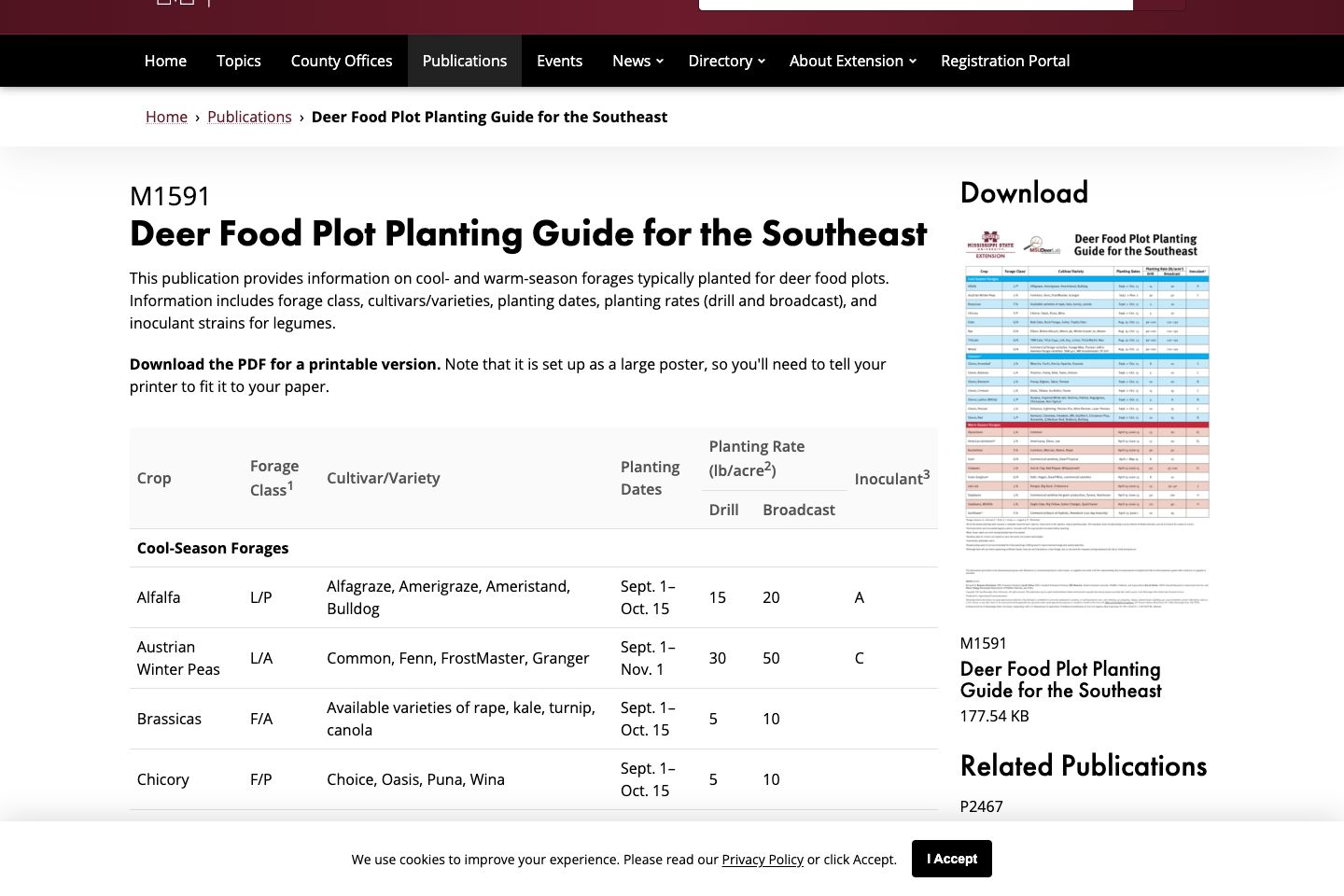
Clover without the right rhizobia is just a green weed competing with your brassicas for water and space. USDA NRCS Virginia’s Inoculation of Legumes sheet explains the symbiotic relationship: Rhizobia infect legume roots, form nodules, and fix nitrogen from soil air for the plant while taking carbohydrates from the host (USDA NRCS). Specific Rhizobium species are required for specific legumes. The alfalfa group (Rhizobium meliloti) covers alfalfa, black medic, burclover, button clover, and white and yellow sweetclover; the clover group (Rhizobium trifolii) covers alsike, crimson, red, and white clovers; the cowpea group (Bradyrhizobium japonicum spp.) covers cowpea, peanut, and lespedeza; the pea and vetch group (Rhizobium leguminosarum) covers big flower, common, and hairy vetch plus rough and winter pea; other listings include birdsfoot trefoil (Rhizobium loti), soybean (Rhizobium japonicum), crownvetch, and kura clover (USDA NRCS). Except for legumes listed under “other,” the same inoculum can be used for all species within an inoculation group (USDA NRCS). Large pink clover nodules indicate good nitrogen fixation (USDA NRCS). Fixation falls with nutrient deficiencies, excessive nitrogen applications generally over 20 pounds per acre, weed or grass competition that shades the legumes, low soil pH, drought, or extreme heat (USDA NRCS). Mississippi State’s deer plot guide separately tells managers to purchase pre-inoculated legume seed or inoculate with the appropriate inoculant before planting, including warm-season cowpeas and lab lab (MSU Extension).
Key Takeaways
- Match inoculant group to species (clover vs alfalfa vs cowpea vs pea/vetch) (USDA NRCS).
- Pink nodules signal effective nitrogen fixation (USDA NRCS).
- Excess N (>~20 lb/A), low pH, drought, heat, or shade cut fixation (USDA NRCS).
- Use fresh inoculant; store cool; inoculate same day; one package ~50 lb seed (USDA NRCS).
- Do not mix inoculated seed with fertilizer; re-inoculate if planting delayed >1 day (USDA NRCS).
- MSU: buy pre-inoculated seed or inoculate before planting (MSU Extension).
Why group matching matters
NRCS lists separate alfalfa, clover, cowpea, and pea/vetch Rhizobium groups because bacteria are species-specific (USDA NRCS). Putting alfalfa inoculant on crimson clover wastes the packet and leaves the stand nitrogen-hungry (USDA NRCS). Within a group the same inoculum works for every listed species, but kura clover, soybean, trefoil, and crownvetch sit outside that convenience rule and need their own listings (USDA NRCS). Cowpea-group plantings on land that only grew red clover still need cowpea inoculant (USDA NRCS).
Reading nodules in the field
Large pink nodules on clover roots indicate good fixation (USDA NRCS). Dig carefully weeks after emergence to check before blaming seed genetics for yellow plots (USDA NRCS). White or green nodules, or no nodules at all, point back to wrong inoculant, dead inoculant, low pH, or heavy starter nitrogen rather than a bad clover cultivar (USDA NRCS).
What shuts fixation down
Nutrient deficiencies, nitrogen applications generally over 20 pounds per acre, weed or grass competition that shades legumes, low soil pH, drought, and extreme heat all reduce fixation (USDA NRCS). Lime and weed control are inoculation partners, not afterthoughts (USDA NRCS). Managers who dump high nitrogen on a new clover mix to “green it up” can suppress the very nodules they paid for (USDA NRCS).
On-farm inoculation steps
When inoculant is purchased, check the label for the legume listing and the expiration date (USDA NRCS). Always use fresh inoculant, store it in a cool place, and inoculate legume seeds just prior to seeding; one package should inoculate about 50 pounds of seed (USDA NRCS). Make seed sticky so inoculant adheres, add inoculant when seed is slightly damp, plant soon after inoculation, and keep seed out of the sun (USDA NRCS). Do not mix inoculated seed with fertilizer, and if planting is delayed more than one day after adding inoculant, re-inoculate (USDA NRCS). A slight soil cover and soil moisture improve inoculant survival after planting (USDA NRCS).
Pre-inoculated seed caveats
Commercially pre-inoculated seed applies an adhesive and then the inoculant, aiming for a higher rhizobium population on the seed and longer survival in the soil (USDA NRCS). Calibrate the seeder using the inoculated seed and plant as soon as possible (USDA NRCS). MSU still frames the choice as purchase pre-inoculated seed or inoculate with the appropriate inoculant before planting warm- and cool-season legumes (MSU Extension).
Deer-plot workflow
Soil-test and correct pH first, choose the inoculant group for your clover, alfalfa-family, cowpea, or vetch mix, inoculate or verify pre-inoculation, then seed the same day (USDA NRCS; MSU Extension). Skip heavy starter nitrogen that can suppress nodulation above about 20 pounds per acre (USDA NRCS). If the field has not hosted the same inoculant group recently, treat it as a new sowing and inoculate again rather than trusting leftover soil rhizobia (USDA NRCS; MSU Extension).
Bottom line
Match Rhizobium group to your clover, cowpea, or vetch; inoculate fresh the same day; protect pink nodules from low pH, shade, sun-killed inoculant, fertilizer mixes, and excess nitrogen (USDA NRCS; MSU Extension).
The other side of it
A manager who has grown white clover on the same ground for years will tell you the soil already carries clover rhizobia, and the article itself only insists on a fresh packet when the field hasn’t hosted that group recently. The NRCS sheet is general farm guidance, not a deer-plot trial, and it puts low pH and shade on the same list of fixation killers. Skipping the packet is still a gamble, and the guy who skips it is first to blame the seed company when his plot goes yellow.
Keep reading
Latest deer news
Comments