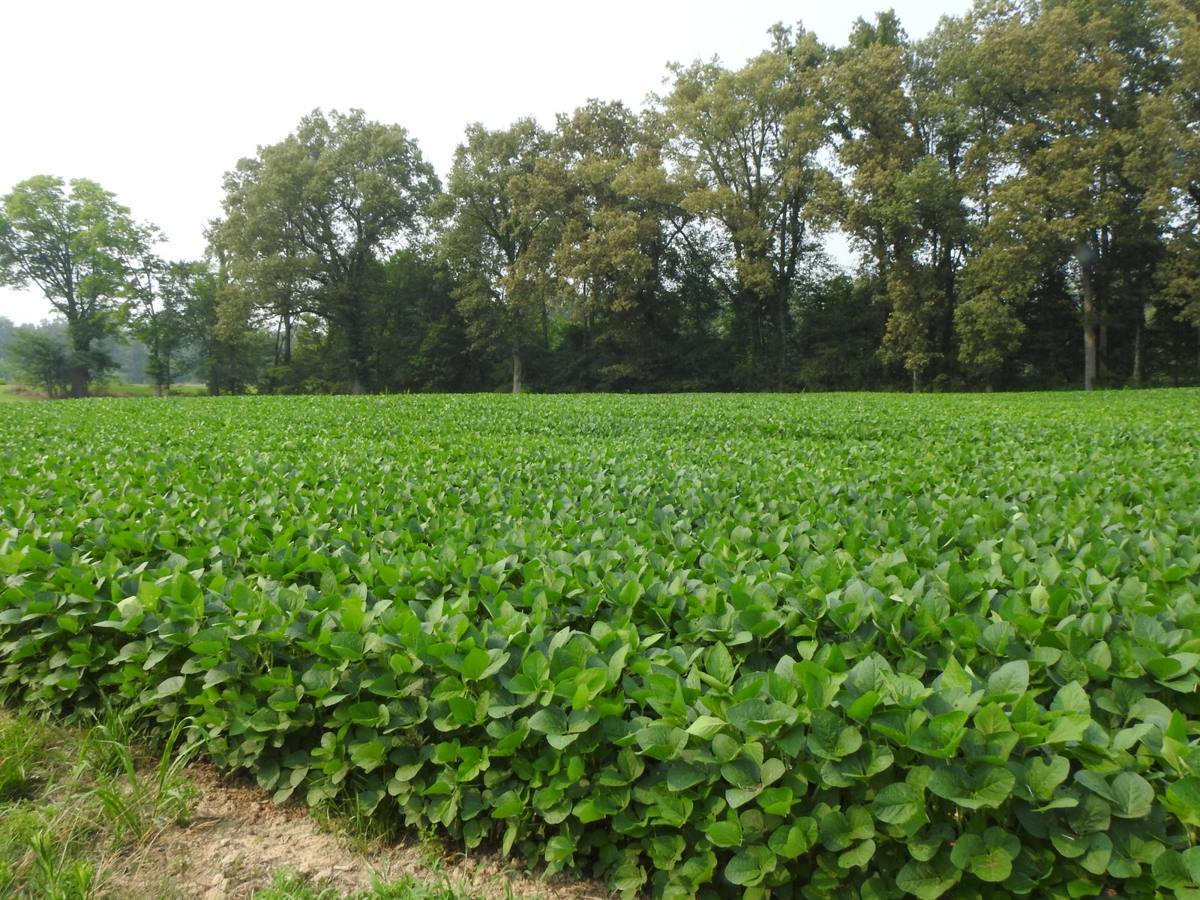
Eagle Claw appears on Mississippi State University Extension’s wildlife soybean line when managers want a browse-oriented bean instead of a grain-yield monoculture. M1591 lists wildlife soybeans L/A annual with Eagle Claw, Big Fellow, Game Changer, and Quail Haven at 20 lb drilled or 40 lb broadcast for April 15 through June 15, while grain soybeans on the same poster run 50 lb drilled or 100 lb broadcast with commercial grain cultivars, Tyrone, and Hutcheson (Mississippi State University Extension). Both rows use inoculant H (Mississippi State University Extension). P2111’s wildlife soybean profile describes a trailing/climbing warm-season annual legume that provides excellent forage for deer and rabbits and seed for quail and turkeys, planted April 15 through June 15 (MSU Extension P2111). Browse-tolerance claims on a bag still have to sit inside those rate and class facts - Eagle Claw is the wildlife column, not a magic shield against infinite deer density (Mississippi State University Extension; MSU Extension P2111).
Key Takeaways
- Wildlife soybeans: Eagle Claw, Big Fellow, Game Changer, Quail Haven; 20/40 lb (Mississippi State University Extension).
- Grain soybeans: 50/100 lb commercial/Tyrone/Hutcheson (Mississippi State University Extension).
- Both Apr 15-Jun 15; inoculant H; L/A (Mississippi State University Extension).
- P2111: trailing/climbing; excellent deer/rabbit forage (MSU Extension P2111).
- May need towers (sunflower footnote 8) when vines climb (Mississippi State University Extension).
- Plot size still limits browse pressure (MSU Extension P2111).
Two columns on one poster
M1591 deliberately splits grain versus wildlife soybean rates - 50/100 versus 20/40 - so managers do not plant grain populations when forage architecture is the goal (Mississippi State University Extension). Eagle Claw lives in the lighter wildlife column (Mississippi State University Extension).
What browse tolerance can and cannot mean
Wildlife cultivars are selected for forage use under animal pressure, but P2111 still implies adequate acreage for warm-season legumes under high deer density (MSU Extension P2111; Mississippi State University Extension). A one-acre Eagle Claw patch beside a bedding thicket can be erased regardless of cultivar marketing (MSU Extension P2111).
Trailing habit and towers
P2111’s trailing/climbing description aligns with M1591 footnote 8’s call for sunflower structure under vining soybeans (MSU Extension P2111; Mississippi State University Extension). Pairing Eagle Claw with a tower crop is consistent with that guidance when vines need lift (Mississippi State University Extension).
Establishment basics
Plant April 15 through June 15, inoculate with H, and use 20/40 lb PLS-aware rates for wildlife beans (Mississippi State University Extension). P2111 soil adaptation spans most soil types with pH about 5.5-7.0 (MSU Extension P2111).
Grain beans when seed is the goal
If mature beans for wildlife seed matter more than leafy browse, M1591’s grain column at 50/100 lb is the matching tool - not Eagle Claw’s forage rate (Mississippi State University Extension).
Claim rule
Treat Eagle Claw as M1591’s 20/40 lb wildlife soybean option for forage architecture, inoculate, size acres to pressure, and add towers when vines need structure - do not read the name as unlimited browse insurance (Mississippi State University Extension; MSU Extension P2111).
Inoculant H for both soybean types
M1591 assigns inoculant H to both grain and wildlife soybean rows (Mississippi State University Extension). Skipping inoculation undermines any browse-tolerance marketing printed on the bag (Mississippi State University Extension). Fresh inoculant matched to soybeans is cheaper than reseeding a failed nodulation stand in June heat (Mississippi State University Extension).
Strip width under pressure
P2111’s warm-season guidance and high-density warnings for related legumes apply here: narrow strips next to bedding cover get hit first (MSU Extension P2111). Wider Eagle Claw acreage or alternating sorghum strips spreads browse so the wildlife cultivar can express whatever tolerance it has (MSU Extension P2111; Mississippi State University Extension).
Bottom line
Plant Eagle Claw in M1591’s wildlife soybean 20/40 lb column with inoculant H for browse-oriented forage, size plots to deer density, and use towers when vines climb (Mississippi State University Extension; MSU Extension P2111).
The other side of it
The MSU sources lump Eagle Claw in with three other wildlife beans without ranking any of them, so this article can’t tell you whether its browse tolerance is real or oversold. A manager who has watched it hold up in his own plots isn’t wrong just because a poster doesn’t confirm it. The guy whose one-acre patch got erased beside a bedding thicket, though, should count deer before he blames the bean.
Keep reading
Latest deer news
Comments