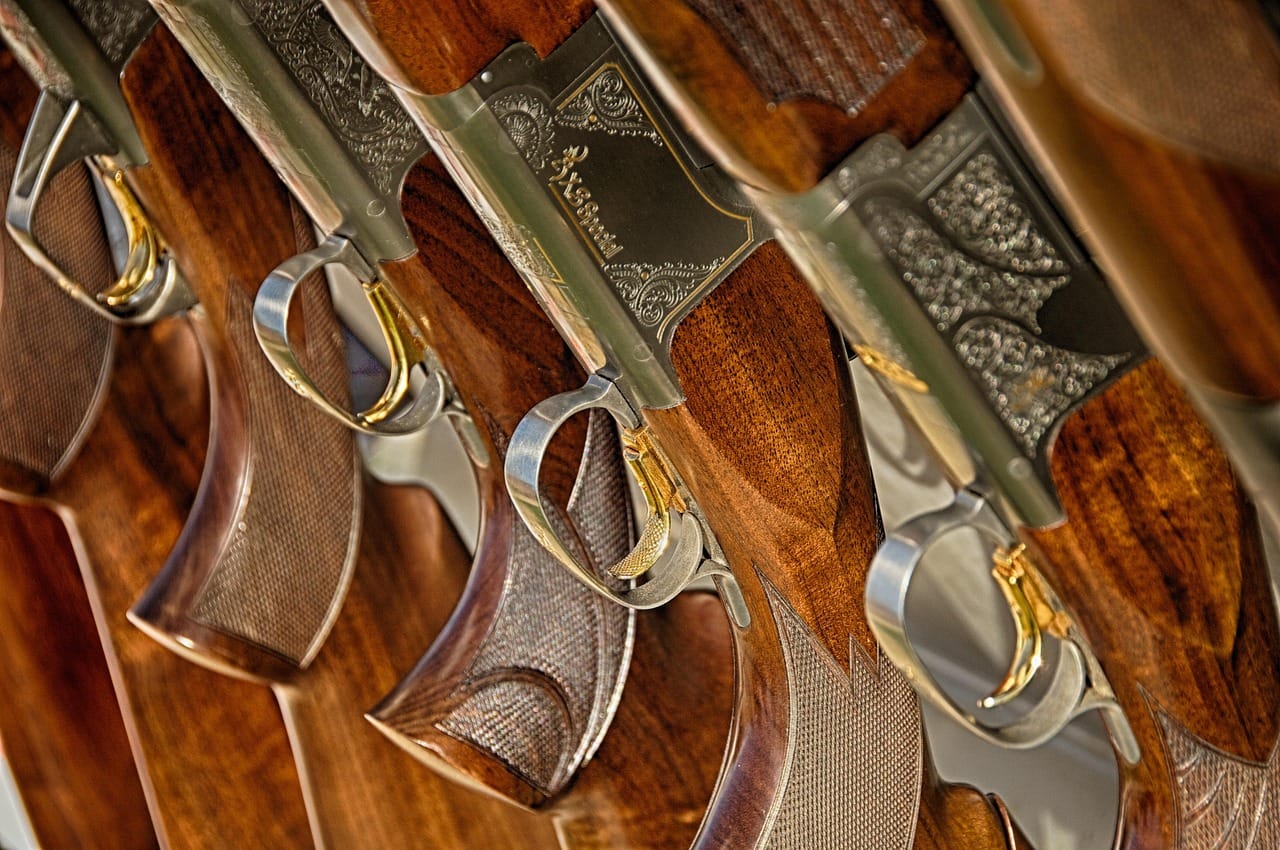
Yes. A price-fixing lawsuit filed Nov. 23, 2026, in federal court in New Hampshire accuses six major gunmakers, Bass Pro Shops and Cabela’s of agreeing since 2015 to keep retail gun prices high, and the guns it covers include the bolt-action rifles many deer hunters carry. It is a proposed class action, so the claims are allegations, no class has been certified and no court has ruled on anything.
Key Takeaways
- The case is William Foster v. Sig Sauer Inc. and others, No. 1:26-cv-00995, filed Nov. 23, 2026, in the U.S. District Court for the District of New Hampshire (complaint).
- Defendants are Sig Sauer, Smith & Wesson Brands, Sturm, Ruger & Co., Glock, FN America, Beretta U.S.A., BPS Direct (Bass Pro Shops) and Cabela’s (complaint).
- The proposed class is anyone in the U.S. who bought one of those makers’ pistols, revolvers, rifles or shotguns at retail, not for resale, from Jan. 1, 2015, to the present (complaint).
- The complaint uses Ruger’s American Rifle Generation II and Savage’s Axis 2 Pro, both .308 bolt-action hunting rifles, as an example of interchangeable guns (complaint).
- Courthouse News reported the companies did not immediately respond to requests for comment (Courthouse News).
Who is being sued, and by whom?
The plaintiff is William Foster. The complaint says he “is an individual and an Alabama resident” who “purchased from Defendant BPS one or more Retail Firearms produced by Manufacturer Defendants,” and that he “paid higher prices” as a result. He sued Sig Sauer, Smith & Wesson Brands, Sturm, Ruger & Company, Glock, FN America, Beretta U.S.A., BPS Direct and Cabela’s, plus 20 unnamed defendants, in the District of New Hampshire, where Sig Sauer is based (complaint).
The law firm DiCello Levitt, one of the plaintiff’s firms, announced the filing and called it “the first nationwide antitrust class action challenging a price-fixing conspiracy among major firearm manufacturers and retailers” (DiCello Levitt release). That is the plaintiff’s lawyers describing their own case.
What does the lawsuit claim the companies did?
The core claim is about minimum advertised price policies, usually called MAP. The complaint says the manufacturers and big retailers “collectively agreed to adopt, maintain, and vigorously enforce minimum advertised price” policies starting around Jan. 1, 2015. It says stores that advertised below those prices faced penalties: “Violations exposed retailers and distributors to warnings, shipment suspensions, do-not-sell designations, and termination of access to the manufacturer’s products” (complaint).
Bass Pro sits near the center of the story the complaint tells. It alleges that in or around September 2017, “BPS reinforced this shared understanding through a supplier meeting at its headquarters in Springfield, Missouri, followed by separate manufacturer-specific discussions.” The same paragraph notes Bass Pro closed its roughly $5 billion purchase of Cabela’s that month (complaint).
The complaint also blames industry marketing for propping up demand, saying that through it “the conspirators were able to maintain high consumer demand and entrench higher prices for Retail Firearms” (complaint). Courthouse News described the legal claims this way: “The three-count complaint is comprised of violations of federal antitrust, state antitrust and consumer protection laws, and one count of unjust enrichment” (Courthouse News).
Does it cover deer rifles?
Yes, by its own terms. The case covers “pistols, revolvers, rifles, and shotguns” sold at retail. The complaint says “Ruger and S&W are the second and fourth, respectively, largest rifle manufacturers in the United States,” and that Ruger sells guns “under the Ruger, Marlin, and Glenfield brands” (complaint).
Deer hunting is named outright. The complaint argues buyers see competing guns as substitutes and gives the example of “a rifle for deer hunting.” It then points to “Ruger’s American Rifle Generation II and Savage’s Axis 2 Pro, which are both bolt-action hunting rifles offered in .308 Winchester” (complaint).
Savage Arms is not a named defendant. The complaint names Smith & Wesson Brands and notes, “In October 2026, S&W acquired Savage Arms Inc. for $160 million” (complaint). RAD covered that sale in Smith & Wesson’s purchase of Savage Arms. The complaint does not spell out whether Savage-made rifles fall inside the proposed class.
What are the plaintiffs asking for?
The proposed class is “All persons and entities in the United States and its territories, from January 1, 2015 through the present (the “Class Period”), who purchased at the retail level, not for resale, Retail Firearms produced by a Manufacturer Defendant.” The complaint asks for a court order stopping the alleged conduct, for “treble the amount of damages” and for a jury trial (complaint).
It also asks the court to direct that notice “be given to the Class, once certified” (complaint). There is nothing for a hunter to sign up for or claim today. The case was filed one day before this story.
Have the companies answered?
Not publicly, as of Tuesday. Courthouse News reported, “Representatives for the gun companies and retailers did not immediately respond to requests for comment Tuesday morning” (Courthouse News). RAD did not find a statement from any defendant by Tuesday afternoon.
Has this happened with bows?
Yes. Joseph Santarlas filed a proposed class action over archery gear in federal court in Utah, naming Hoyt, the Archery Trade Association, Bowtech, Mathews, PSE, Bass Pro, Cabela’s, Dick’s Sporting Goods and others over MAP policies. The court stamp on that complaint reads “Filed 05/30/25” (Santarlas complaint).
On Oct. 16, 2025, the Judicial Panel on Multidistrict Litigation folded it and six similar suits into “IN RE: ARCHERY PRODUCTS ANTITRUST LITIGATION,” MDL No. 3160, and ordered that “the actions listed on Schedule A are transferred to the District of Colorado.” Santarlas is on that list (JPML transfer order).
Mathews asked the Utah court to toss the claims in July 2025. Its motion called MAP policies “a perfectly legal, common, and procompetitive tool used across many industries” and said MAPs “attempt to regulate only the price at which retailers advertise a manufacturers’ product,” not the price a buyer actually pays (Mathews motion to dismiss). Expect the gun defendants to make some version of that argument.
The other side of it
A complaint is one side’s story, written to survive a motion to dismiss, and this one leans hard on inference about what competitors understood from each other. Mathews’ answer in the archery case, that MAP policies are common and lawful on their own, is the obvious defense here too, and the real fight is over whether rivals agreed with each other. Until a judge rules on that, the only thing this case changes for a deer hunter is the knowledge that someone is asking a court whether the price on that rifle tag was set fairly.
Sources
- William Foster v. Sig Sauer Inc. et al., Class Action Complaint, Case 1:26-cv-00995 (D.N.H., filed 11/23/26), U.S. District Court for the District of New Hampshire (filing hosted by Courthouse News Service)
- Top gun manufacturers, outdoors shops hit with antitrust class action, Courthouse News Service
- DiCello Levitt Files Antitrust Class Action Alleging Firearm Price-Fixing by Major Manufacturers, Bass Pro Shops, and Cabela's, DiCello Levitt LLP (plaintiff's counsel)
- Santarlas v. Hoyt Archery et al., Proposed Class Action Complaint, Case 2:25-cv-00436 (D. Utah, filed 05/30/25), U.S. District Court for the District of Utah (via CourtListener RECAP)
- Transfer Order, In re: Archery Products Antitrust Litigation, MDL No. 3160 (J.P.M.L., filed 10/16/25), U.S. Judicial Panel on Multidistrict Litigation (order PDF hosted by Nigh Goldenberg)
- Defendant Mathews Archery, Inc.'s Motion to Dismiss, Case 2:25-cv-00436 (D. Utah, filed 07/10/25), U.S. District Court for the District of Utah (via CourtListener RECAP)
Comments