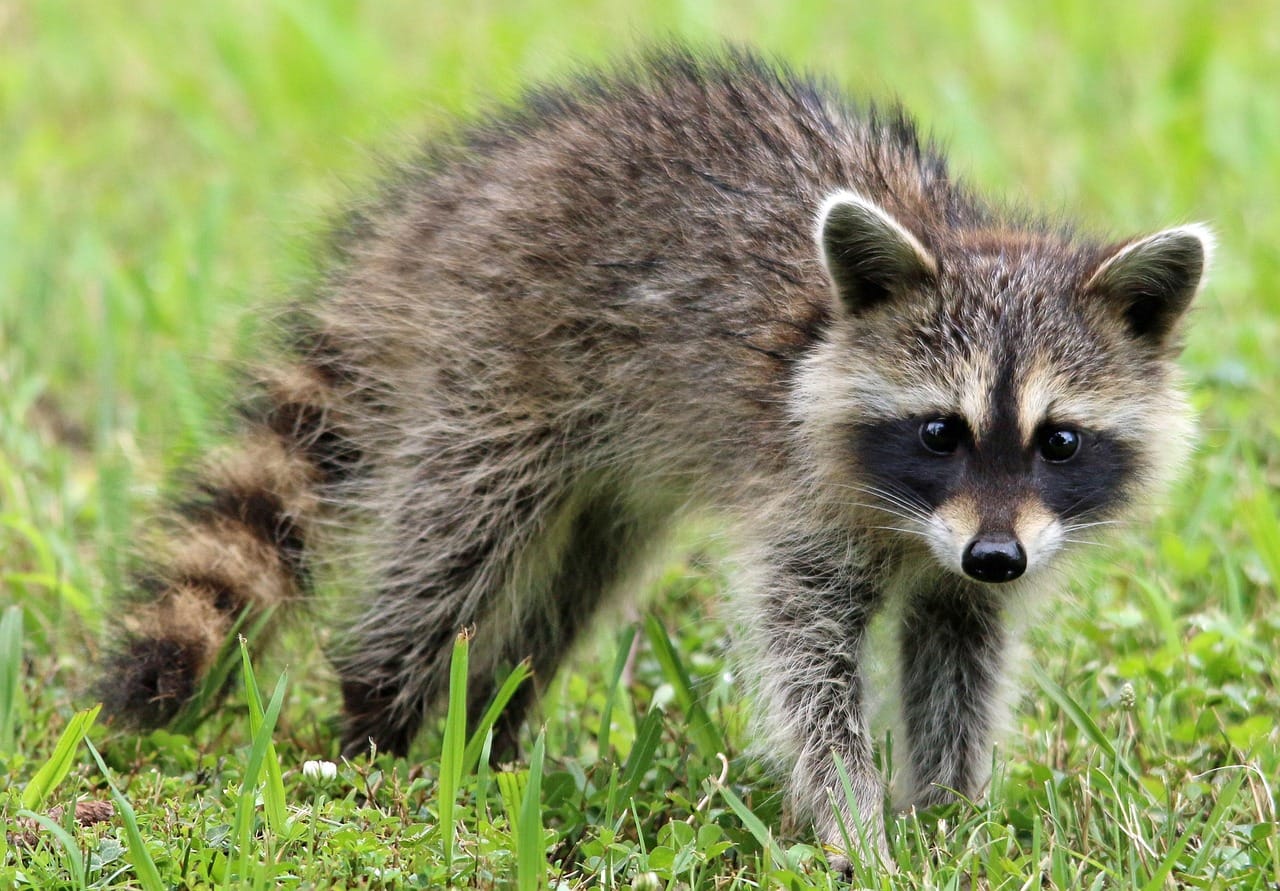
How to keep raccoons out of deer feeder corn comes down to blocking their routes to the spinner and cutting off the free food after dark. Field & Stream calls raccoons “among the most destructive varmints to visit deer feeders,” and says some “are smart enough to hang on to the bottom of feeder with three feet while rotating the spinner with the available foot.” The fix is layered: a cage around the spinner, guards on the legs, no overhanging limbs, a daylight feeding schedule and, for protein feeders, a hood that closes under a raccoon’s weight.
Key Takeaways
- Raccoons climb the legs or drop from limbs, then spin the plate by hand to dump corn.
- A steel cage around the spinner and motor is the first fix. Field & Stream says a good built-in guard beats homemade chicken wire.
- Guard or sleeve every leg and move the feeder away from overhanging branches.
- Raccoons are mostly active at night, so set your timer for daylight feedings.
- For protein feeders, weight-activated hoods block raccoons while letting deer eat.
- Check your state’s feeding and baiting rules, and its furbearer rules before trapping.
Why raccoons hit deer feeders so hard
They’re built for it. The Missouri Department of Conservation describes raccoons as “Expert climbers and good swimmers” that are “curious, clever, and cunning,” and says they are “Most active at night” (Missouri Department of Conservation). Their diet includes “corn, acorns, pecans, and other nuts,” plus nearly anything else they can catch.
And they show up in numbers. The Daily Leader in Brookhaven, Mississippi, reported that “Research conducted by Mississippi State University’s Deer Lab found 40 percent of visitors to feeders were raccoons. Deer made up 25 percent of the visitors” (Daily Leader). The same story notes “Raccoons are nest predators for turkeys,” and that a corn feeder concentrates “raccoons, coyotes and bobcats in an area where their prey visits.”
Raccoons do more than eat. Field & Stream warns they “can also chew through wiring, causing feeder failure” (Field & Stream).
How to keep raccoons out of deer feeder spinners: cage it
The spinner is the target. Feeder maker Spin-Cast says raccoons “hang on the spinner and dump it all night long,” costing corn, batteries and motors. Its varmint guard “creates a physical barrier around your spinner and control unit so varmints can’t reach it” (Spin-Cast Wildlife Feeders). Its version is a “14” x 14” x 14” steel cage” with “1.5” grid spacing,” which the company says “blocks raccoons while maintaining proper feed throw.” Those are the maker’s specs and claims.
Field & Stream’s advice on homemade fixes: “a good built-on varmint guard nearly always works better than the chicken wire and zip tie solution you might be considering.” If you’re shopping for a new feeder, look for one with a varmint guard already on it.
Block the climb
A cage protects the spinner, but don’t let the coon get there in the first place. Trap maker OcuTrap’s field guide says raccoons “may climb the feeder legs, drop from a nearby limb, or hang from the motor housing” (OcuTrap). Its list of fixes:
- “Varmint guards or baffles on every leg”
- “Slick pipe sleeves on legs”
- “Hanging the feeder with a baffle above”
- “Moving the feeder away from overhanging limbs”
It also warns that “A partial fix may simply send a determined raccoon to another leg or an overhanging limb.” Guard all the legs, not just the one you saw on camera.
Fencing the whole feeder is harder than it sounds. Field & Stream says “it’s nearly impossible to fence a feeder to keep raccoons out but let deer in.”
Change the schedule
Because raccoons work at night, feed when they don’t. OcuTrap says to “set the timer to throw only during daylight,” so “Deer have time to reach the feed while less corn remains on the ground after dark.” It cautions that “Timing alone may not stop a raccoon that can operate the spinner,” so pair it with a cage.
Field & Stream notes that photocell feeders “will automatically feed at about 30 minutes after dawn and 30 minutes before dusk,” and that “If you want to feed more than twice a day, a digital timer is your best option.” The evening throw is the one raccoons will find, so watch your camera and consider dropping it.
Protein feeders: weight-activated hoods
Chute-style protein feeders are a different problem since there’s no spinner to cage. Feed Bandit sells CoonHood, which it describes as a device that “allows the unwanted animal’s weight to lower the hood blocking access to the feed,” while “the hood remains in the upright neutral position which allows the larger intended animals to eat freely” (Feed Bandit). The seller claims “raccoons are responsible for the consumption (or waste) of 30-40% of feed from non-guarded protein feeders.” That’s a manufacturer estimate, not a study.
Trapping: check the law first
If guards don’t work, trapping is the next step, but raccoons are regulated. MDC says “Hunters and trappers may pursue this furbearer species during its prescribed season,” and that Missouri law “allows landowners to control raccoons that have become a nuisance.” Other states have their own rules. OcuTrap adds a practical point: “A trap you cannot check should not be set.”
Feeding deer itself is illegal in some states and counties, so check that before you buy hardware. See deer baiting laws by state and feeder timers and attractant versus bait definitions. Hogs at the feeder are their own headache; see feral hogs at deer bait sites.
FAQ
How do you keep raccoons out of a deer feeder? Cage the spinner, guard every leg, clear overhanging limbs and set the timer for daylight only. Use weight-activated hoods on protein feeders.
Will a timer alone stop raccoons? Usually not. A raccoon that can spin the plate can get corn any time, so combine a daylight schedule with a spinner cage.
Do homemade chicken wire guards work? Field & Stream says a good built-in varmint guard “nearly always works better” than chicken wire and zip ties.
Can I trap raccoons at my feeder? Raccoons are a regulated furbearer. Check your state’s season and nuisance-control rules first.
The other side of it
Some managers say the real fix is to pull the feeder. The same Mississippi report that found raccoons outnumbering deer at feeders argues habitat work is “more cost effective than filling a feeder.” That’s a fair point if you’re feeding mainly to grow deer, since you’re also feeding the turkey nest raiders. If you keep feeding, keep it locked down and in daylight. The hunter who keeps filling an unguarded spinner feeder every Saturday is running the best-fed raccoon operation in the county.
Keep reading
Latest deer news
Sources
- 10 Things To Know Before You Buy A New Deer Feeder, Field & Stream (The Editors)
- Raccoon (Field Guide), Missouri Department of Conservation
- Ditch the feeders for habitat management, better deer movement, The Daily Leader, Brookhaven, Miss. (Hunter Cloud, Oct. 10, 2023)
- Deer Feeder Varmint Guard Cage Basket, Spin-Cast Wildlife Feeders (manufacturer)
- "Raccoons Raiding Your Deer Feeder: Stop the Nightly Drain" (Oct. 5, 2026), OcuTrap (trap manufacturer)
- CoonHood Varmint Guards, Feed Bandit (retailer of CoonHood)
Comments