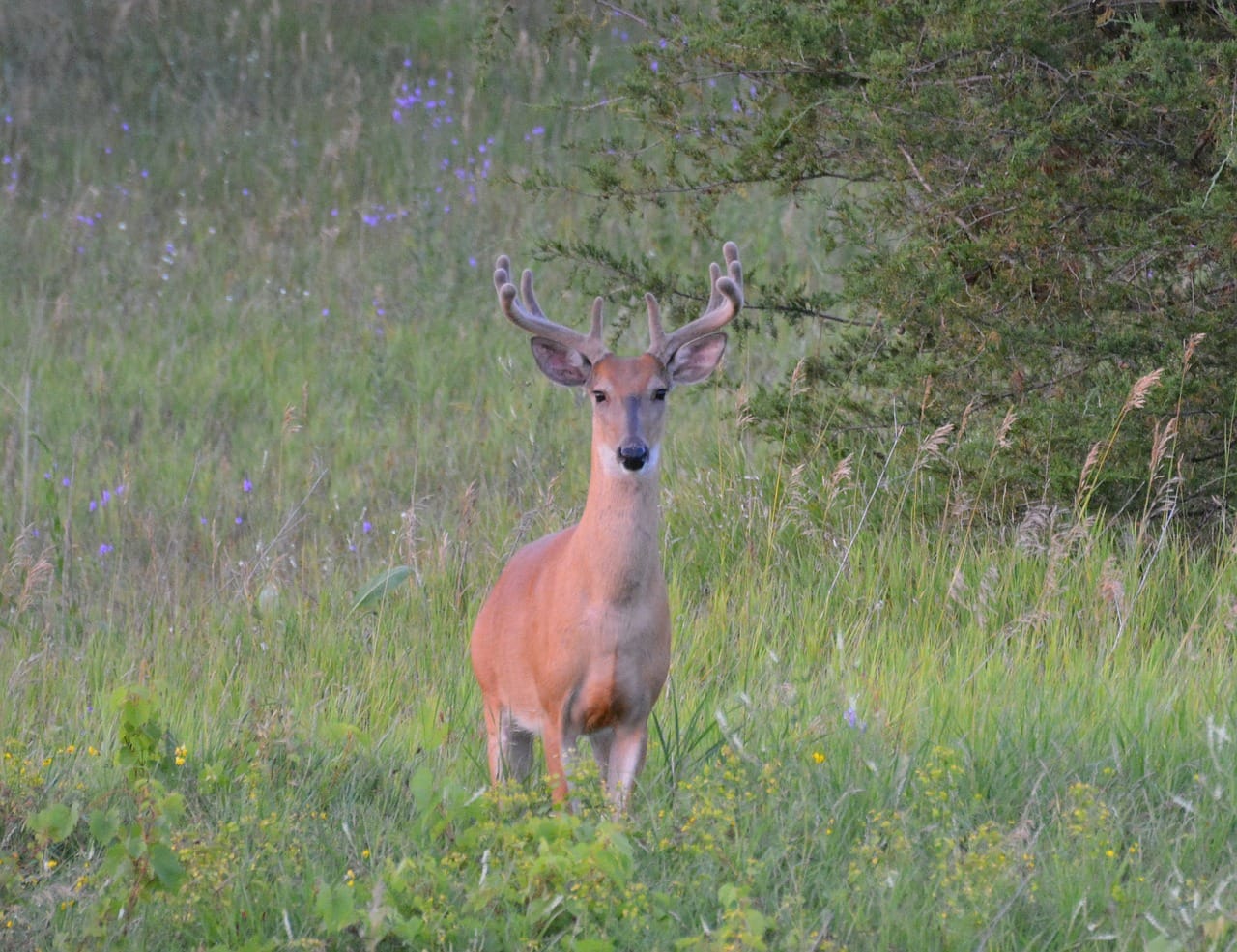
Antlers are the only mammalian bones that grow outside the body and must be fed through skin. Utah Division of Wildlife Resources mule deer working-group guidance explains that growing antlers receive nutrients via abundant blood flow in velvet, making them warm to the touch, with arteries feeding growing tips before blood returns down the antler center (Utah Division of Wildlife Resources). Velvet arteries can constrict quickly when severed, a trait shared with umbilical arteries that limits blood loss (Utah Division of Wildlife Resources). Grooves on hardened beams largely record where those major velvet vessels once lay (Utah Division of Wildlife Resources). After breeding-season hormones shift, bone weakens at the antler-pedicle junction and hard antlers cast before a new velvet cycle begins from the pedicle (Utah Division of Wildlife Resources).
Key Takeaways
- Velvet carries nutrient-rich blood to growing antler tips (Utah Division of Wildlife Resources).
- Blood returns down the antler core after feeding the growth zone (Utah Division of Wildlife Resources).
- Velvet arteries constrict rapidly when cut (Utah Division of Wildlife Resources).
- Beam grooves preserve old vessel paths (Utah Division of Wildlife Resources).
- Hormone-driven junction weakening precedes cast (Utah Division of Wildlife Resources).
- New growth resumes from the permanent pedicle (Utah Division of Wildlife Resources).
Why the pedicle is the plumbing hub
Antlers do not sprout as free-floating bone; they grow from permanent pedicles on the frontal bone and depend on vascular delivery while velvet is intact (Utah Division of Wildlife Resources). Utah’s fact sheet stresses that these external bones exist outside the body yet still need blood-borne nutrients during the soft phase (Utah Division of Wildlife Resources). Interrupt that supply and growth stops; complete calcification later closes vessels at the pedicle junction so velvet dies and sheds (Utah Division of Wildlife Resources).
Flow path tip to core
Arteries in velvet feed the active growth zone at the tips; after nutrients and signaling compounds promote cell division, blood returns through the antler core (Utah Division of Wildlife Resources). That one-way nutritional circuit explains why damaged velvet can stall a tine and why late-summer velvet antlers feel hot compared with hard antlers (Utah Division of Wildlife Resources). Hardened antler texture still shows the vessel grooves left while blood was flowing (Utah Division of Wildlife Resources).
Emergency shutoff when velvet is cut
Utah notes velvet arteries share with umbilical arteries the ability to constrict quickly when severed, reducing hemorrhage (Utah Division of Wildlife Resources). That physiology is why a buck that tears velvet on brush may bleed dramatically for a short time then slow, and why velvet removal in farming contexts relies on rapid vascular shutoff plus analgesia protocols outside the hunter’s remit (Utah Division of Wildlife Resources).
Hormone calendar around cast and regrowth
After the breeding season, declining testosterone weakens bone at the antler-base junction so antlers fall; growth resumes soon afterward from the pedicle as a new soft cartilaginous core under velvet (Utah Division of Wildlife Resources). Mineralization then replaces cartilage with bone until blood supply at the junction closes and velvet dries (Utah Division of Wildlife Resources). Hunters reading bloody December beams are seeing vessel stains and bark tannins, not active nutrient delivery (Utah Division of Wildlife Resources).
What this means for summer encounters
Velvet bucks are growing tissue fed by high blood flow; impacts that strip velvet waste a season’s vascular work (Utah Division of Wildlife Resources). Hard-antler fights use a dead mineral structure no longer nourished through velvet arteries (Utah Division of Wildlife Resources). Nutrition still matters upstream because blood only delivers what the diet and body stores provide (Utah Division of Wildlife Resources).
Bottom line
Pedicle-linked velvet arteries deliver nutrients to growing tips and return blood down the core until calcification shuts the system and antlers cast (Utah Division of Wildlife Resources).
The other side of it
It’s all one Utah mule deer fact sheet stretched over whitetails, and knowing the plumbing doesn’t change a single plot or shot. The piece even ends by admitting what matters is upstream, in diet and body stores. Meanwhile somebody at camp will still swear that red streak on a December rack is fresh blood from a fight, plumbing diagrams be damned.
Keep reading
Latest deer news
Comments