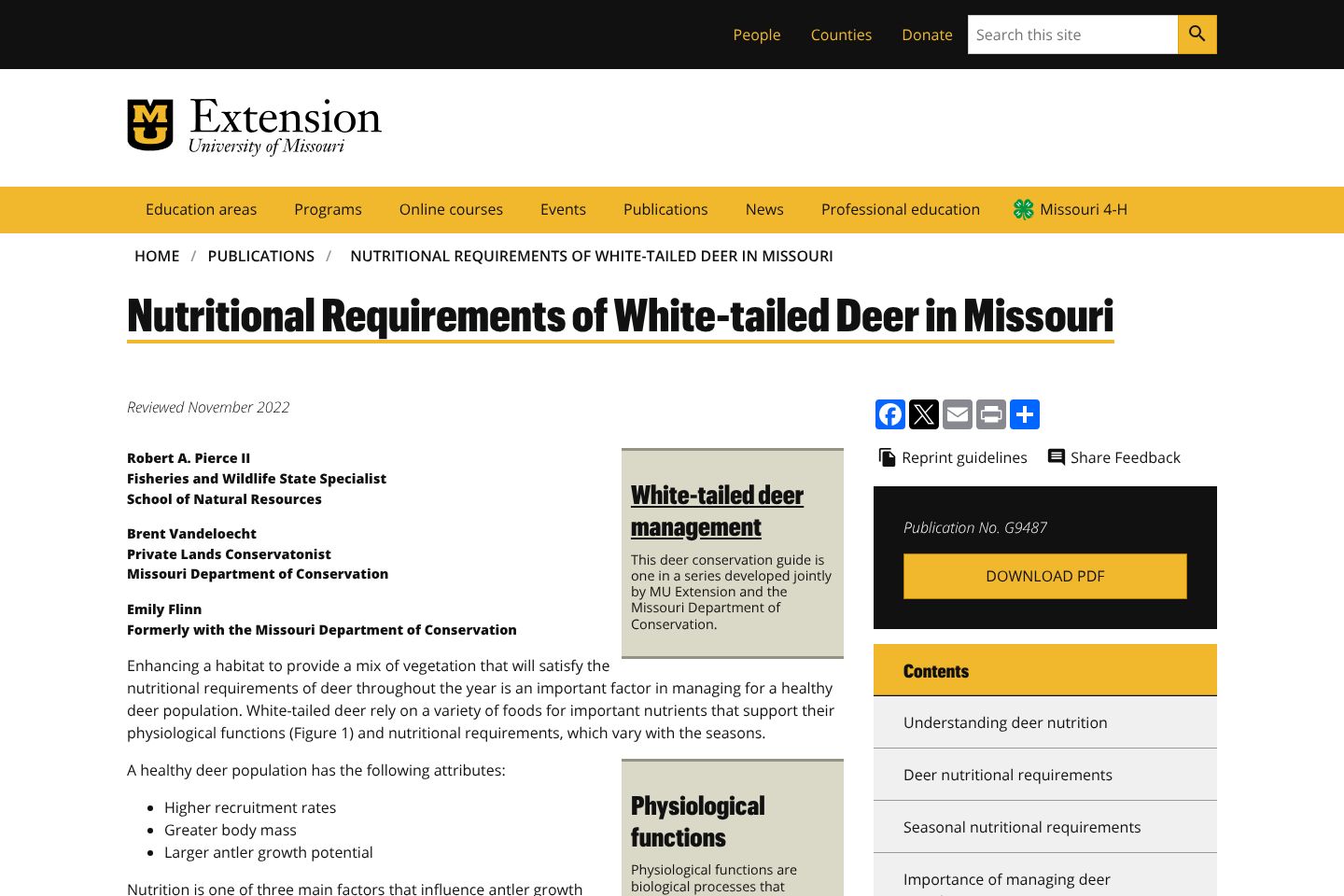
Lactation is the highest protein cost in a doe’s annual cycle: University of Missouri Extension lists 14 to 22 percent dietary protein while nursing, compared with 11 to 15 percent in late pregnancy and only 6 to 10 percent for adult maintenance (MU Extension G9487). White-tailed deer milk averages about 8.2 percent protein, and does raising twins face still higher demand (MU Extension G9487). That physiology is why late-summer browse and forb quality still decide fawn growth after spring green-up photos look perfect (MU Extension G9487; MU Extension G9493). Mississippi State Deer Lab spring-summer protein guidance for productive herds lands in the same mid-teens conversation even when the headline is antlers (MSU Deer Lab).
Key Takeaways
- Lactation requires 14-22% dietary protein (MU Extension G9487).
- Deer milk averages about 8.2% protein (MU Extension G9487).
- Twin litters raise lactation costs (MU Extension G9487).
- Late summer is a documented nutrition stress window (MU Extension G9487).
- Does nurse hidden fawns on brief visits (National Deer Association).
Translate the protein spike
MU Extension warns that milk quantity and quality likely decline when does miss protein targets during lactation (MU Extension G9487). Late pregnancy already lifts needs to 11 to 15 percent, but lactation is the sharper jump (MU Extension G9487). Yearling maintenance at about 11 percent shows how much extra a nursing adult is carrying relative to a non-lactating young deer (MU Extension G9487).
August is still a nutrition season
MU flags late summer among the most nutritionally stressful times of year even before winter (MU Extension G9487). Food-plot publication G9493 tells landowners to plant for stress periods when native vegetation is lacking or poor - typically late summer to early fall and mid- to late winter - expressly for pregnant or lactating does and antler-growing bucks (MU Extension G9493). Cool-season plots that peak only in spring leave a lactation gap (MU Extension G9493).
Litter size links back to doe condition
Illinois Learn to Hunt notes adult females usually produce twins while females in poor condition or younger fawns often produce a single offspring, with age and health shaping reproductive capacity (Illinois Learn to Hunt). Rut peaks in mid-November under photoperiod control, so next summer’s nursing load is scheduled the prior fall (Illinois Learn to Hunt). Some female fawns can breed at 7 or 8 months when condition allows, adding unusual lactation timing the following year (Illinois Learn to Hunt).
Hider beds still need milk trucks
National Deer Association coverage of Minnesota fawn research describes neonates hiding alone while does make brief nursing visits rather than remaining continuous company (National Deer Association). Those visits only provision fawns if the doe can synthesize milk - which returns to the 14 to 22 percent protein window (MU Extension G9487; National Deer Association).
Winter severity shows up in next summer’s milk
Minnesota DNR notes pregnant does have high nutritional demands in the last trimester and while nursing, and that early or late spring green-up influences fawn survival before and after birth (Minnesota DNR). A severe WSI winter that burns fat reserves leaves less margin for lactation when snow finally melts (Minnesota DNR; MU Extension G9487). Deep snow above 15 inches is called out as especially costly because travel burns reserves (Minnesota DNR).
Overlap with buck antler protein months
The same spring-summer months that demand 15 to 16 percent protein for antler growth are lactation months for does (MU Extension G9487). Property plans that hit mid-teens to low-20s protein in June through August serve both sexes without separate magic feeds (MU Extension G9487; MSU Deer Lab).
Bottom line
Treat August forage like a lactation project: hit 14 to 22 percent dietary protein, plan for twins, and keep nursing visits supplied (MU Extension G9487; MU Extension G9493; National Deer Association).
The other side of it
A skeptic would say nobody walking a property in August can actually measure whether does are getting 14 to 22 percent protein, so the target works better as a reason than as a recipe. MU’s own plot guide says to plant for stress periods when native vegetation is lacking or poor, which means places with good browse may not need a lactation project at all. Funny how every August nutrition crisis seems to come with a bag of something for sale.
Keep reading
Latest deer news
Sources
- Nutritional Requirements of White-tailed Deer in Missouri | MU Extension
- Enhancing White-Tailed Deer Habitats on Your Property: Food Plots | MU Extension
- Nutrition & Genetics | Deer Ecology & Management Lab | Mississippi State University
- National Deer Association (deerassociation.com)
- White-Tailed Deer Ecology | Illinois Learn to Hunt | Illinois Natural History Survey | Prairie Research Institute
- How winter impacts deer survival | Minnesota DNR
Comments