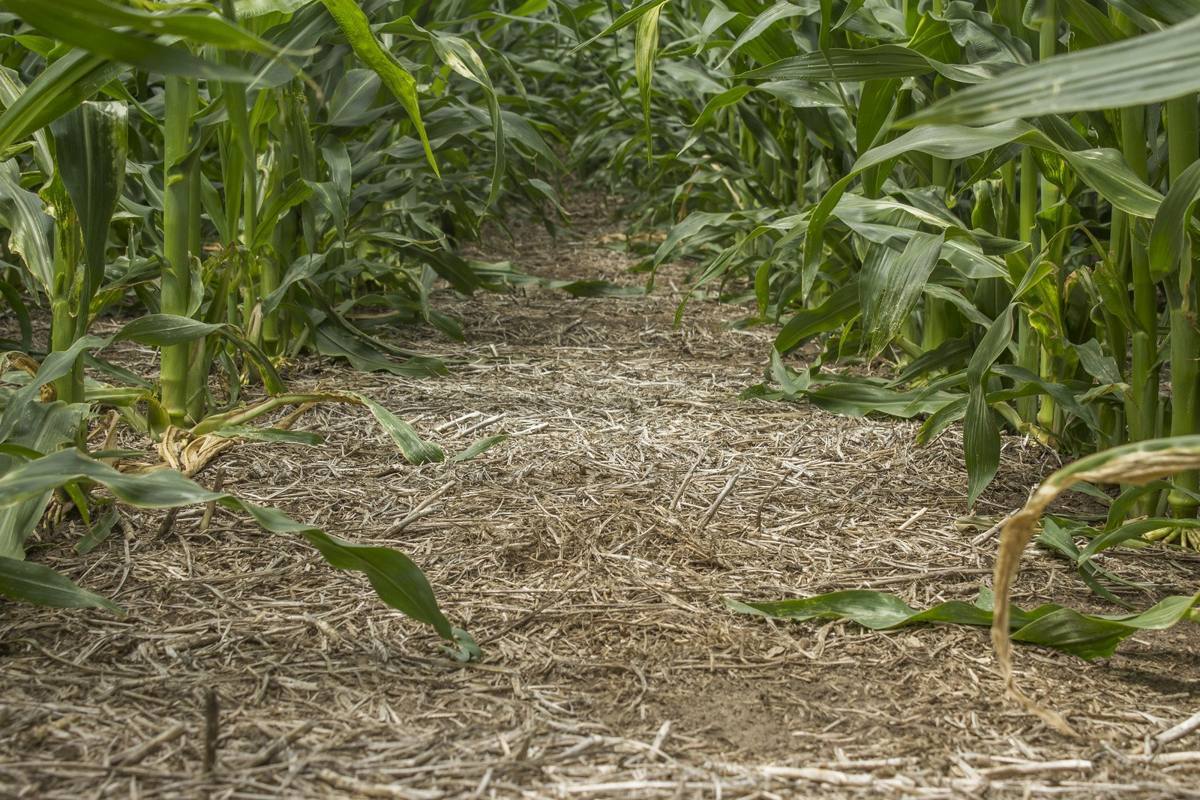
Unharvested corn strips give deer both calories and vertical cover after surrounding fields are bare. Mississippi State University Extension lists corn as a warm-season grass/annual on the deer food-plot guide, with commercial varieties and dwarf tropical types planted April 1 through May 15 (Mississippi State University Extension). Pure-stand rates are 8 lb per acre drilled or 12 lb broadcast, but footnote 7 warns that broadcasting is not recommended for corn; drilling in rows improves forage and seed production (Mississippi State University Extension). Leave-strips are a harvest decision layered on that agronomy: selected rows stay standing so grain and stalks persist into winter instead of going to the combine (Mississippi State University Extension). National Deer Association habitat writing stresses early-successional forage and cover structure on managed properties, which standing corn can complement when native cover is thin (National Deer Association).
Key Takeaways
- Plant corn April 1-May 15 per MSU Southeast dates (Mississippi State University Extension).
- Drill rather than broadcast; MSU discourages broadcasting corn (Mississippi State University Extension).
- Pure-stand drill rate 8 lb/acre (12 broadcast if used) (Mississippi State University Extension).
- Leave-strips keep grain and stalk cover after neighboring harvest (Mississippi State University Extension).
- Cut corn rates in mixes with other warm-season species (Mississippi State University Extension).
- Pair strips with broader habitat work, not as the only cover plan (National Deer Association).
Agronomy before the leave decision
MSU puts corn in the warm-season forage block beside cowpeas, grain sorghum, soybeans, sunflowers, and related plantings (Mississippi State University Extension). The April 1-May 15 window is earlier than many cowpea and soybean windows that run mid-April into June (Mississippi State University Extension). Because footnote 7 rejects broadcasting for corn and grain sorghum, plan a row drill if the goal is ears and sturdy stalks that can stand into winter (Mississippi State University Extension). Weak broadcast stands lodge earlier and waste the leave-strip concept (Mississippi State University Extension).
How leave-strips function for deer
A leave-strip is simply corn that is never combined: standing ears supply late energy while stalks break wind and sight lines in open farm country (Mississippi State University Extension). Width and placement matter more than planting a second full field; narrow strips along timber edges concentrate use without abandoning an entire crop check (Mississippi State University Extension). Grain left through winter is still subject to raccoons, birds, and weather, so strips are a managed sacrifice of yield, not free feed (Mississippi State University Extension).
Mixture and companion rules
If corn shares a warm-season blend, MSU footnote 2 still requires reducing each species from its pure-stand rate (Mississippi State University Extension). Cowpeas at 50/75-100 lb or soybeans at 50/100 lb will climb and tangle if seeded too heavy beside corn; MSU even notes sunflowers as structure for vining legumes rather than as primary deer forage (Mississippi State University Extension). Leave-strip planning is simplest on pure drilled corn where row spacing is consistent and harvest equipment can skip marked rows (Mississippi State University Extension).
Cover context beyond the strip
NDA habitat articles emphasize converting non-native grass to deer forage, using prescribed fire, and measuring how much forage a property actually grows (National Deer Association). Standing corn helps on crop ground, but it does not replace early-successional cover, bedding thickets, or browse on the rest of the farm (National Deer Association). Use leave-strips as one winter feature inside a wider habitat map rather than as the whole program (National Deer Association; Mississippi State University Extension).
Operational checklist
Mark leave rows before harvest so the combine operator does not erase them by habit (Mississippi State University Extension). Confirm local hunting and baiting rules if standing grain is treated as attractant in your state, because food-plot corn can fall under different language than harvested waste grain (Mississippi State University Extension). Replant warm-season corn each spring on MSU’s calendar if strips are annual by design (Mississippi State University Extension).
Bottom line
Drill corn on MSU’s April window, then deliberately leave selected rows standing so grain and cover last after the rest of the field is cut (Mississippi State University Extension; National Deer Association).
The other side of it
Leave-strips are a managed sacrifice, and the article admits raccoons, birds and weather take their cut of that standing grain. Neither source actually studies leave-strips either, since one is a planting poster and the other a general habitat page. Some states may also read standing grain as an attractant. Strange how a strip of standing corn is “habitat” on one side of a state line and bait on the other.
Keep reading
Latest deer news
Comments