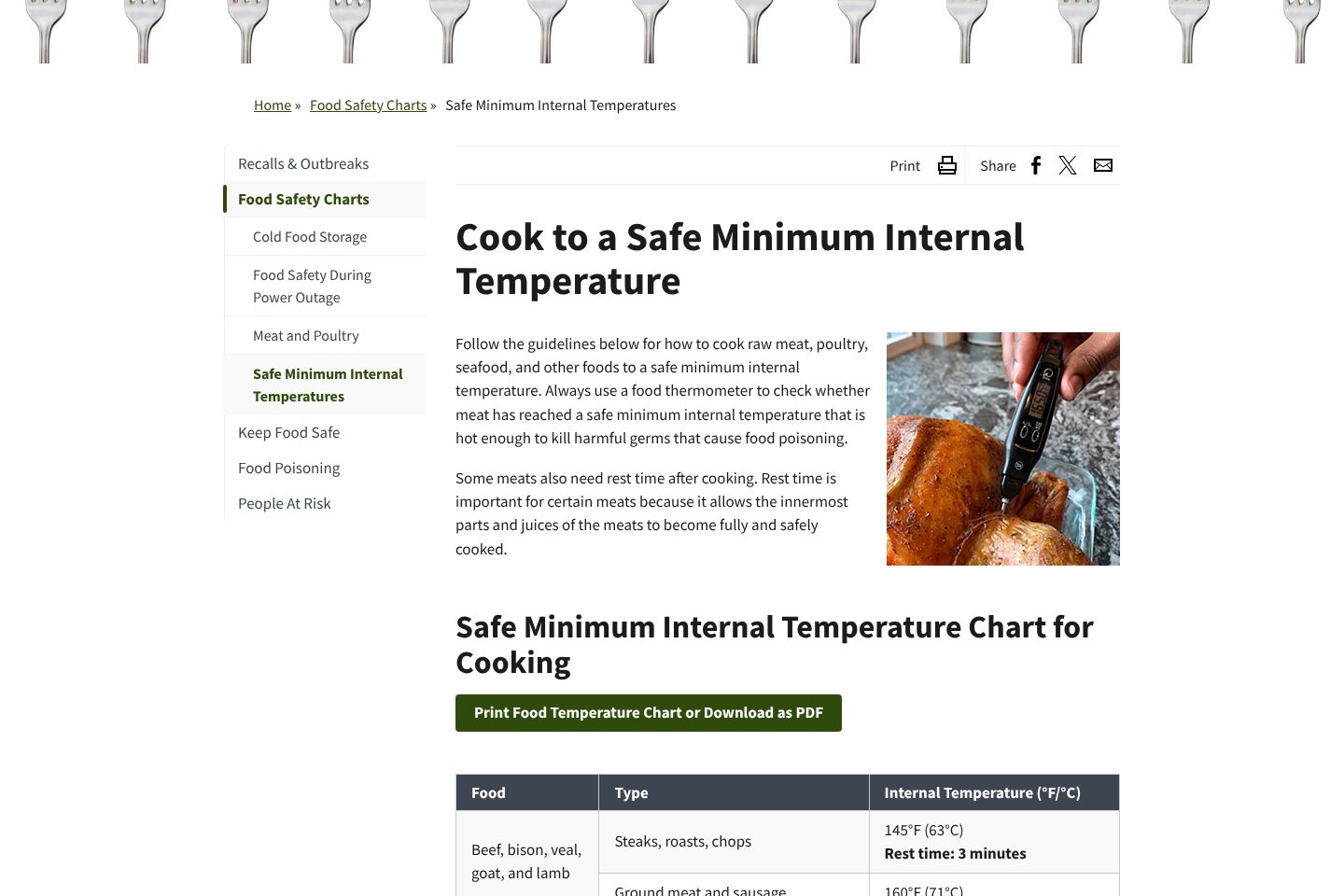
Theileria and related piroplasms appear in cervid health notes as tick-associated blood parasites. Confirmation is laboratory, not Facebook photo calls (Wisconsin DNR EHD). Hunters should glove up, cook venison to 160 deg F, and submit samples when asked (FoodSafety.gov; FSIS Food Safety Basics; Wisconsin DNR EHD).
Key Takeaways
- Lab confirmation required (Wisconsin DNR EHD)
- Tick exposure awareness (FSIS Food Safety Basics)
- Cook venison 160F (FoodSafety.gov)
- Report sick deer (Wisconsin DNR EHD)
- Gloves (FSIS Food Safety Basics)
- Not a substitute CWD test (USGS NWHC CWD)
Why emerging talk
Range expansions and better tests surface cases (Wisconsin DNR EHD).
Field look
Clinical signs are nonspecific (Wisconsin DNR EHD).
Sample pipelines
Agency pathologists own the call (Wisconsin DNR EHD).
Human tick bite care
Deer processing raises your own tick checks (FSIS Food Safety Basics).
HD differential
Foamy water-edge die-offs still point to orbiviruses first (Wisconsin DNR EHD).
Cook
160 deg F (FoodSafety.gov).
Bottom line
Leave Theileria calls to labs - process deer with gloves, cook to 160 deg F, and report truly sick animals (Wisconsin DNR EHD; FoodSafety.gov).
The other side of it
Fair criticism: none of the sources here are about Theileria itself. They’re an EHD page and food-safety charts, and with clinical signs this nonspecific, “report truly sick deer” leaves a hunter guessing what counts. The glove and cooking advice would read the same with no blood parasite in the conversation at all. Still, the camp diagnostician who calls piroplasms off one blurry Facebook photo never needed a lab to be wrong.
Keep reading
Latest deer news
Comments