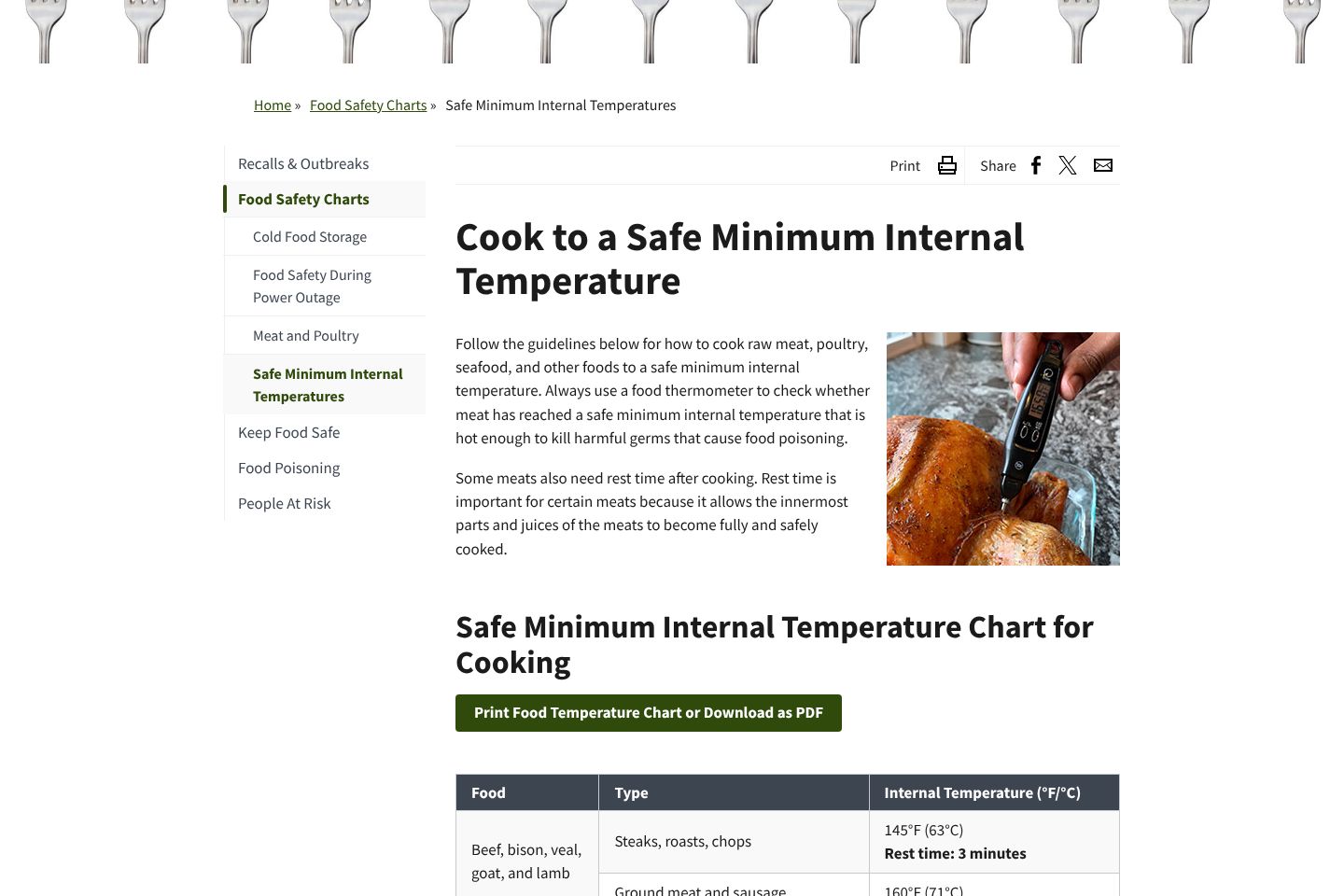
Abomasal parasite counts are laboratory tallies of worms in the deer abomasum used by wildlife managers to index herd health under density stress. Clubs partner with agencies or diagnostic labs when projects exist (Wisconsin DNR EHD). Harvested meat decisions still follow FoodSafety.gov 160 deg F and FSIS hygiene (FoodSafety.gov; FSIS Food Safety Basics).
Key Takeaways
- APC is a lab manager tool (Wisconsin DNR EHD)
- Needs trained necropsy sampling (Wisconsin DNR EHD)
- Indexes density-related parasite load (Wisconsin DNR EHD)
- Not a home kit (Wisconsin DNR EHD)
- Cook venison 160F (FoodSafety.gov)
- Report sick deer (Wisconsin DNR EHD)
When clubs see it
Research check stations may request abomasums (Wisconsin DNR EHD).
Interpretation
High APCs with poor body condition flag density problems (MSU Extension Wildlife Habitat).
Browse link
Parasite stress plus browse lines argue for antlerless take (MSU Extension White-tailed Deer Farmers Series).
Hygiene
Gut piles still get gloves (FSIS Food Safety Basics).
CWD separate
APC does not test prions (USGS NWHC CWD).
Cook
160 deg F (FoodSafety.gov).
Bottom line
Leave APC to labs and agencies - use results as herd-health context beside MSU-style density metrics, and cook kept meat to 160 deg F (Wisconsin DNR EHD; FoodSafety.gov).
The other side of it
If clubs can’t run the count themselves and only see one when a research project happens to come through, most clubs will never lay eyes on an APC number. The browse lines and body condition this piece already mentions cost nothing and point the same direction. There’s always one member who wants a lab report before he’ll shoot a doe, and the browse line has been waiting on him for years.
Keep reading
Latest deer news
Comments