USGS’s CWD work depends on laboratory testing of cervid tissues because the disease is a fatal prion TSE that can spread before obvious clinical signs (USGS NWHC CWD). Some agencies and research partners archive hunter-harvested tissues so later assays or genetic studies can revisit past seasons (USGS NWHC CWD). When a check station asks for extra samples for an archive project, that request supports science rather than busywork (USGS NWHC CWD).
Key Takeaways
- CWD needs lab tissue testing (USGS NWHC CWD)
- Archives enable later analysis (USGS NWHC CWD)
- Fatal contagious cervid disease (USGS NWHC CWD)
- Follow sample handling instructions (USGS NWHC CWD)
- No home archive replaces official labs (USGS NWHC CWD)
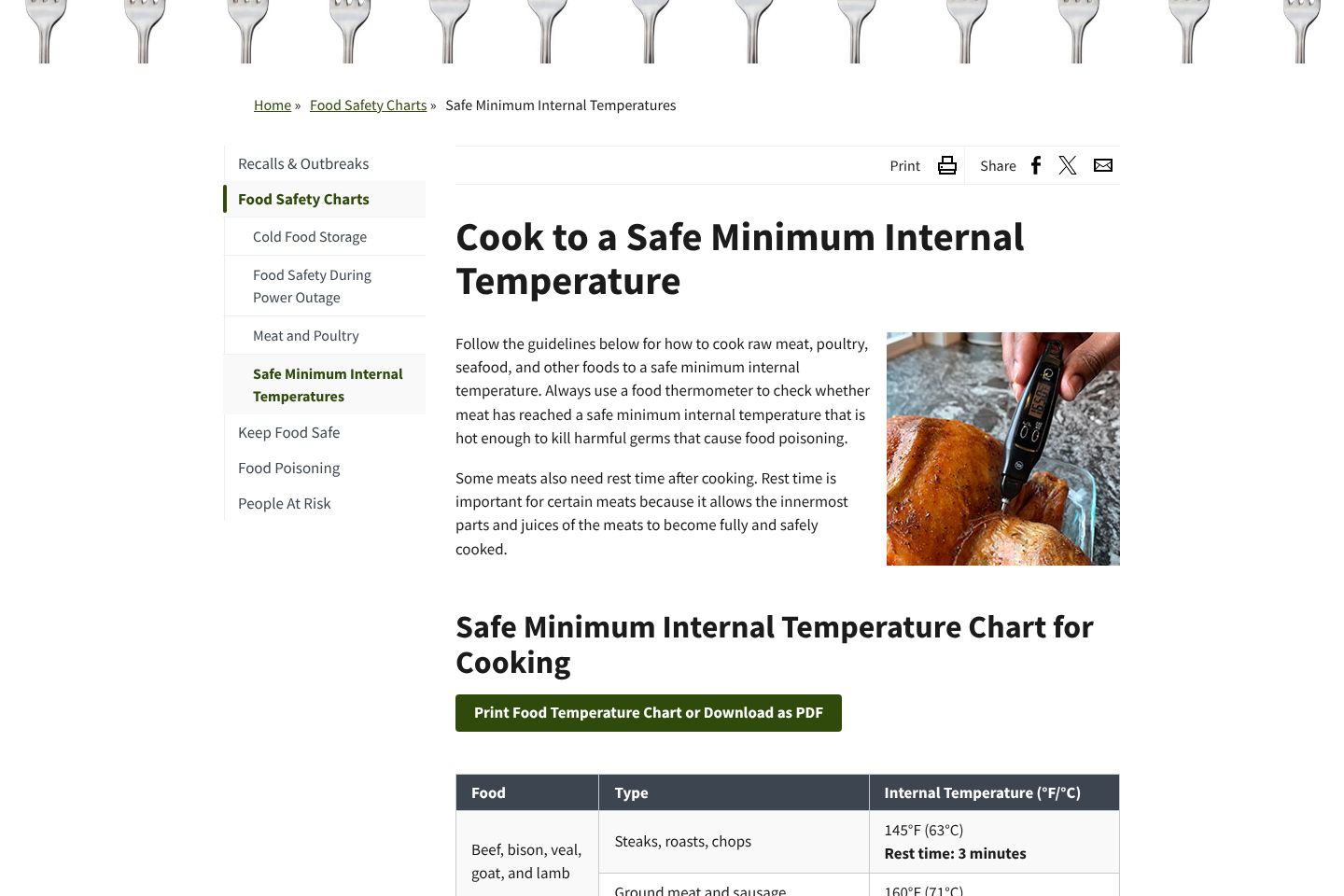
- Cook chart still 160F for food (FoodSafety.gov)
Why archive
Retrospective testing can refine prevalence timelines when new assays arrive (USGS NWHC CWD).
What gets saved
Lymph nodes, obex, or other tissues per protocol (USGS NWHC CWD).
Labeling
Accurate harvest location and date make archived samples scientifically useful (USGS NWHC CWD).
Consent and rules
Participate under the agency program terms offered at the station (USGS NWHC CWD).
Biosafety
Treat samples as potentially infectious materials (USGS NWHC CWD).
Kitchen separation
Keep surveillance samples out of the food cooler (FSIS Food Safety Basics).
Bottom line
Support hunter-harvest tissue archives as long-term CWD science under USGS’s surveillance framing - label samples well and keep them out of the dinner cooler (USGS NWHC CWD; FSIS Food Safety Basics).
The other side of it
The whole case leans on a single USGS page, and it never says who holds the archived tissue, for how long, or whether the hunter who gave it ever hears what came of it. A hunter asked for extra samples at a busy check station is fair to want those answers before saying yes. That said, the guy who refuses a lymph node because the government is tracking his deer already posted the buck, the stand and the field edge online by lunch.
Keep reading
Latest deer news
Comments