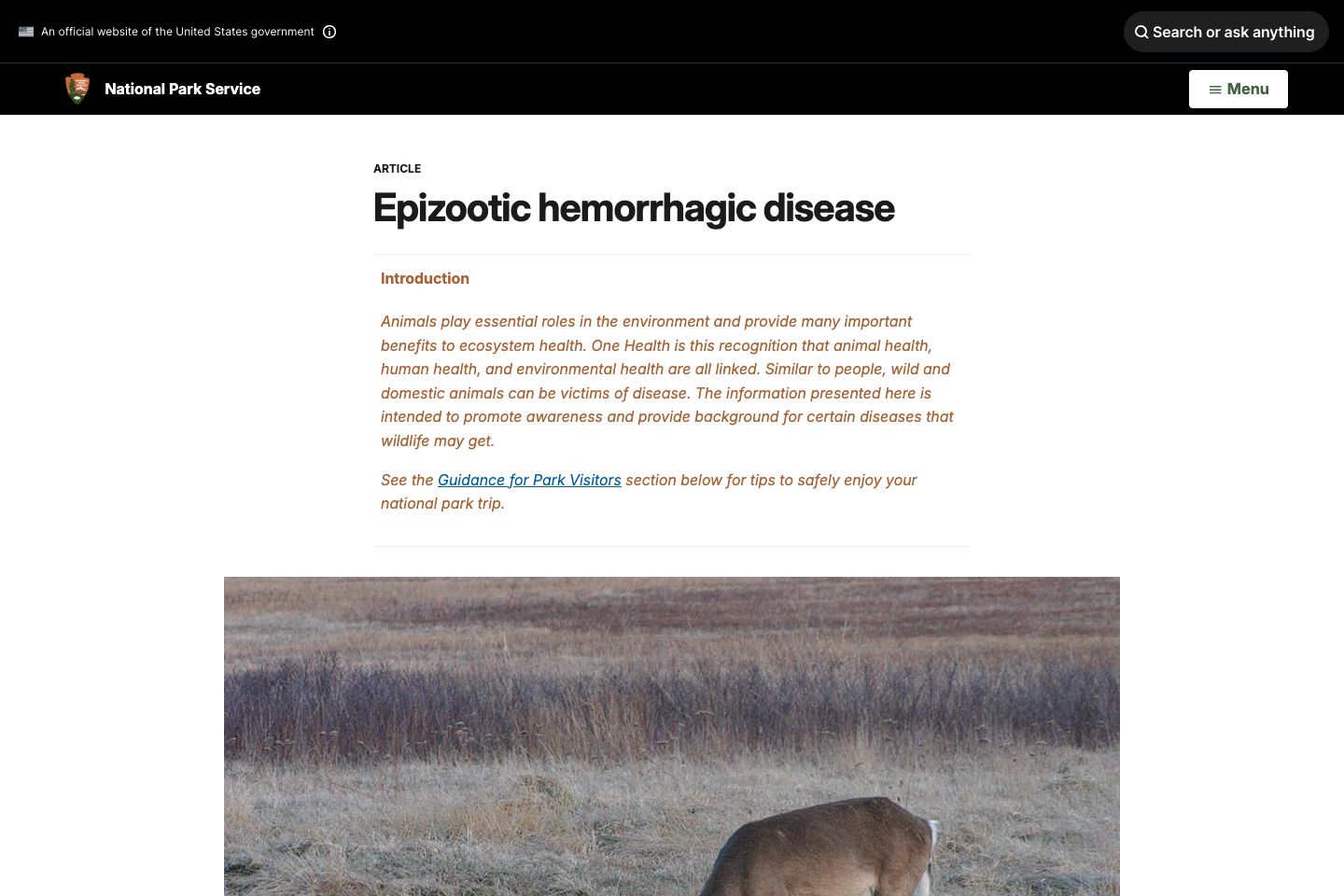
When several deer die at ponds in August or September, agencies need reports and sometimes tissues - not silent disposal. NPS tells visitors to notify staff and avoid contact with sick or dead wildlife because some disease agents can move between animals and people even though EHD itself does not infect humans (National Park Service). Cornell CWHL notes diagnosis combines clinical signs with virus testing on tissue and blood, essential to separate EHD/BT from foreign-animal disease concerns (Cornell CWHL). Michigan DNR documents August-October EHD patterns and clinical signs so hunters can recognize reportable events (Michigan DNR). Montana FWP emphasizes the same late-summer Culicoides window and post-frost case lag (Montana FWP).
Key Takeaways
- Notify agencies; avoid handling sick/dead deer (National Park Service).
- Lab virus ID on tissue/blood confirms EHD vs BT vs other diseases (Cornell CWHL).
- Expect late summer/early fall clusters near water (Michigan DNR; Montana FWP).
- Cases may continue ~2 weeks after frost from incubation lag (Montana FWP).
- No human infection from EHD/BT (Cornell CWHL; National Park Service).
What a reportable scene looks like
Michigan describes sudden appetite loss, loss of fear of humans, progressive weakness, disorientation, excessive salivation, and fever that drives deer to immerse in water (Michigan DNR). Cornell lists swollen head, neck, tongue, or eyelids and notes acute deer often die within 8 to 36 hours (Cornell CWHL). NPS adds depression, respiratory distress, and head/neck/tongue swelling among early signs (National Park Service). Multiple carcasses at one waterhole in late summer is the classic pattern managers want called in (Michigan DNR; Montana FWP).
Why agencies want the call
Virus typing distinguishes EHD from BT and helps rule out livestock foreign-animal diseases such as foot-and-mouth that can look concerning at necropsy (Cornell CWHL). Outbreak maps guide hunter messaging and livestock risk awareness for sheep and cattle (Iowa State Extension; Montana FWP). NPS frames reporting as One Health situational awareness even though EHD viruses have no evidence of infecting people (National Park Service). Iowa State notes host susceptibility, vector species, and climate jointly shape how severe an outbreak becomes (Iowa State Extension).
How to submit without making it worse
Do not drag carcasses across counties casually; contact the state wildlife disease desk or local biologist for current sample instructions before moving animals (Michigan DNR; National Park Service). Avoid unnecessary contact; trained staff use protective measures when handling suspect wildlife (National Park Service). Fresh tissue and blood beat rotten gut piles for virus recovery (Cornell CWHL). Remember dead deer are not lasting EHD virus reservoirs the way CWD carcasses remain prion risks (Michigan DNR).
Timing quirks after frost
Montana warns incubation up to about 10 days means detections can continue a couple of weeks after hard frost kills midges (Montana FWP). Michigan says outbreaks usually end within two weeks of frost onset (Michigan DNR). NPS incubation guidance of 5 to 10 days matches that lag (National Park Service). Keep reporting through the lag window so the last incubating cases still enter the surveillance map (Montana FWP; Michigan DNR).
Chronic leftovers worth a call
NPS describes chronic hoof breaks and complete hoof-wall sloughing that cause lameness into colder months, sometimes with deer walking on knees or chest (National Park Service). Cornell likewise notes chronic hoof abnormalities including wall sloughing (Cornell CWHL). Report odd late lameness clusters if your agency tracks chronic HD sequelae after the midge season ends (National Park Service; Cornell CWHL).
Bottom line
Call it in: late-summer waterhole die-offs need agency virus typing - do not handle carcasses casually and expect a short post-frost case lag (Michigan DNR; Cornell CWHL; National Park Service).
The other side of it
The catch is timing. Labs want fresh tissue and blood, and by the time most hunters stumble on a waterhole carcass in late-summer heat it may be well past that point, while the article’s sources from Michigan, Montana and the Park Service don’t hand you one set of instructions. A call can still help the map even when it can’t help the lab. But the hunter who keeps a die-off quiet so nobody spooks his lease is the first to blame the state when the stand goes empty.
Keep reading
Latest deer news
Comments