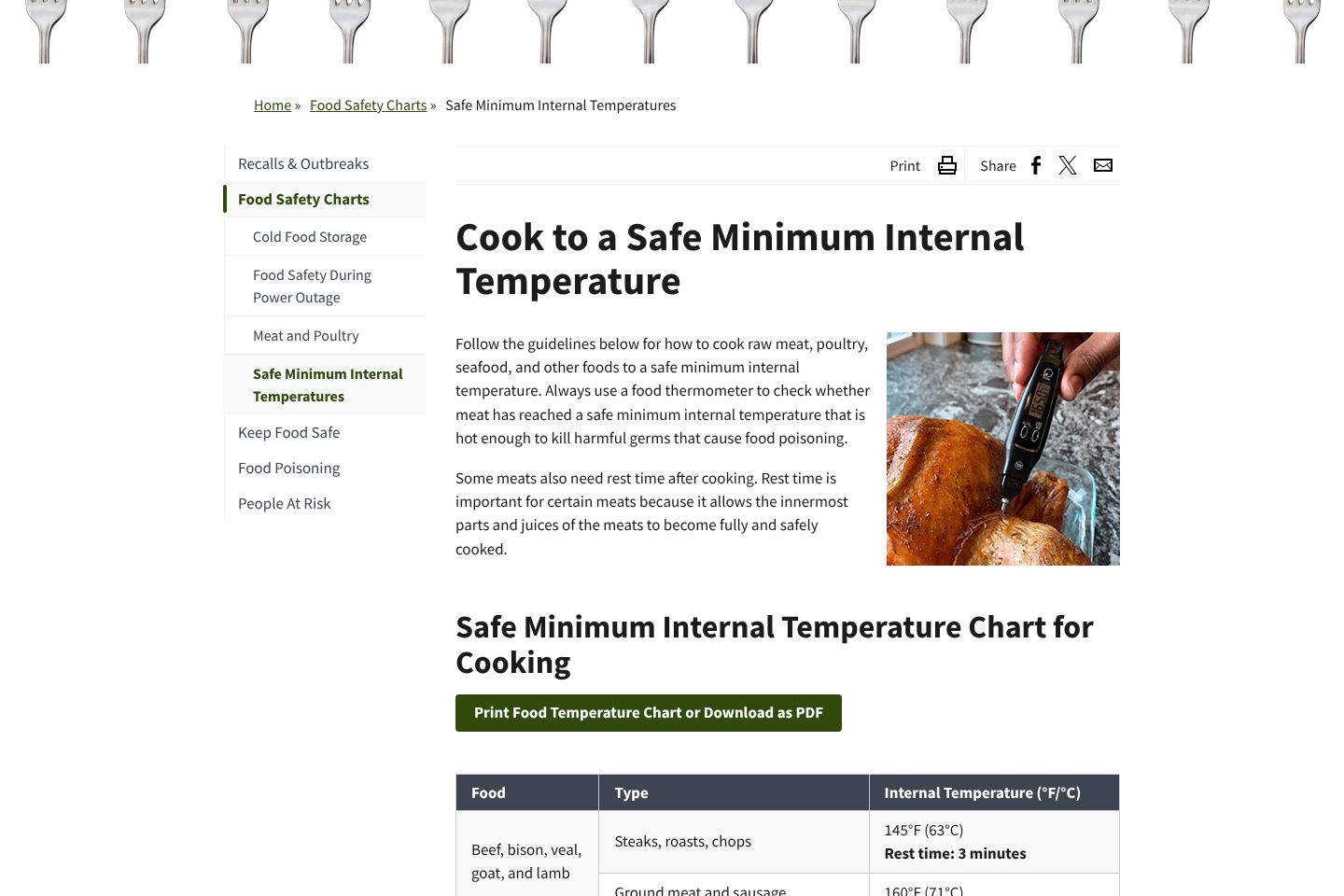
Skin bot flies (Cuterebra and related) leave larvae under deer skin that hunters nick while skinning, distinct from nasal bots listed on agency disease pages (Wisconsin DNR EHD). They are usually a seasonal cosmetic carcass finding. Trim the cyst, keep juices controlled, and cook venison to 160 deg F (FoodSafety.gov; FSIS Food Safety Basics).
Key Takeaways
- Skin bots differ from nasal bots (Wisconsin DNR EHD)
- Trim cysts (FSIS Food Safety Basics)
- Cook 160F (FoodSafety.gov)
- Gloves (FSIS Food Safety Basics)
- Not EHD (Wisconsin DNR EHD)
- Report systemic illness (Wisconsin DNR EHD)
Seasonality
Larvae are more obvious in certain months depending on fly life cycles (Wisconsin DNR EHD).
Hide quality
Bots can hole capes destined for taxidermy (Wisconsin DNR EHD).
Meat
Localized trim usually suffices (FSIS Food Safety Basics).
Dogs
Keep pets from eating larvae (FSIS Food Safety Basics).
Differential
Warbles are not fibromas (Wisconsin DNR EHD).
Thermometer
160 deg F (FoodSafety.gov).
Bottom line
Expect seasonal skin bots while skinning - trim, glove, cook to 160 deg F, and do not confuse them with EHD (Wisconsin DNR EHD; FoodSafety.gov).
The other side of it
For a piece about life-cycle timing, there isn’t much timing in it, and the sources are an EHD page and food-safety charts that don’t really cover bot flies. The cosmetic verdict is probably fine for the meat, but a hunter with a cape headed to the taxidermist won’t call holes in it cosmetic. Still beats the guy who finds one grub and leaves the whole deer for the coyotes.
Keep reading
Latest deer news
Comments