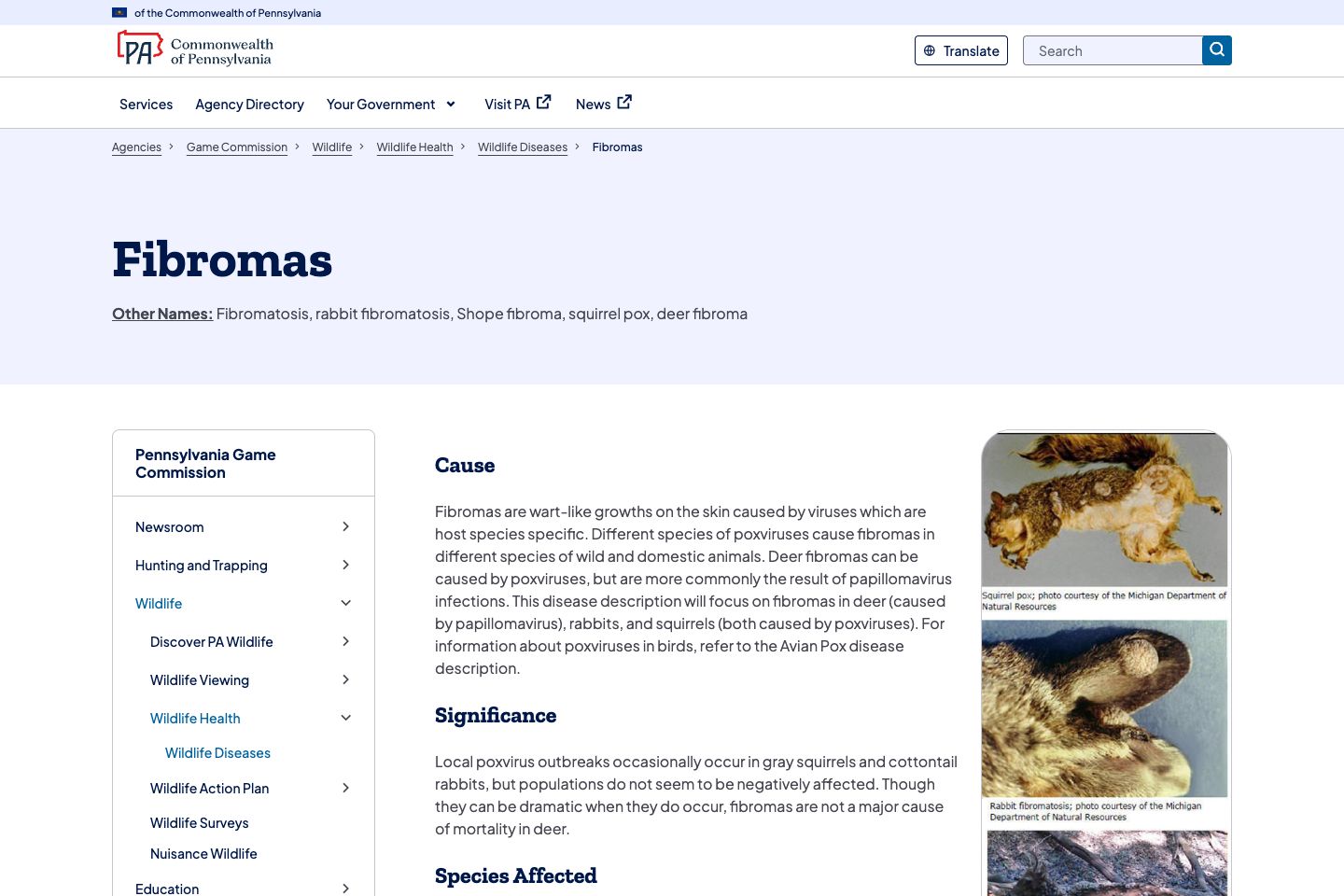
Cutaneous fibromas are virus-caused skin growths on deer - often called warts - caused by a species-adapted papillomavirus. Pennsylvania Game Commission, Kentucky Fish and Wildlife, Wisconsin DNR, and Washington DFW agree the tumors are skin-limited for practical hunter purposes, do not infect people, and leave the meat edible after trimming (PA Game Commission fibromas; Kentucky cutaneous fibromas; Wisconsin DNR deer fibroma; WDFW growths and abscesses).
Key Takeaways
- Fibromas are skin tumors; muscle is generally fine after removing growths and any infected tissue (PA Game Commission fibromas; Wisconsin DNR deer fibroma).
- Not zoonotic to people via ordinary field dressing (Kentucky cutaneous fibromas; PA Game Commission fibromas).
- Severe cases can cover much of a deer and look alarming; still a skin disease unless secondary infection invades (WDFW growths and abscesses).
- Trim ulcerated or abscessed areas generously; cook venison thoroughly (WDFW growths and abscesses).
- Do not confuse fibromas with abscesses from wounds or with CWD - different problems (WDFW growths and abscesses; CDC about CWD).
What they look like
Growths range from pea-sized to grapefruit-sized, gray to black, sometimes stalked, often on the face, neck, and shoulders (PA Game Commission fibromas; Wisconsin DNR deer fibroma). Young bucks fighting may spread virus through skin contact. Many deer carry a few lumps without looking sick.
How do deer get warts?
Nobody knows for sure. The virus most likely gets in through broken skin when a deer rubs against an infected one, and Pennsylvania figures sparring does a lot of it since bucks get fibromas more often (PA Game Commission fibromas). Both Pennsylvania and Wisconsin say biting insects may spread it too (PA Game Commission fibromas; Wisconsin DNR deer fibroma).
Harvest decision
If the deer otherwise looks healthy - bright eyes, good body condition - agencies say harvest and trim (Kentucky cutaneous fibromas; PA Game Commission fibromas). If the animal is emaciated, covered in open infected masses, or acting neurologic, pass and report. Fibromas alone are not a CWD sign. A warty deer still gets CWD sampled wherever your state requires it (USGS CWD).
Processing steps
Skin carefully to keep tumor tissue out of the meat. Cut wide margins around ulcerated spots. Discard skin and growths. Wash knives between cuts if you nick a wart (WDFW growths and abscesses). Normal cooking guidance for wild game still applies, so use the FoodSafety.gov chart and take ground venison to 160°F (FoodSafety.gov). Gloves are smart for any field dressing.
Public questions wardens hear
“Can my dog catch it?” Deer fibroma viruses are host-specific in agency messaging; still keep pets from chewing discarded skin (PA Game Commission fibromas). “Is the whole deer ruined?” No - trim and keep muscle (Wisconsin DNR deer fibroma). “Should I report?” Unusual severe cases can interest biologists; routine small warts usually do not.
Related skin problems
Abscesses from gore wounds are pockets of pus, not solid fibromas (WDFW growths and abscesses). Mange causes hair loss patterns. Cutaneous fibromas stay as discrete lumps. When unsure, photograph and ask a wildlife disease email desk rather than dumping a freezer of good meat.
Bottom line
Deer warts are ugly skin virus growths; trim them, keep the venison, and wash up - people do not catch deer fibroma from butchering (PA Game Commission fibromas; Wisconsin DNR deer fibroma; Kentucky cutaneous fibromas).
Related: Nasal bots and CWD organs guidance.
When fibromas get severe
Rare deer carry dozens of large tumors that ulcerate and invite flies. Agencies still describe the disease as cutaneous; the harvest call turns on overall condition and secondary infection (WDFW growths and abscesses; PA Game Commission fibromas). Emaciated deer with open, foul masses are poor table fare even if the virus itself is skin-limited - bacterial contamination is the issue.
Butcher station workflow
Hang, skin away from growths, switch knives after any tumor nick, rinse, and continue (WDFW growths and abscesses). Keep a dedicated trash bag for skin and trimmed lesions so they never hit the cooler with steaks. Freeze or refrigerate muscle promptly as you would any deer.
Youth-hunt teaching moment
Fibromas are a perfect “gross but safe” lesson beside nasal bots and liver flukes. Show the wart, trim it, cook a backstrap. Kids remember agency-backed calm better than internet panic (Kentucky cutaneous fibromas; Wisconsin DNR deer fibroma).
Reporting threshold
One pea wart: process. Hide covered in open sores plus poor body condition: photograph, consider not eating, and email the wildlife disease desk (PA Game Commission fibromas; WDFW growths and abscesses). Mention county and date so biologists can track odd clusters.
Geographic notes
Fibromas appear wherever papillomaviruses circulate in deer; Pennsylvania, Kentucky, Wisconsin, and Washington all publish hunter Q&As because the sight is nationwide enough to generate calls (PA Game Commission fibromas; Kentucky cutaneous fibromas; Wisconsin DNR deer fibroma; WDFW growths and abscesses). Expect more questions after warm seasons when bugs and social contact peak among deer.
Mount versus meat
A buck with facial warts can still be a legal trophy mount; taxidermists hide or repair minor lesions. For meat, priority is clean trim, not cosmetics (PA Game Commission fibromas). If lesions make skinning miserable and infection smells wrong, walk away from the meat - that is bacterial judgment, not virus mysticism (WDFW growths and abscesses).
Knife discipline reminder
Cross-contamination fears are about ordinary field bacteria once ulcers open, not about catching deer papillomavirus (Kentucky cutaneous fibromas). Soap, water, and separated cutting boards remain the boring heroes.
If a processor refuses a fibroma deer out of caution, ask whether they will accept it after you skin and trim tumors at home - many will take clean quarters (Wisconsin DNR deer fibroma; PA Game Commission fibromas). Pack quarters on ice either way and keep tumor skin out of their barrel (WDFW growths and abscesses; Kentucky cutaneous fibromas).
Photograph severe cases for the agency desk, then decide on meat with bacterial smell and body condition as your guides (WDFW growths and abscesses).
The other side of it
The skeptic’s point is that a wart is rarely the only thing you’re looking at. A deer covered in growths that’s also thin is telling you something about its overall health, and fibromas not being a CWD sign doesn’t clear the rest of the animal. Agencies say trim and keep, but they’re picturing the bright-eyed deer with a few lumps. Every camp has a guy who’ll eat anything that hits the gambrel and calls it agency-approved.
Keep reading
Latest deer news
Sources
- Fibromas | Game Commission | Commonwealth of Pennsylvania
- Cutaneous Fibroma - Kentucky Department of Fish & Wildlife
- Deer fibroma | | Wisconsin DNR
- Growths and abscesses on deer | Washington Department of Fish & Wildlife
- CDC about CWD (cdc.gov)
- FoodSafety.gov (foodsafety.gov)
- Chronic Wasting Disease | U.S. Geological Survey
Comments