Hunters find facial swellings that may be soft cutaneous abscesses or firmer jaw infections sometimes called lumpy jaw. Wisconsin DNR asks for reports of unusual sick deer rather than kitchen surgery (Wisconsin DNR EHD). Do not taste-test pus; discard affected tissue, glove up, and cook remaining sound muscle to 160 deg F only if the carcass otherwise looks healthy and agencies do not advise otherwise (FoodSafety.gov; FSIS Food Safety Basics). Neurologic or EHD-like deer are a different call (Wisconsin DNR EHD).
Key Takeaways
- Report unusual sick deer (Wisconsin DNR EHD)
- Gloves for draining lesions (FSIS Food Safety Basics)
- Discard pus-filled tissue (FSIS Food Safety Basics)
- Cook sound venison 160F (FoodSafety.gov)
- Separate from EHD foam signs (Wisconsin DNR EHD)
- CWD sampling still when required (USGS NWHC CWD)
Soft vs hard swellings
Fluctuant abscesses differ from bony jaw distortion (Wisconsin DNR EHD).
Processing choice
When infection tracks into muscle, discard more aggressively (FSIS Food Safety Basics).
Human hygiene
Wash thoroughly after handling (FSIS Food Safety Basics).
Not fibromas
Warty papillomas differ from hot abscesses (Wisconsin DNR EHD).
Herd health
Clusters of jaw infections may interest managers (Wisconsin DNR EHD).
Cook chart
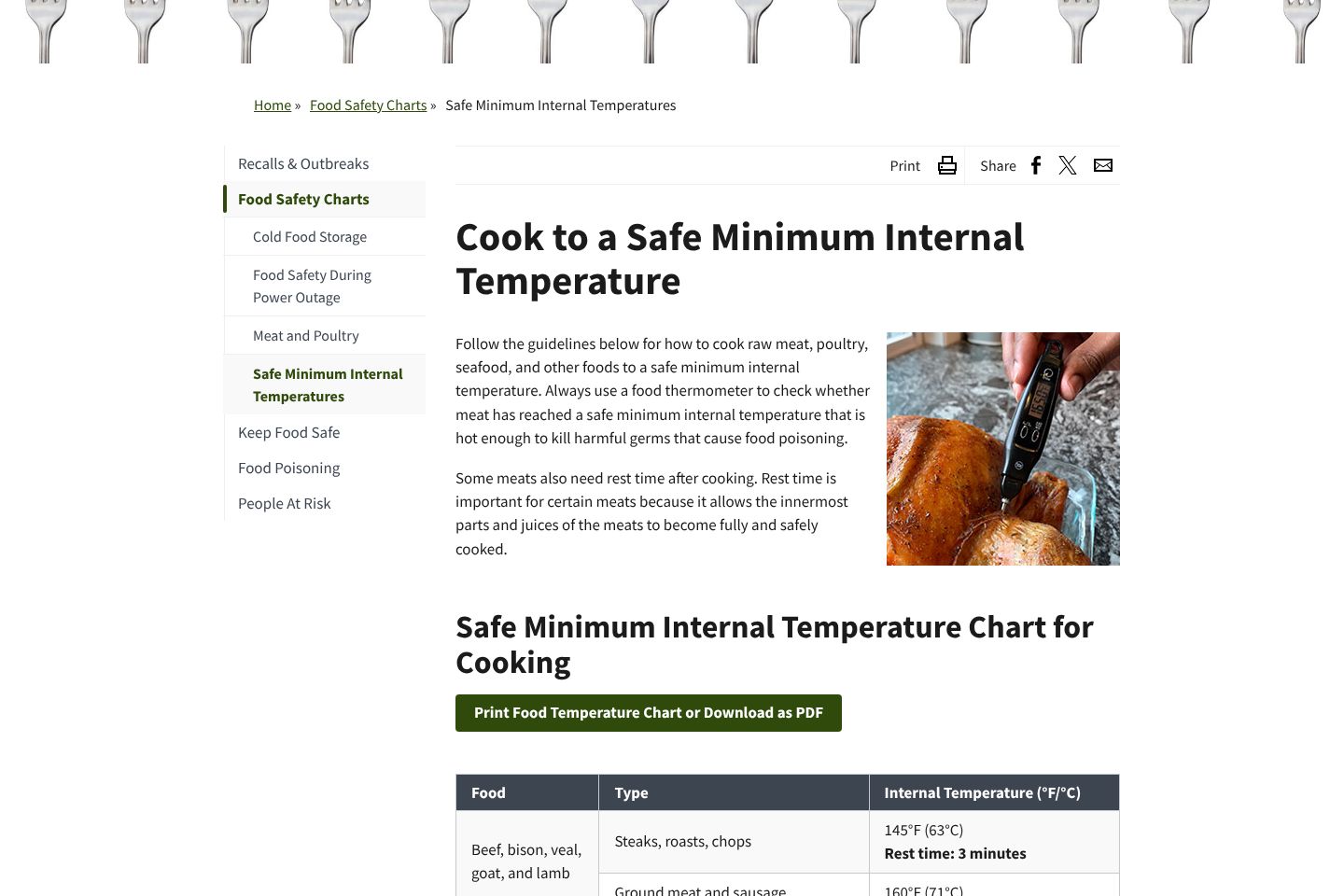
160 deg F remains the venison line for kept meat (FoodSafety.gov).
Bottom line
Differentiate abscesses from lumpy jaw carefully, glove up, discard nasty tissue, and only keep clearly sound meat cooked to 160 deg F (Wisconsin DNR EHD; FoodSafety.gov).
The other side of it
For the guy holding the knife, the distinction may matter less than the headline suggests. Soft abscess or bony jaw, the advice lands in the same place: gloves on, bad tissue out, sound meat cooked to 160. Where it really counts is in reports to managers, and the article offers little beyond soft versus hard to help anyone sort them. Of course, the camp expert who diagnoses every lump from the tailgate has never once been wrong, to hear him tell it.
Keep reading
Latest deer news
Comments