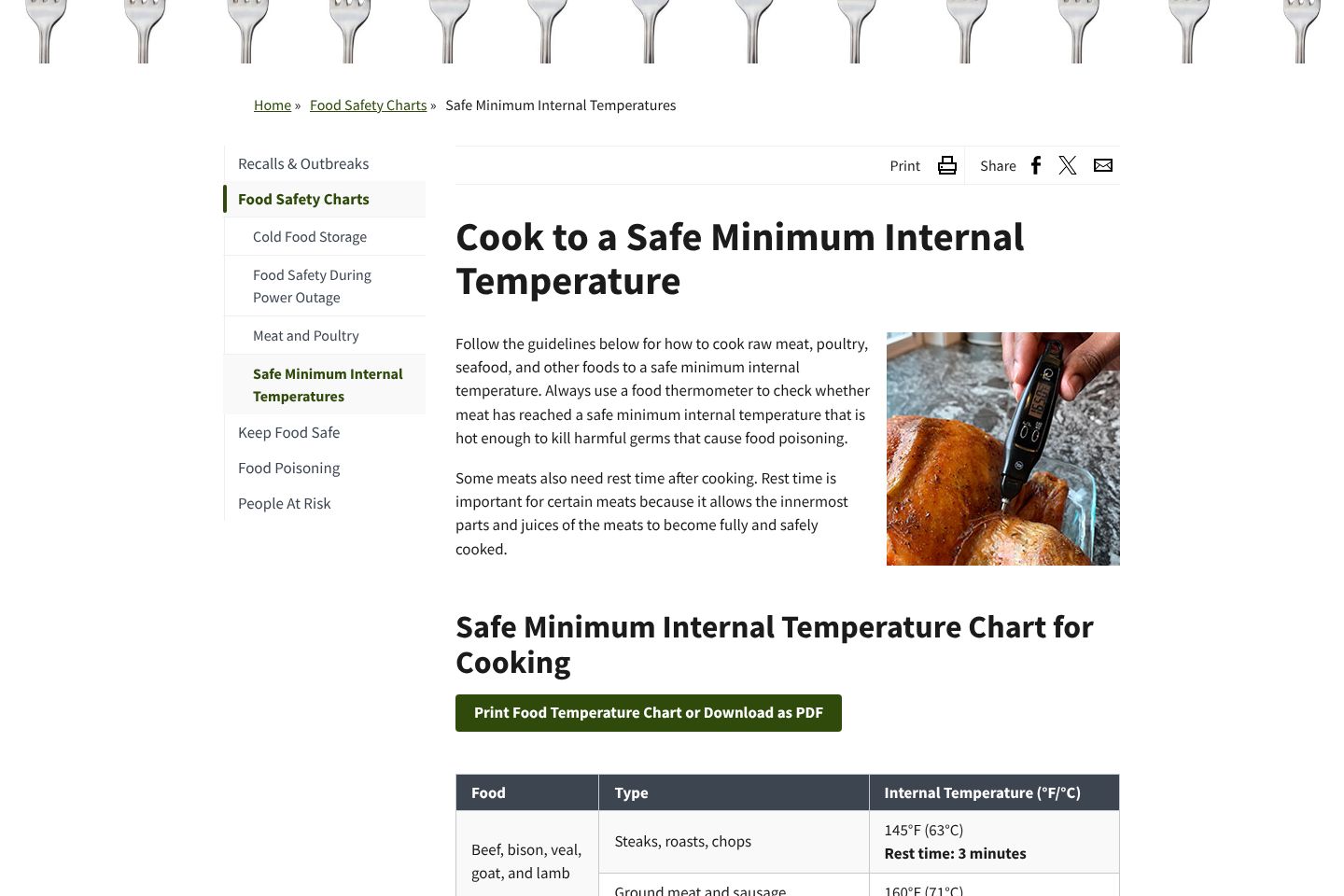
Brucella discussions in North American wildlife more often involve bison, elk, or swine than routine whitetail camp talk, and B. melitensis notes in cervids are uncommon relative to other deer diseases (Wisconsin DNR EHD; USGS NWHC CWD). That rarity is not permission to skip gloves or FoodSafety.gov’s 160 deg F venison cook (FoodSafety.gov; FSIS Food Safety Basics).
Key Takeaways
- Rare relative to common deer diseases (Wisconsin DNR EHD)
- Gloves always (FSIS Food Safety Basics)
- Cook venison 160F (FoodSafety.gov)
- Watch official alerts (Wisconsin DNR EHD)
- CWD remains the big prion program (USGS NWHC CWD)
- Report unusual aborting/sick wildlife (Wisconsin DNR EHD)
Risk framing
Do not inflate rare agents into panic, and do not dismiss hygiene (FSIS Food Safety Basics).
Species confusion
Elk/bison brucellosis stories do not auto-transfer to every whitetail (Wisconsin DNR EHD).
Processing
Avoid tasting raw fluids (FSIS Food Safety Basics).
Pregnant household members
Extra caution with raw game handling is wise (FoodSafety.gov; FSIS Food Safety Basics).
Agency lead
State veterinarians own outbreak messaging (Wisconsin DNR EHD).
Cook
160 deg F (FoodSafety.gov).
Bottom line
Keep Brucella melitensis in the rare-cervid notes column - glove, cook to 160 deg F, and follow official alerts (Wisconsin DNR EHD; FoodSafety.gov).
The other side of it
The rarity claim here rests on pages about EHD and CWD, not on anything that tracks Brucella in deer, so “uncommon” is an assumption more than a measurement. A hunter could fairly ask why a disease this rare gets its own write-up when the gloves and the 160 deg F cook are the same ones you’d use on any deer, and he’d have a point. Still, the guy who skips gloves because the odds are low is the same one who’d taste the raw fluids on a dare.
Keep reading
Latest deer news
Comments