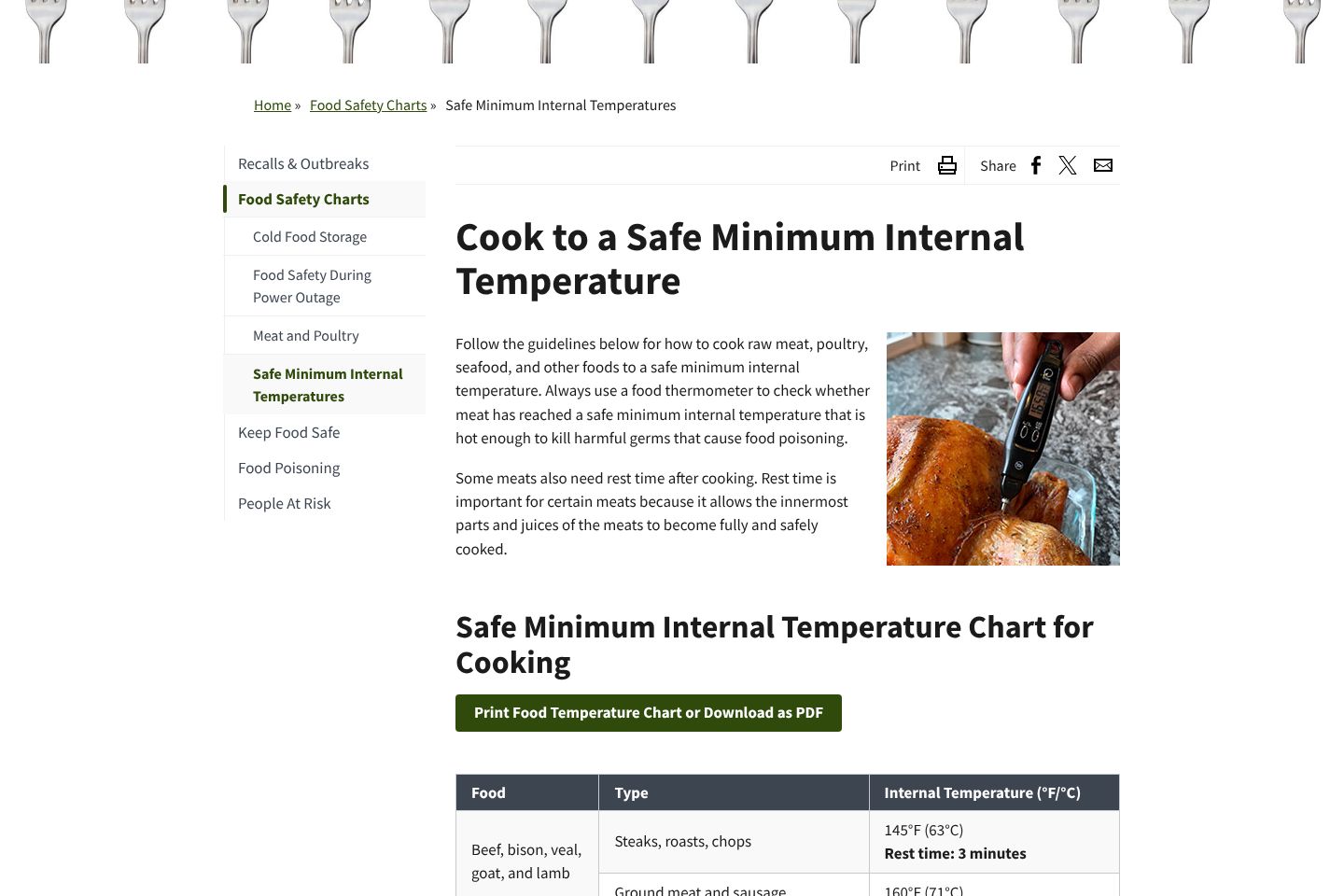
Anaplasma and related blood parasites appear in cervid serosurveys that agencies and universities run on hunter-harvested blood. Prevalence signals inform wildlife health, not a home diagnosis (Wisconsin DNR EHD). Keep processing hygiene, cook venison to 160 deg F, and report clinically ill deer (FoodSafety.gov; FSIS Food Safety Basics; Wisconsin DNR EHD).
Key Takeaways
- Serosurveys are lab programs (Wisconsin DNR EHD)
- Not a garage diagnosis (Wisconsin DNR EHD)
- Report sick deer (Wisconsin DNR EHD)
- Cook 160F (FoodSafety.gov)
- Gloves (FSIS Food Safety Basics)
- CWD testing separate (USGS NWHC CWD)
Hunter role
Provide blood tubes when check stations ask (Wisconsin DNR EHD).
Tick link talk
Some Anaplasma discussions overlap tick ecology - protect yourself (FSIS Food Safety Basics).
Meat
Standard cook temperatures remain (FoodSafety.gov).
Differential
Acute HD outbreaks look different from chronic blood-parasite study animals (Wisconsin DNR EHD).
Data use
Managers watch trends across counties (Wisconsin DNR EHD).
Do not self-medicate deer
No backyard antibiotics (Wisconsin DNR EHD).
Bottom line
Treat Anaplasma prevalence as agency serosurvey science - hunters give samples, cook meat to 160 deg F, and skip garage blood diagnoses (Wisconsin DNR EHD; FoodSafety.gov).
The other side of it
For a title promising prevalence signals, this piece never shows one. Its sources are a Wisconsin EHD page and general food-safety guidance, so a hunter finishes it knowing to hand over a blood tube and cook his meat, which he’d have done anyway. What Anaplasma numbers actually mean for a herd isn’t here yet. Not that a missing blood panel ever stopped the guy diagnosing deer off trail-cam photos.
Keep reading
Latest deer news
Comments