Deer 101
Specific questions, direct answers, sources you can check. One page per question, updated in place and dated, never replaced by a yearly copy.
- deer diseasesDeer wart vs abscess field identificationNot every lump on a deer is the same triage problem. Michigan DNR materials describe cutaneous fibromas (deer warts) as typically skin-only growths that can look cauliflower-like, while abscesses are pus-filled…
- hunting shows eventsDates vendors and deer seminars in louisvilleDeerFest markets itself as a consumer deer-hunting show under the line "The Season Starts Here," with site sections for Schedule, Exhibitors, Vendors, and Contact (DeerFest). The official homepage thank-you notice…
- venisonAltitude corrections for venison jarsAltitude correction for canned venison is a gauge-type decision, not a single PSI for every kitchen. NCHFP's meat strips/cubes/chunks tables (explicitly including venison) list separate pressures for dial-gauge and…
- regulationsDisabled hunter deer hunting permits explainedState wildlife agencies routinely issue disability accommodations that change how a hunter may take deer: crossbow or draw-lock use in archery seasons, shooting from a stationary vehicle, ATV access on designated…
- deer biologyDo Bucks Travel Together?Yes, for part of the year. Bucks usually spend late spring through early fall in small "bachelor groups" that travel together and often feed and bed together, according to the Caesar Kleberg Wildlife Research…
- deer biologyDo Deer Drink Water?Yes. Texas Parks and Wildlife says white-tailed deer drink an average of 3 to 6 quarts of water a day, depending on how moist their food is, the temperature and the humidity (TPWD).
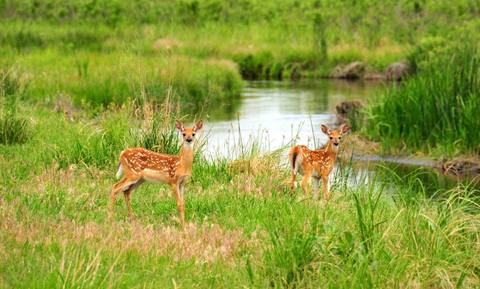
- food sourcesDo Deer Eat Apples?Yes, deer eat apples, and they'll browse the tree too. University of Maine Cooperative Extension lists white-tailed deer first among the animals that eat wild apple fruit, and adds that "deer also browse on the twigs…
- food sourcesDo Deer Eat Hay?Deer will eat hay, but feeding it to them, especially in winter, can kill them. A winter deer's gut is stocked with microbes matched to woody browse, and when it suddenly fills up on hay or corn, Montana State…
- deer biologyDo Deer Eat Meat?Do deer eat meat? Yes, now and then, and there's video to prove it. Whitetails are built to eat plants. But researchers have filmed deer swallowing songbird nestlings, eating bobwhite eggs, chewing bones and, in one…
- food sourcesDo Deer Eat Winter Rye?Yes, deer eat winter rye. Winter rye, also called cereal rye, is a cool-season grain the National Deer Association describes as "highly preferred by deer," and it holds up well to heavy grazing. The catch is that a…
- deer biologyDo Deer Like Bananas?Do deer like bananas? Probably, in the sense that a whitetail will try almost anything soft and sweet in its path. But nobody has studied it, and no wildlife agency we could find recommends feeding deer fruit of any…
- food sourcesDo Deer Like Persimmons?Yes, deer like persimmons, and they eat them. State and university sources list white-tailed deer among the animals that eat American persimmon fruit, and Missouri's Department of Conservation says deer eat the buds…
- deer biologyDo Deer Move in the Rain?Yes, deer move in the rain. The best GPS-collar data we have says does barely change their routine in a steady rain, bucks tend to cover less ground, and a strong wind can cancel out the rain effect entirely. So if…
- deer biologyDo Deer Whistles Work?Do deer whistles work? Not according to the only well-designed field test anyone has run. University of Georgia researchers drove a car past 319 free-ranging whitetails while playing pure tones across the whole range…
- rutHow long is a doe in estrus recycle timing?Rut timing debates get clearer once you separate the doe's short receptive window from the buck's long search. New Jersey Fish and Wildlife's deer biology page describes white-tailed doe estrus as lasting about 24…
- deer biologyDoe family groups whitetail huntingWhitetail does often live in related female groups - mothers, daughters, and sisters sharing overlapping ranges. Biologists call these matrilines. That social pattern shapes where deer bed, how they respond when a…
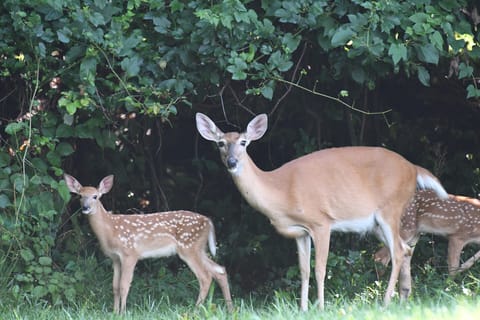
- deer biologyHow consistently does reuse the same seasonal ranges?Adult doe white-tailed deer are among the most site-faithful large mammals hunters share a property with. A USDA Forest Service / University of Georgia radiotelemetry project monitored 148 females on the MeadWestvaco…
- deer biologyDouble beamed antler deer causesDouble-beamed antlers - a second main beam splitting from or beside the primary beam - fall under abnormal or nontypical conformation in white-tailed deer antler science (MSU Deer Lab antler growth cycle; MU…
- venisonSafe ways to soften jerky in the fieldProperly dried jerky that met NCHFP's 160 deg F heat path and bend-test dryness keeps about two weeks sealed at room temperature, longer if refrigerated or frozen (NCHFP Jerky). Once deer strips are rehydrated into a…
- food sourcesUAV imagery to score plot establishmentDrone orthomosaics can count gaps in food-plot stands so clubs reseed weak strips - useful agronomy beside MSU's warning not to manage woods as deer-only monocultures (MSU Extension Wildlife Habitat; MSU Extension…
- scoring recordsWhat causes drop tines on deer?Drop tines and kickers look like genetic trophies on the wall, but many one-sided nontypical points are injury products, and free-ranging cull harvest rarely rewrites herd genetics. Missouri Extension and National…
- deer biologyDrop tine deer biologyDrop tines are abnormal antler points that project downward from a beam or tine rather than rising as typical upright points (MSU Deer Lab antler growth cycle; MU Extension antler development G9486). Mississippi…
- deer biologyDsc convention deer managementDallas Safari Club's Convention & Sporting Expo is a conservation fundraising and hunting industry event. DSC's convention page states the convention brings hunters, conservationists, and outdoor enthusiasts together…
- regulationsEbike rules on wildlife management areas deer huntingElectric bicycles blur the line between a push bike and a motor vehicle - and wildlife agencies do not all draw that line the same way. Idaho Fish and Game tells hunters that e-bikes are treated as motorized on lands…
- public landE scouting public land deerE-scouting public deer ground starts with ownership and access layers, then terrain and hydrography, then agency hunting rules. USGS PAD-US and The National Map supply the federal basemap; state wildlife and USFS…
- food sourcesWildlife soybean traits versus grain beansEagle Claw appears on Mississippi State University Extension's wildlife soybean line when managers want a browse-oriented bean instead of a grain-yield monoculture. M1591 lists wildlife soybeans L/A annual with Eagle…
- gearEnvironmental DNA methods near waterholesEnvironmental DNA (eDNA) water samples can detect deer presence from shed cells, useful in thick cover where cameras fail - but presence is not abundance, and MSU still wants browse and harvest metrics for density…
- deer diseasesWhat serology says after die-offs?Wisconsin DNR tracks EHD outbreaks through public reports of sick or dead deer and prioritized sampling where the virus is not already confirmed (Wisconsin DNR EHD). Antibody serosurveys in harvested deer help…
- deer diseasesWhat Should Hunters Do in an EHD Outbreak Year?EHD is a native deer virus spread by biting midges, not deer-to-deer contact. Here is how deer hunters can decide what to do during an EHD outbreak year.
- deer diseasesWhich ehd serotypes circulate and why outbreak years differ?Hunters lump late-summer die-offs as "blue tongue," but agencies split hemorrhagic disease (HD) into Epizootic Hemorrhagic Disease viruses and Bluetongue viruses - related orbiviruses with multiple serotypes (Iowa…
- habitatWhy cereal rye holds soil on slopes?Elbon cereal rye is the slope-workhorse small grain on Mississippi State University Extension lists when deer plots sit on erodible ground. M1591 names Elbon beside Wrens Abruzzi, Wrens 96, Winter Grazer 70, and…
- venisonWhat science says about tenderness gadgets?Camp talk sometimes claims electrical stimulation gadgets tenderize deer like industrial beef plants. NDSU wild-game care still centers on prompt field dressing, chilling, and clean handling (NDSU Extension FN124).…
- deer biologyHow epiphyseal plate closure ages deer compared with jawbone methods?Long-bone growth stops when cartilaginous epiphyseal plates ossify. A Southeastern Naturalist study of optimally nourished captive white-tailed deer radiographed distal humerus, proximal and distal radius, and…
- hunting tacticsDoe estrous bleat calling tips evidenceEstrous doe bleats are easy to overuse and hard to evaluate honestly. Calling articles from Deer and Deer Hunting, Game and Fish, American Hunter, and HuntWise converge on a modest claim: soft bleats can pull a…
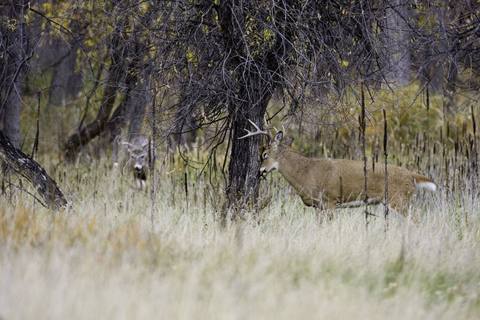
- habitatWhat fenced plots teach about carrying capacity?Fenced deer exclosures beside open controls make MSU's browse-line and ragged-twig damage signs undeniable - inside regenerates, outside often does not (MSU Extension White-tailed Deer Farmers Series; MSU Extension…
- scoring recordsWhat hunters attest to when entering a buck?Entering a Boone and Crockett or Pope and Young deer requires affirming Fair Chase. Boone and Crockett's Fair Chase page frames hunting as regulated sustainable use and lists ethics including obedience to laws,…
- regulationsWhat Is Fair Chase Hunting?Fair chase hunting is a written ethical standard, not a law. Boone and Crockett defines it as "the ethical, sportsmanlike, and lawful pursuit and taking of any free-ranging wild game animal in a manner that does not…
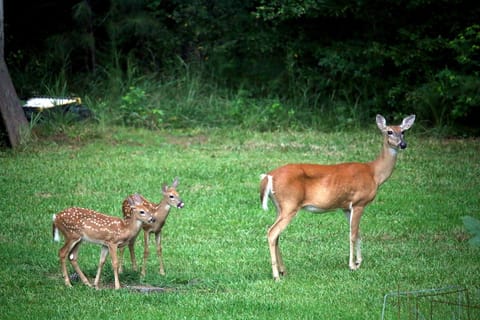
- deer biologyWhen do fawns lose their spots?Spotted fawns are not a fixed calendar icon - they lose spots during the first coat molt into winter hair, typically around three to four months of age, with timing shifted by birth date and latitude. Missouri…
- food sourcesHow hogs at bait affect deer and shared disease concerns?Where deer bait or supplemental feed concentrates animals, wild pigs often show up for the same calories. Texas Parks and Wildlife's wild pig ecology overview notes that in areas where forage is not limiting -…
- deer biologyWhether doe condition skews fawn sex ratiosTrivers-Willard theory predicts well-conditioned mothers should favor sons in polygynous mammals, while poor-condition mothers favor daughters, but white-tailed deer tests do not always cooperate. A large Mississippi…

