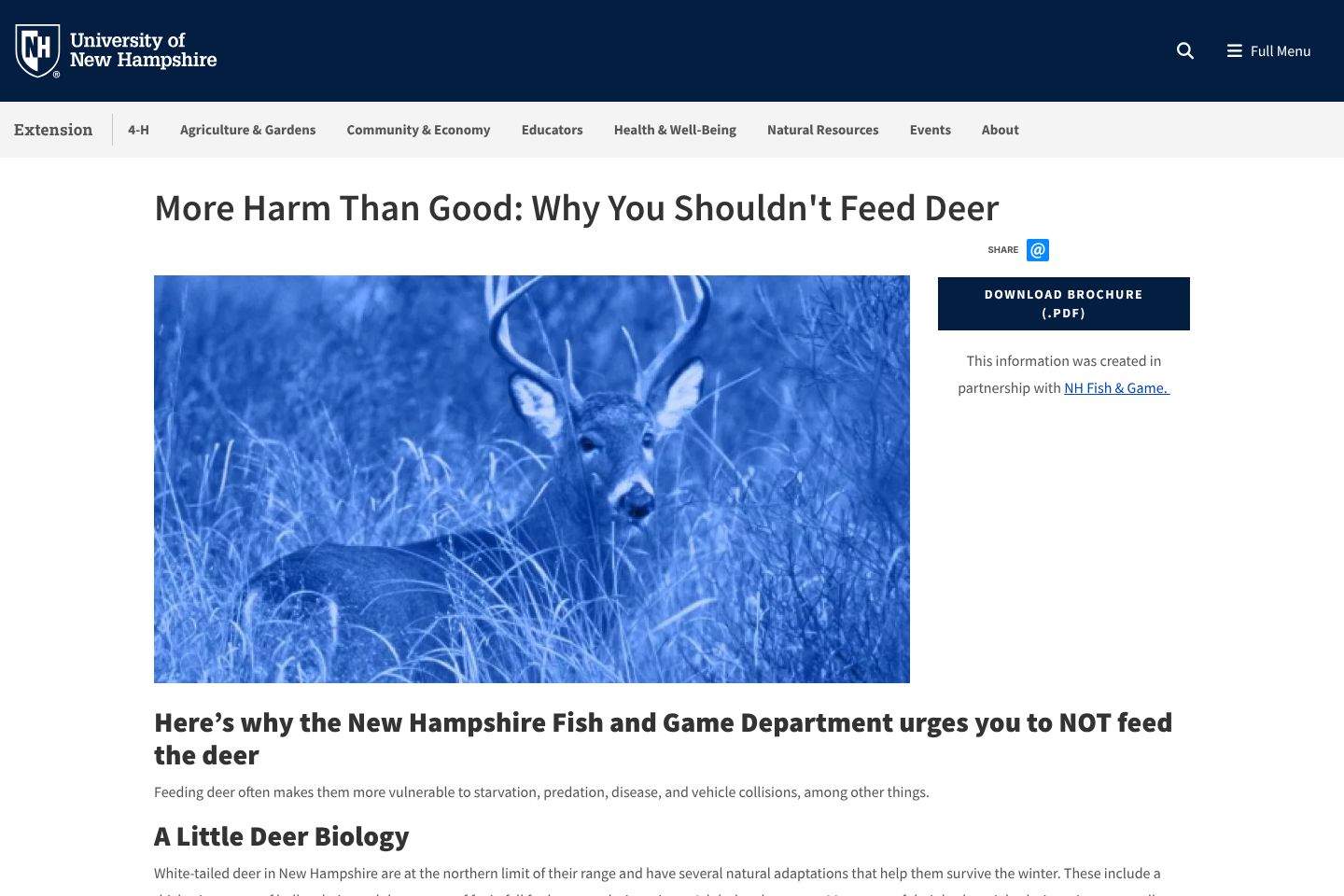
Autumn is when whitetails bank energy for winter. Southeastern Cooperative Wildlife Disease Study work on endogenous fat found kidney fat superior to other indices of physical condition in southeastern white-tailed deer, with heart/pericardial fat nearly as useful except in winter, and femur marrow fat unreliable alone (SEAFWA Stockle et al.). New Hampshire guidance notes adult deer may lose up to 20 percent of body weight in winter and can draw about 40 percent of daily winter energy from fat tissue regardless of offered feed (UNH Extension). Maryland biology describes the thick winter coat molt that pairs with that energy strategy (Maryland DNR). Missouri ecology likewise details the fall switch into a brownish-grey winter coat sometimes more than an inch thick (MU Extension G9479).
Key Takeaways
- Kidney fat was the best condition index in SCWDS southeastern samples (SEAFWA Stockle et al.).
- Heart/pericardial fat nearly as good except in winter (SEAFWA Stockle et al.).
- Femur marrow fat alone was not a reliable indicator (SEAFWA Stockle et al.).
- Adults may lose ~20% body weight in winter; ~40% of winter daily energy from fat (UNH Extension).
- Winter cover, not feed piles, is the survival key once fat is banked (UNH Extension).
Why autumn forage is a savings account
Deer enter winter with fat deposited during fall hyperphagia; UNH states adults get as much as 40 percent of daily winter energy from that tissue and still lose up to 20 percent of body weight (UNH Extension). That loss happens whether or not people offer feed (UNH Extension). Missouri ecology notes the thick winter pelage of short underfur plus outside guard hairs that reduces heat loss while fat supplies calories (MU Extension G9479). The April molt back to summer coat closes the winter insulation chapter (MU Extension G9479).
Which fat depot to trust
Stockle, Doster, and Davidson compared fat reserves as condition indicators and concluded kidney fat was superior across seasons (SEAFWA Stockle et al.). Heart and pericardial fat tracked favorably except in winter; limited data supported tail fat for winter and spring (SEAFWA Stockle et al.). Femur marrow fat content by itself was not reliable, though marrow consistency correlated better with percent fat than marrow color did in related literature they cite (SEAFWA Stockle et al.). An improved marrow-fat measurement method is discussed in the same paper for labs that need chemistry, not eyeballing (SEAFWA Stockle et al.).
Marrow as the last account
Michigan DNR malnutrition guidance describes progressive fat loss ending with bone marrow as the last depot before animals burn cellular protein, with ketosis common in malnourished animals (Michigan DNR). A deer with jelly-like marrow is past the autumn savings story and into starvation pathology (Michigan DNR; SEAFWA Stockle et al.). That is why autumn kidney-fat scores predict winter outcomes better than a single late-winter marrow glance (SEAFWA Stockle et al.).
Coat and calendar cues
Maryland notes antlers harden for breeding while does conceive mainly in early November, then fawns arrive after about 200 days - the reproductive calendar that runs on autumn condition (Maryland DNR). Yearling does usually birth singles; mature does in good condition frequently twin (Maryland DNR). Poor autumn fat therefore shows up as spring recruitment failure, not only as February carcasses (Maryland DNR; UNH Extension).
Management reading
Protect late-summer and autumn forage quality so kidney-fat indices stay high entering winter (SEAFWA Stockle et al.; UNH Extension). Do not expect winter corn piles to replace fat already missed in October (UNH Extension). Score hunter-killed does with kidney fat when agencies ask for condition data (SEAFWA Stockle et al.). Softwood wintering cover protects the energy account after it is banked (UNH Extension).
Bottom line
Bank fat in autumn - kidney fat is the best field index - then expect winter weight loss even with feed; softwood cover protects the account you already built (SEAFWA Stockle et al.; UNH Extension).
The other side of it
The kidney-fat finding comes from southeastern deer, and the guide carries it north into softwood wintering cover without much of a bridge. Kidney fat also needs a dead deer, so it grades the animals you already shot rather than the ones still walking. Condition going in is only half the math, and nothing here says how much autumn fat counts against winter cover. The fella hauling corn out in February is mostly feeding his own conscience.
Keep reading
Latest deer news
Comments