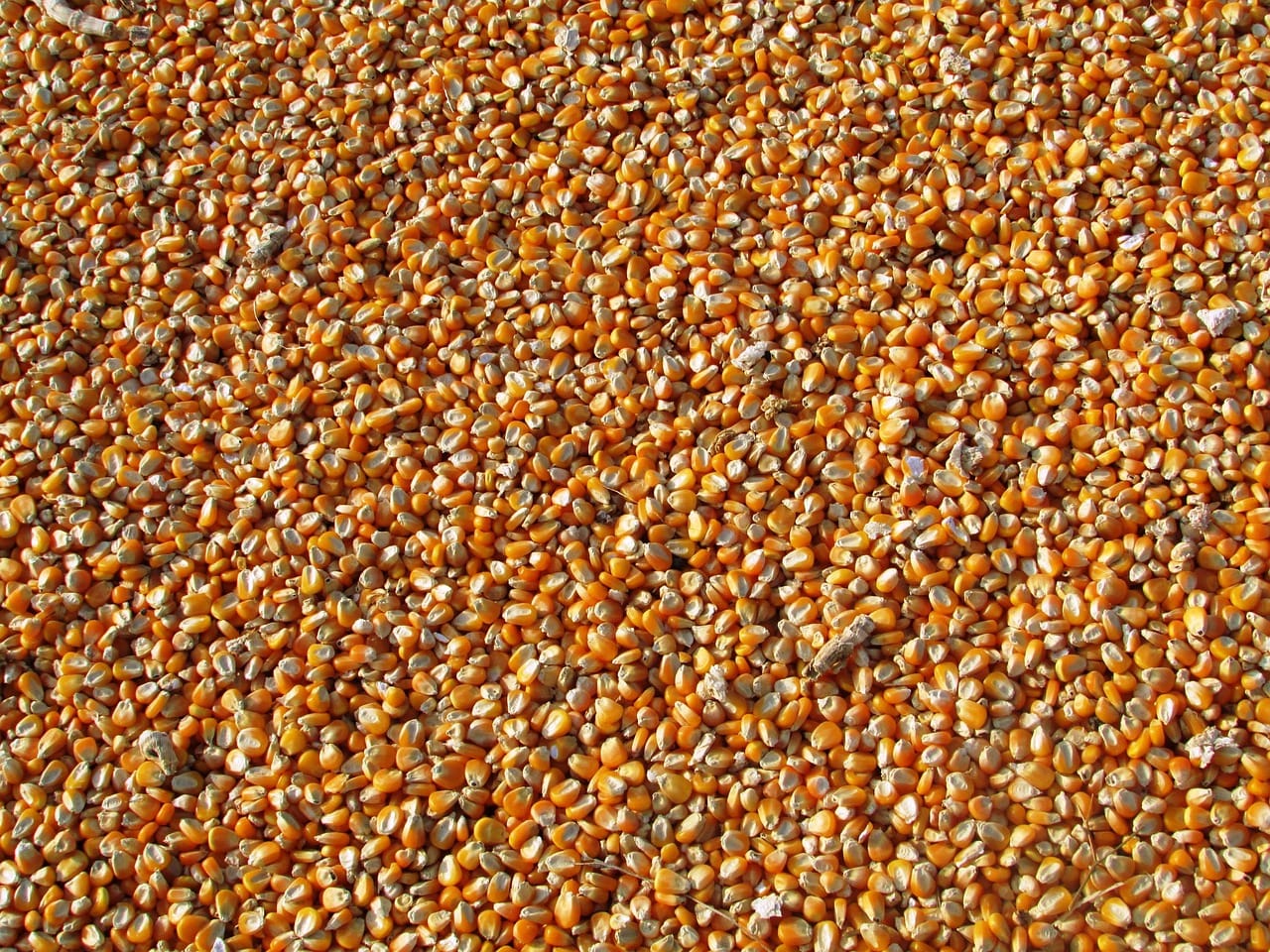
If you’re wondering where to buy deer food, the short answer is any store that sells livestock feed, but the better question is what you’re buying and whether you can legally put it out. Bagged deer corn and protein pellets move through the same channels as cattle and horse feed. What separates a good purchase from a bad one is the tag on the bag, the toxin level in the corn and your state’s baiting and feeding rules.
Key Takeaways
- Big feed makers sell through local cooperatives, independent dealers and large retailers. Call ahead, because stock varies.
- Read the guaranteed analysis and ingredient list. Texas deer feeds in one review averaged 18 percent crude protein.
- Corn can carry aflatoxin. A Texas extension specialist recommends only corn labeled under 20 ppb.
- Unmarked bags tested worse for aflatoxin in a 1998 Texas survey.
- Many states and counties ban feeding deer. Check before you buy.
Where to buy deer food: feed dealers, co-ops and farm retailers
Most deer feed is sold through the same network as other animal feed. Purina Animal Nutrition, which makes the AntlerMax deer line, says it serves customers “through a broad network of local cooperatives, independent dealers and other large retailers throughout the United States.” Its dealer page adds: “Please call ahead to check availability” (Purina). If you already know the brand you want, its dealer list is a quick way to find a store near you.
In practice, that points to a few kinds of sellers:
- Local feed stores and co-ops. The “local cooperatives” and “independent dealers” in Purina’s network. Ask what deer products they carry.
- Large farm and ranch retailers. The “other large retailers” Purina mentions. Selection varies by store, so call first.
- Online. Worth checking, but compare the shipping cost on a heavy bag against the drive to town.
For a side-by-side look at bags from one big chain, see our creator desk piece on deer feeds from Tractor Supply.
Read the tag before you pay
Where you buy matters less than what’s on the tag. At a Caesar Kleberg Wildlife Research Institute meeting, Dr. Dave Hewitt explained that feed labels in Texas are managed by the Office of the Texas State Chemist and the Association of American Feed Control Officials. He told buyers the two parts to watch are “the guaranteed analyses and the ingredient list” (Livestock Weekly via CKWRI).
Hewitt compared 18 deer feeds made in Texas. Across them, “the average crude protein was 18 percent though it ranged from 16 to 20 percent.” That fits with Texas A&M AgriLife wildlife specialist Ken Cearley’s guidance that “A level of 16-20 percent crude protein in the deer diet supplement is generally considered best” (AgriLife Extension).
Read the warnings too. Hewitt said some labels said “if running sheep then do not feed this product,” largely because of copper. In his words, “The deer do fine with it; it will kill the sheep.” If you run sheep or goats on the same ground, that line matters.
For what protein level fits what time of year, see protein requirements of whitetails by season.
Corn or pellets?
Corn is cheap and deer eat it, but it is not a complete feed. A Texas Parks and Wildlife Department bulletin calls corn “one of the poorest types of deer feed available” and says it is “low in protein (approximately seven to ten percent) and high in carbohydrates” (TPWD). Cearley notes that if your goal is only to attract deer, “shelled corn will probably fill the bill.”
So decide first whether you are feeding for nutrition or drawing deer to a spot. That choice decides which bag you buy. Changing a herd’s diet quickly carries its own risk; see why sudden feed changes kill deer.
Check corn for aflatoxin
Corn sold for deer can carry mold toxins. Neal Wilkins, writing as a Texas Cooperative Extension wildlife specialist, said Texas hunters and wildlife watchers feed “almost 300 million pounds of corn to deer and other wildlife annually.” In a 1998 survey of deer corn sold at Texas retailers, he reported aflatoxin “over 20 parts per billion (ppb) in 44 percent of those samples” (AgriLife Extension, Wilkins).
His most useful shopping tip: “Unmarked bags with no weight labels or manufacturer’s address tended to have higher aflatoxin concentrations.” Wilkins wrote that labeling rules were later strengthened, and that “wildlife specialists recommend that only corn labeled as being less than 20 ppb aflatoxin be used.” He also said “Corn with 100 ppb or more aflatoxin should not be fed to wildlife.”
Deer are not the main worry. Wilkins wrote that deer “don’t seem as susceptible to the effects of mycotoxins as other animals,” but that species at risk include “grain-eating birds like quail and turkey.”
Texas regulates this directly. The Office of the Texas State Chemist says that “all grains and oilseed specifically designated for wildlife are commercial feeds” under state law, so sellers must be licensed. Its rules let aflatoxin-contaminated whole grain into commercial channels if it does not exceed “50 ppb when designated for wildlife” (OTSC Feed Industry Memorandum 5-12). The office’s labeling guidance says “Any grain that exceeds 20 ppb aflatoxin and 5 ppm fumonsin must be labeled” (OTSC). Other states have their own feed laws, so ask your dealer what testing their corn has.
Store it right after you buy it
Wilkins warned that “The worry isn’t over once corn is purchased.” He advised that “people should avoid buying the corn commonly sold in plastic bags,” because those bags can promote the toxins, and said “Feed corn should be stored in a cool, dry area.” Clean feeders that don’t leak matter too. For feeder choices, see deer feeders, timers and bait definitions.
Make sure you can use it
Buying a bag of deer food is the easy part. Putting it out may not be legal where you hunt. Wisconsin’s DNR says “There are 59 counties where deer baiting and feeding is prohibited” (Wisconsin DNR). The National Deer Association “does not support supplemental feeding in known CWD and bovine TB areas” (NDA). Check deer baiting laws by state and read about supplemental feeding disease risk before you load the truck.
FAQ
Where can I buy deer food near me? Try local feed stores, farm co-ops and farm and ranch chains. Feed brands like Purina list dealers on their websites and suggest calling ahead.
Is deer corn safe? It can carry aflatoxin. Buy labeled corn, ideally under 20 ppb, and avoid unmarked bags.
What protein level should deer pellets have? Texas A&M AgriLife’s Ken Cearley says 16 to 20 percent crude protein is generally considered best for a supplement.
Is it legal to feed deer? It depends on where you are. Wisconsin bans feeding in 59 counties, and other states have their own rules.
The other side of it
The strongest counterargument is that the best place to buy deer food is a seed store, not a feed store. Cearley calls managing habitat “the most gratifying and cost-effective way to provide for a deer herd’s dietary needs,” and a food plot doesn’t need refilling every weekend. Then again, nobody has ever bragged about the price per pound of clover. And the hunter who drives two hours to save a dollar on an unmarked bag of corn is feeding his deer the cheapest thing in the store and his truck the most expensive.
Keep reading
Texas's biggest bucks in the record book →
Latest deer news
Sources
- Find a Purina Dealer Locator, Purina Animal Nutrition (manufacturer)
- Deer Feed Labels Discussed; Mostly High Energy Product, Livestock Weekly (Colleen Schreiber, June 2, 2022), hosted by Caesar Kleberg Wildlife Research Institute
- Feeding Deer: Supplementing or Baiting?, Texas A&M AgriLife Extension (Ken Cearley)
- Supplemental Feeding, Texas Parks and Wildlife Department (J.R. Perkins, 1991)
- Hunters Use Caution When Feeding Corn to Wildlife, Texas A&M AgriLife Extension (Neal Wilkins, Texas Cooperative Extension)
- Feed Industry Memorandum No. 5-12, Office of the Texas State Chemist (revised Aug. 1, 2019)
- Labeling (Mycotoxin BMPs), Office of the Texas State Chemist
- Baiting and feeding regulations, Wisconsin Department of Natural Resources
- Can Baiting and Feeding Really Spread Deer Diseases Faster?, National Deer Association (Kip Adams, Aug. 9, 2023)
Comments