The MSU Deer Lab is the Deer Ecology and Management Lab at Mississippi State University. It’s a working whitetail research unit that publishes what it learns in plain language for hunters. On YouTube that means MSU Deer Lab TV, which links to the lab’s site and calls the program “one of the premier deer management research units in the United States” (YouTube About). As of November 10, 2026, the channel showed 18.4K subscribers and 236 videos, with a join date of June 29, 2017. That’s small for a channel whose research gets cited this often, RAD included.
Key Takeaways
- Deer research at MSU dates to the mid-1970s, with Drs. Dave Guynn and Harry Jacobson (MSU Deer Lab).
- The lab in its current form was established in 2010 by Drs. Steve Demarais and Bronson Strickland (MSU Deer Lab).
- Eric Michel and Jacob Dykes became co-directors in 2025 (MSU Deer Lab).
- Deer University, its podcast, runs on the same YouTube channel (Deer University).
Where did the MSU Deer Lab come from?
The lab’s About page tells it as a relay. Guynn and Jacobson arrived in the mid-1970s. In 1977 Jacobson began building a quarter-acre pen for bottle-raised fawns, which grew into five main pens, seven small holding pens and a handling facility. MSU Extension says the university has kept that captive research facility near campus since 1979 (MSU Extension).
Demarais joined in 1997 and Strickland, an extension wildlife specialist, in 2006. In 2010 they established the lab as it’s known now, adding social media accounts, a website and the podcast. The lab says the two mentored more than 40 graduate students. Their positions are endowed: the Taylor Chair in Applied Big Game Research and Instruction, and the St. John Endowed Professor of Wildlife Management. A renovation of the captive facility was set to begin in fall 2025 (MSU Deer Lab).
What does the lab study?
Things hunters argue about at camp, measured instead of argued:
- Antlers. Genetics, nutrition and epigenetics in body and antler size, in a cooperative project with the Mississippi Department of Wildlife, Fisheries, and Parks. The lab’s site notes that antlers in velvet grow about 3/4 inch a week for yearlings and 1 1/2 inches a week for adults at peak (MSU Deer Lab).
- Crop damage. Trials on the cost-effectiveness of repellents, and ideas about deterring deer with drone swarms (MSU Extension).
- Buck movement. The study that made the channel’s name. It’s covered below.
The lab also hosts regional deer seminars across Mississippi and offers hunting-club apps for logging observations and harvests and managing stand use (MSU Deer Lab).
What’s on MSU Deer Lab TV?
The Buck Movement Study series has the most-watched videos on the channel. Episode 1, from 2019, explains that researchers collected more than 700,000 locations from more than 50 collared adult bucks across 66,000 acres of private recreational land in Madison and Yazoo counties. Other episodes take on one question each:
- “Do Bucks Bed in the Same Area Every Night?” (Episode 7), the channel’s top video, with about 202K views on November 10, 2026.
- “Mobile vs. Sedentary Buck Personalities” (Episode 4).
- “What Is That Buck Doing?” (Episode 8).
Deer University passed 100 episodes in 2026. Recent topics include “Cactus Bucks and Antlered Does,” “The Largest Whitetail Culling Study Ever Conducted,” “Adaptive Strategies to Manage CWD in Missouri,” “How Fawns Avoid Predators” and “The Impact of Hunters on Deer Movement.” The hosts’ stated goal is to teach listeners to think like deer biologists instead of relying on camp rumors (Deer University). The show is part of the Natural Resources University network, which is funded under the Renewable Resources Extension Act.
Short explainers round it out. “From Nubs To Growing Antlers” has Demarais explaining how a fresh antler scab turns into new growth. There’s also a CWD series, including “Is it safe to eat CWD-positive deer?,” and food plot work such as “Crimson Clover as a Deer Food Plot Forage.”
Why RAD leans on it
Because the lab shows its data. Our pages on the culling study and on whether the moon affects buck movement both trace back to its work. So do guides like drop tines: biology vs. myth and buck antlers. This profile is the hub those pages can point to.
Where to watch and listen
- YouTube: MSU Deer Lab TV
- Website: msudeer.msstate.edu
- Podcast: Deer University
Mississippi State University Deer Lab's most-watched videos
Mississippi State University Deer Lab on RAD
- Creator DeskThe Largest Whitetail Culling Study Ever ConductedA Deer University episode with Dr. Randy DeYoung walks through the largest field tests of whether shooting cull bucks improves antler genetics in wild deer.
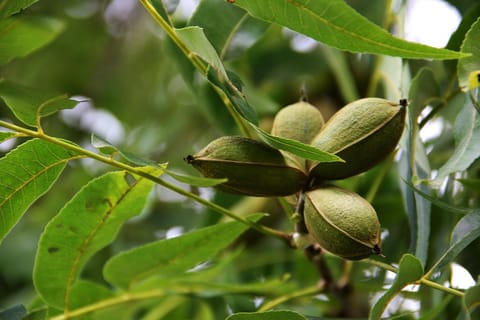
- Deer 101Do Whitetail Deer Eat Pecans?Do whitetail deer eat pecans? Yes, and in some orchards heavily, but most sources rank pecans below acorns. What biologists, extension and growers report.
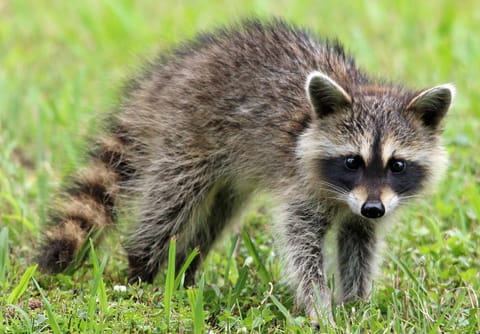
- Deer 101How to Keep Raccoons Out of Deer Feeder Corn and ProteinHow to keep raccoons out of deer feeder setups: cage the spinner, guard the legs, clear limbs, feed in daylight and use weight-drop hoods on protein feeders.
- Deer 101What Are Deer Antlers Called? Rack, Tines, Beams and BurrsWhat are deer antlers called? A set is a rack. Each antler has a burr, a main beam and points, or tines. The first point is the brow tine. Here are the terms.
- Deer 101What Is Best Deer Attractant? What Research and the Rules SayWhat is best deer attractant? Research says scent lures draw curiosity, not devotion, natural urine is banned in some states, and food is often illegal bait.
- Deer 101Why Do Bucks Break Antlers Mid-Season?A buck that loses a tine or beam mid-season usually broke it fighting, on a fence or in a collision, or from a velvet-stage weakness. Here is what happened.
- Deer 101What Are Buck Antlers and How Do They Grow?Buck antlers are bone, regrown every year. How the growth cycle works, what velvet is, why age and groceries beat genetics, and whether does can grow them.
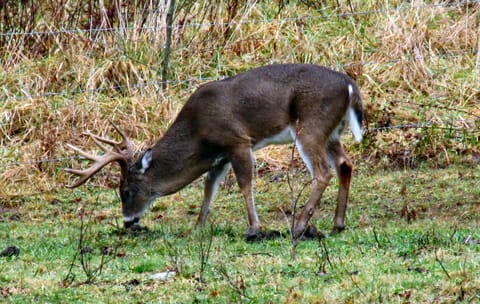
- Deer 101How Long Does It Take a Buck to Shed Velvet?Velvet shedding is a short end stage of the antler cycle, not a multi-week peel you can schedule by the day. Here is what MSU and MU Extension explain.
- Deer 101Deer Research Findings Hunters Can Actually UseNational Deer Association research digests turn university and agency projects into numbers hunters can use. Here are cooperative findings worth knowing.
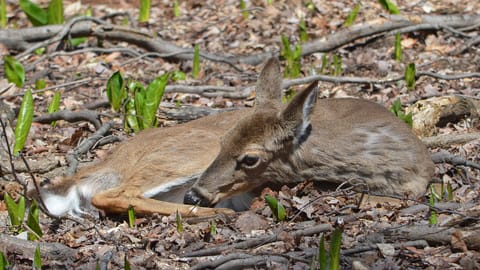
- Deer 101Where Do Deer Bed? What GPS Collars Say About Deer BeddingDeer bedding, from GPS collars: one Mississippi buck used 87 bedding areas in one season. Where whitetails bed by sex and season, and how to find beds.
- Deer 101Do Deer Movement Times by Zip Code Actually Work?Deer movement times by zip code come from 1930s solunar math, not deer data. What the charts compute, what GPS-collar studies found, and a better local read.
- Deer 101What Is the Deer Rut, and When Does It Happen?The deer rut is triggered by daylight, not the moon or weather, and it peaks at about the same time every year where you hunt. Here's what the research says.


Sources
- About | MSU Deer Ecology & Management Lab
- MSU Deer Ecology & Management Lab home page
- Deer University podcast | Natural Resources University
- White-tailed deer managed for state's hunters, farmers | MSU Extension
- MSU Deer Lab TV — YouTube channel About page
- YouTube: Buck Movement Study - Episode 1: Introduction
Comments