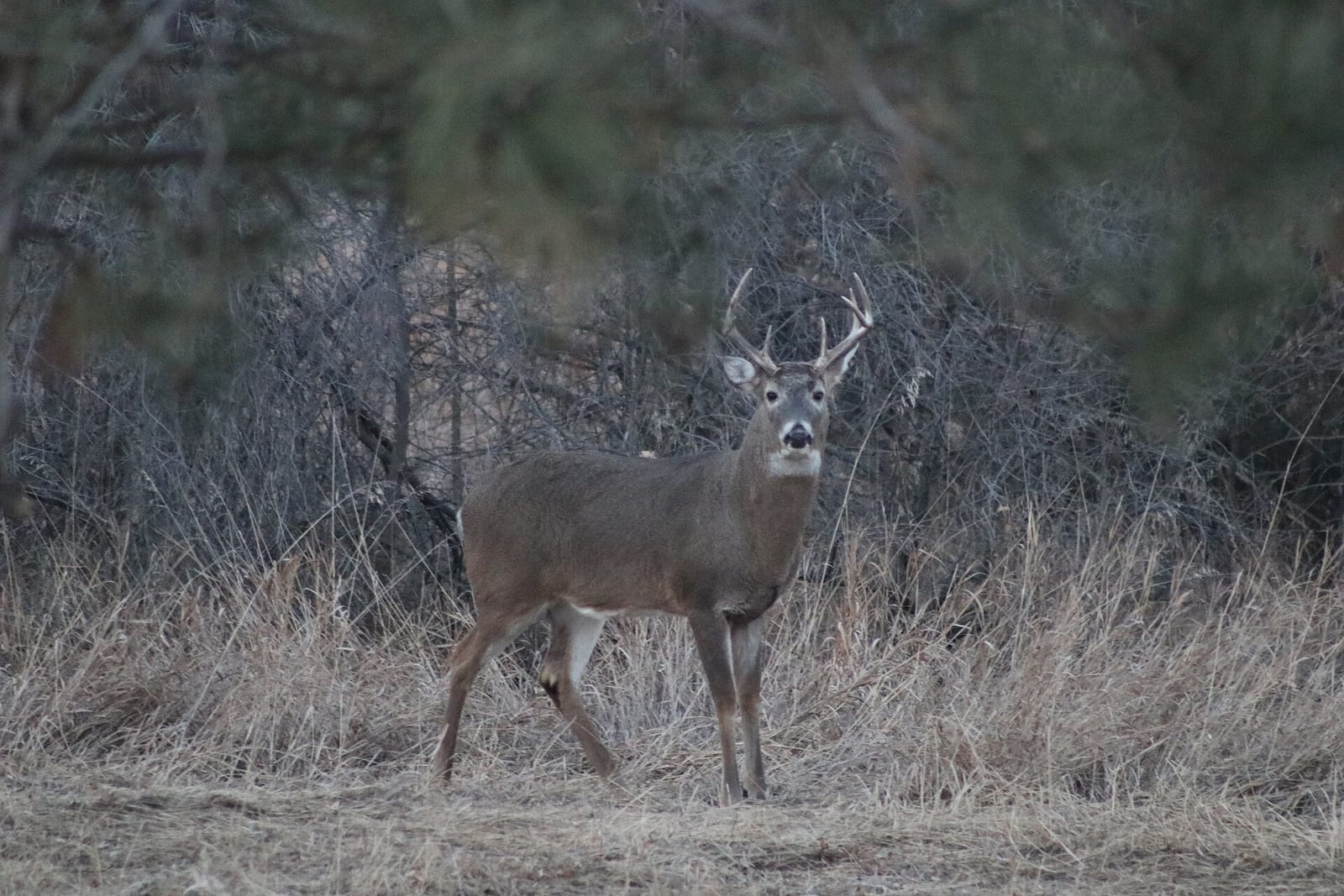
That is what antler point restrictions do, and Pennsylvania offers the best-studied example. Its 2002 rules, which required 3 or 4 points on one antler depending on area, were designed to protect at least half of yearling bucks (Wildlife Monographs). They did, and most hunters supported them, but not everyone liked the overall program that came with them (Wildlife Monographs).
Key Takeaways
- Yearling buck survival rose from under 20 percent to 64 percent after APRs, per PGC’s radio-collar data (PGC).
- In 2024-25, two of every three bucks taken in Pennsylvania were at least 2.5 years old (PGC).
- Georgia uses APRs on some WMAs: a legal buck needs 4 points of 1 inch on one side or a 15-inch spread (GA regulations).
What are we actually arguing about?
Mandates versus choice. Nobody disputes that some hunters pass young bucks voluntarily. The question is whether the state should require it.
The strongest case for required antler restrictions
Pennsylvania’s results. Before APRs, about 80 percent of bucks were harvested each year (PGC). Researchers found APRs cut the subadult harvest rate to 0.31, and adult buck harvest rose 29 percent statewide from 2000 to 2005 (Wildlife Monographs). PGC reports hunters are as successful harvesting a buck now as before (PGC), and 2024-25 success, about 28 percent, was the highest since at least the late 1980s (PGC).
The strongest case against
It takes choice away and can frustrate hunters. In the study’s longitudinal panel, 29 percent became less supportive of APRs over three years and 23 percent more; 41 percent rated the deer management program lower after three years (Wildlife Monographs). Genetics is a common worry: that APRs shoot out good young bucks. PGC says yearling antler points are poor predictors of later antlers and most bucks are killed after breeding (PGC).
What does the evidence say?
- Biology: success in Pennsylvania. Researchers called APRs biologically and socially successful (Wildlife Monographs).
- Breeding timing: no change. Average conception was Nov. 17 before and Nov. 16 after (PGC).
- Confounder: PGC raised antlerless harvest at the same time (Wildlife Monographs).
- Support: 61 to 70 percent of random-sample hunters supported statewide APRs during the study (Wildlife Monographs); Penn State says support remains above 60 percent (Penn State).
What changes the answer?
- Local antler growth. A rule tuned to one region may protect too many or too few bucks elsewhere (PGC).
- Points or spread. PGC chose points because a 15-inch spread would have protected most adult bucks too (PGC).
- Exemptions. Pennsylvania excluded junior hunters (PGC).
Your call
Pennsylvania’s data is strong for Pennsylvania. Would you support an APR in your state if your agency showed it fit local antler growth, or should passing young bucks stay a personal choice?
Related reading on RAD:
The other side of it
The guy who shoots every spike and then complains about the lack of big bucks is running his own antler restriction study. He just has not read the results.
Sources
- Biological and social outcomes of antler point restriction harvest regulations for white‐tailed deer
- Antler Restrictions in Pennsylvania | Game Commission | Commonwealth of Pennsylvania
- GAME COMMISSION RELEASES DEER HARVEST ESTIMATES | Game Commission | Commonwealth of Pennsylvania
- GA regulations (svsfyqqhjlyhrfuhwpox.supabase.co)
- The stick or the carrot? | Penn State Deer-Forest Study
Comments