Key takeaways
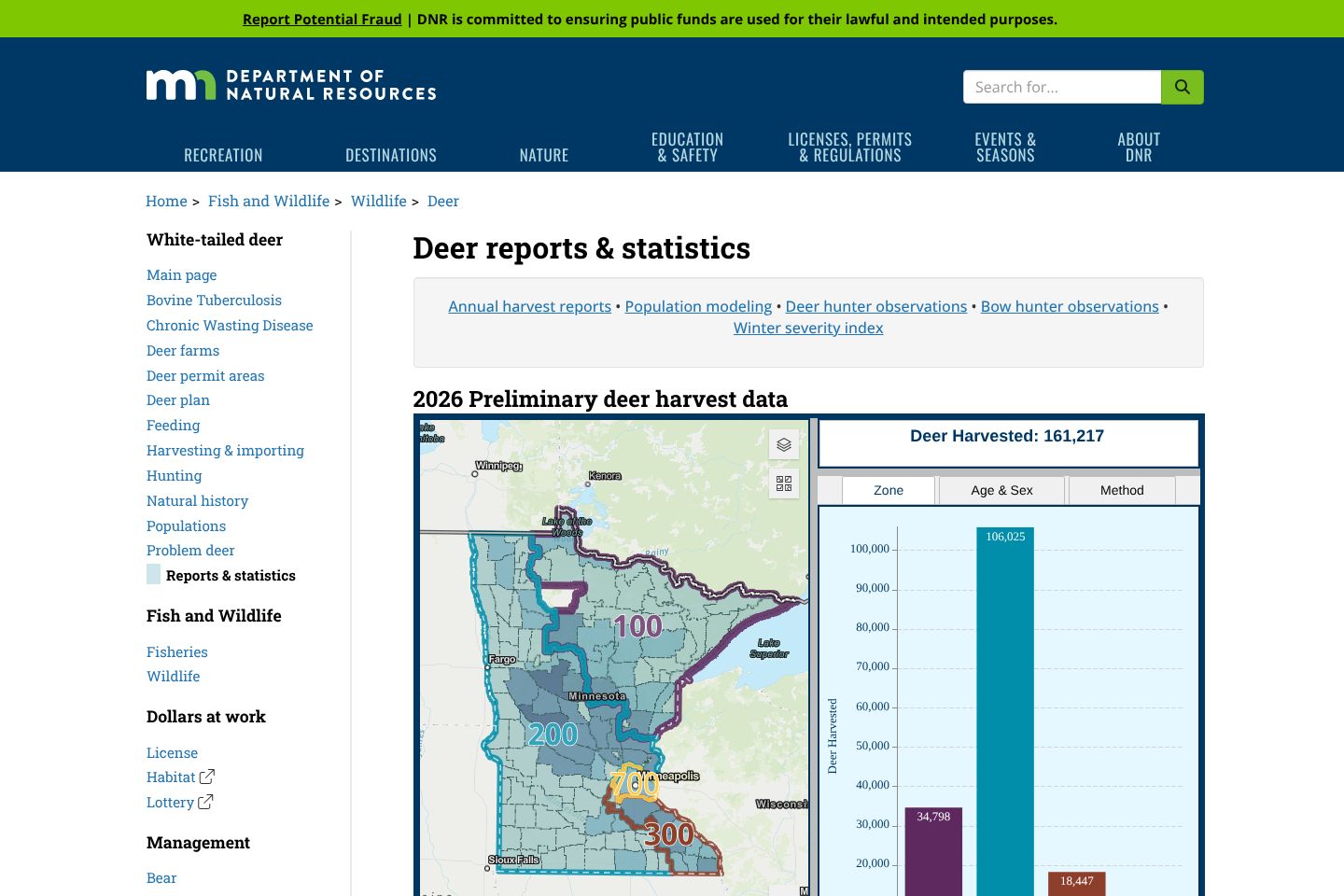
State deer harvest reports are built from hunter telecheck/registration and sometimes from check-station or survey data. Read the year, the geography (statewide vs county/zone), the antlered vs antlerless split, and the method footnotes before claiming a herd is “up” or “down” (Minnesota DNR deer reports and statistics; Iowa deer hunting; KDFWR Deer).
What most reports count
Harvest reports usually tabulate deer registered by hunters after the season, not a live census of every deer in the woods (Minnesota DNR deer reports and statistics; Iowa deer hunting). A jump in harvest can mean more deer, more hunters, longer seasons, more antlerless tags, or better weather - not one cause alone (Minnesota DNR deer reports and statistics).
Geography first
Open the county or zone table, not only the statewide headline. Iowa Zone A vs Zone B and Kentucky deer zones show how bag rules differ by map color; a statewide average can hide a county that flooded antlerless tags (Iowa deer hunting; KDFWR Deer).
Antlered vs antlerless
Separate buck and doe columns. Heavy antlerless harvest years often track management goals to cut density, not hunter failure on bucks (Minnesota DNR deer reports and statistics; KDFWR Deer).
Method and season footnotes
Archery, firearm, and muzzleloader rows (or youth seasons) show where harvest happened. Comparing only modern-gun bucks across years while archery opportunity expanded will misread the trend (Iowa deer hunting; KDFWR Deer).
Effort and license context
Where agencies publish hunter numbers or license sales beside harvest, compute a crude success rate before declaring a boom (Minnesota DNR deer reports and statistics). Harvest up with hunters up may be flat success.
Disease and weather caveats
EHD years and harsh winters can cut both deer and harvest independently of tag policy - read disease notes when the agency publishes them (NYSDEC EHD; Minnesota DNR deer reports and statistics).
How to use a report as a hunter
- Pull the latest full PDF or dashboard, not a social-media screenshot (Minnesota DNR deer reports and statistics).
- Note the season year covered (Minnesota DNR deer reports and statistics).
- Compare your county/zone to the state (Iowa deer hunting; KDFWR Deer).
- Split antlered/antlerless and method (Minnesota DNR deer reports and statistics).
- Cross-check current season regulations - last year’s harvest does not rewrite this year’s bag (Iowa deer hunting; KDFWR Deer).
Official digest checks
Bookmark your state DNR deer statistics or harvest dashboard next to the current regulations PDF (Minnesota DNR deer reports and statistics; Iowa deer hunting; KDFWR Deer).
Recordkeeping tip
Save the PDF or dashboard URL with the date you downloaded it so later arguments cite the same edition (Minnesota DNR deer reports and statistics).
If the report uses fiscal year or license year labels, note that those may not match calendar season dates in the regulations digest (Iowa deer hunting; Minnesota DNR deer reports and statistics).
Success rate math
When a report lists both deer harvested and hunters afield (or licenses sold), divide harvest by hunters for a rough success rate and compare that rate across years before celebrating a raw harvest record (Minnesota DNR deer reports and statistics).
Registration completeness
States that require telecheck or registration capture most legal harvest but still miss illegal take and some wounding loss - treat published harvest as a minimum managed kill, not total mortality (Iowa deer hunting; KDFWR Deer).
Multi-year charts
Prefer three- to five-year charts over single-year spikes. One mild winter plus extra antlerless tags can create an outlier year (Minnesota DNR deer reports and statistics).
The other side of it
Even a careful read only gets you so far, because a harvest report counts registered deer, not the deer still standing in the woods. Crude success rates help, but they can’t fully separate a bigger herd from a longer season or a mild winter, and illegal take and wounding loss never show up at all. Lean on the multi-year trend and the agency’s own notes before telling anybody the herd boomed or busted.
Keep reading
Latest deer news
Comments