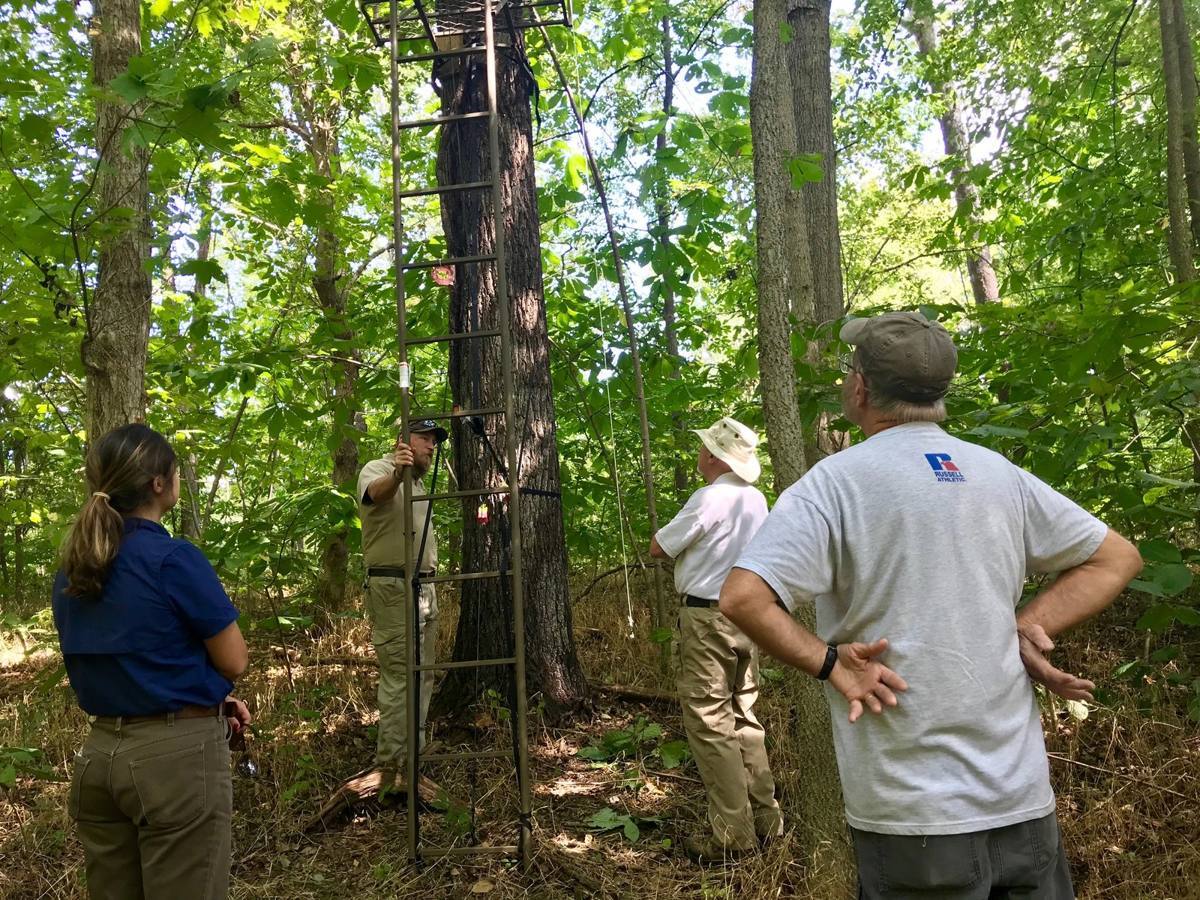
If you’re searching for how to make a tree stand, start with what the people who teach hunter education say: New Jersey’s hunter education manual states flatly, “Homemade stands should NEVER be used” (NJ Fish & Wildlife). That’s not the answer a guy with a pile of lumber wants. But falls from stands are a real way to get hurt hunting, and the agencies that clean up after those falls are clear about homemade builds. So this guide covers why, and how to “make” a stand the safe way: assembling and hanging a certified one correctly.
Key Takeaways
- New Jersey’s hunter education manual says homemade stands should never be used. Kentucky’s wildlife agency recommends against them.
- Virginia says few people have the knowledge and expertise to design and build a homemade ladder stand.
- Use a stand certified by the Treestand Manufacturers Association (TMA) and assemble it exactly per the instructions.
- New Jersey says three people are needed to put up a ladder stand safely.
- Wear a full-body harness from the time you leave the ground until you’re back on it.
How to make a tree stand: why agencies say don’t build one
Kentucky Department of Fish and Wildlife Resources says “most serious injuries and deaths incurred afield are caused by falls from tree stands.” Its R3 Branch Manager Rachel Crume “recommends against using homemade stands, as they tend to be dangerous and unreliable. Commercially manufactured stands are industry certified and tested” (KDFWR).
Virginia’s Department of Wildlife Resources describes homemade ladder stands as “usually made of various combinations of wood, metal, plastics, etc.” with fasteners including “bolts, screws, nails, ropes and welding.” Its warning: “Few people have the knowledge and expertise to design and build a stand of this type; therefore one must use extreme caution with these stands” (Virginia DWR).
New Jersey’s manual reprints the TMA guideline: “NEVER use homemade or permanently elevated stands or make modifications to a purchased treestand without the manufacturer’s written permission.” It also says, “Commercially made stands certified by the Treestand Manufacturer’s Association (TMA) are best.” For how to read those certification labels, see treestand ASTM and TMA rating labels explained.
Choose the type of stand
New Jersey’s manual lays out the main portable types:
- Ladder stands “usually provide a platform 10 to 15 feet above ground” and are “leaned against a tree and chained or strapped into place.”
- Tower stands are “free-standing and can be placed anywhere that has a firm base.”
- Fixed-position stands “provide about four square feet of space” and need “separate climbing aids such as segmented ladders or screw-in steps (where they can be used legally).”
- Climbing stands let a hunter “walk” a stand up a tree but are “not suited for trees with shaggy bark.”
Kentucky adds that “Saddle type suspension systems are also growing in popularity.” If that’s where you’re leaning, read is saddle hunting safe.
Pick the right tree
Crume’s advice: “Choose trees that are at least telephone pole-sized in circumference, growing straight and with fewer limbs,” and “Check for storm damage on trees, as well.” Kentucky also says to “stay away from dead trees and confirm that tree stands are allowed on hunting properties before installing one.” The TMA guideline in New Jersey’s manual says, “Do not climb or place a treestand against a leaning tree.”
Assemble and hang a ladder stand
Virginia DWR’s steps for putting up a ladder stand:
- “Assemble the stand according to the manufacturer’s instructions.” If parts are missing, contact the manufacturer and “Do not make substitutions unless the manufacturer agrees.”
- “Clear the area around the tree of objects that are hazards.”
- “Before setting the stand against the tree attach a temporary lifeline to the platform/seat.”
- “Have one or more people to assist raising and stabilizing the stand.” New Jersey’s manual says, “Three people are needed to erect a ladder stand safely.”
- Anchor “a board to the ground with rods to prevent the rails from sinking into the ground.”
- Put on your harness, clip into the temporary lifeline with a prusik, climb, and strap the stand to the tree.
- Attach the main lifeline and remove the temporary one.
Virginia also says “A complete inspection must be made of the stand and all other equipment before each use,” and warns hunters not to “exceed the maximum rated loads.” For more on weight ratings, see treestand load rating labels decoded.
Climb and hunt with a harness
Virginia says “Everyone must properly employ a fall arrest system from the time they leave the ground until such time as they are back on the ground.” Kentucky says “A majority of tree stand accidents happen when climbing up or down,” and recommends “Three-point climbing, in which only one foot or hand leaves the ladder at any given time.” Use a haul line for your gear. See full-body harness standards for harness basics.
Take it down
Crume says, “Don’t leave your stands out all year long,” because “Growing tree trunks can actually stretch the fabric of straps and weaken them over time.” The TMA guideline in New Jersey’s manual goes further: “Never leave a treestand installed for more than two weeks.”
FAQ
Can I build my own wooden tree stand? New Jersey’s manual says homemade stands should never be used, and Kentucky and Virginia warn against them. Check property and public-land rules too.
How high should a ladder stand be? New Jersey says ladder stands usually put the platform 10 to 15 feet up.
How many people does it take to put up a ladder stand? New Jersey says three.
The other side of it
Some hunters will say their granddad’s 2x4 stand has held for thirty years and the warnings are just liability talk from people who sell stands. Maybe that one stand is fine. But the agencies writing these warnings aren’t selling anything, and Virginia’s point is that few people know enough to design one. The hunter who trusts a stand because it hasn’t broken yet is running the same logic as a guy who skips the harness because he hasn’t fallen yet.
Keep reading
Latest deer news
Sources
- Hunter Education Manual Chapter 12, Tree Stand Safety, New Jersey Division of Fish and Wildlife
- Stay safe while deer hunting this fall, Kentucky Department of Fish and Wildlife Resources
- Ladder Stand Safety, Virginia Department of Wildlife Resources
Comments