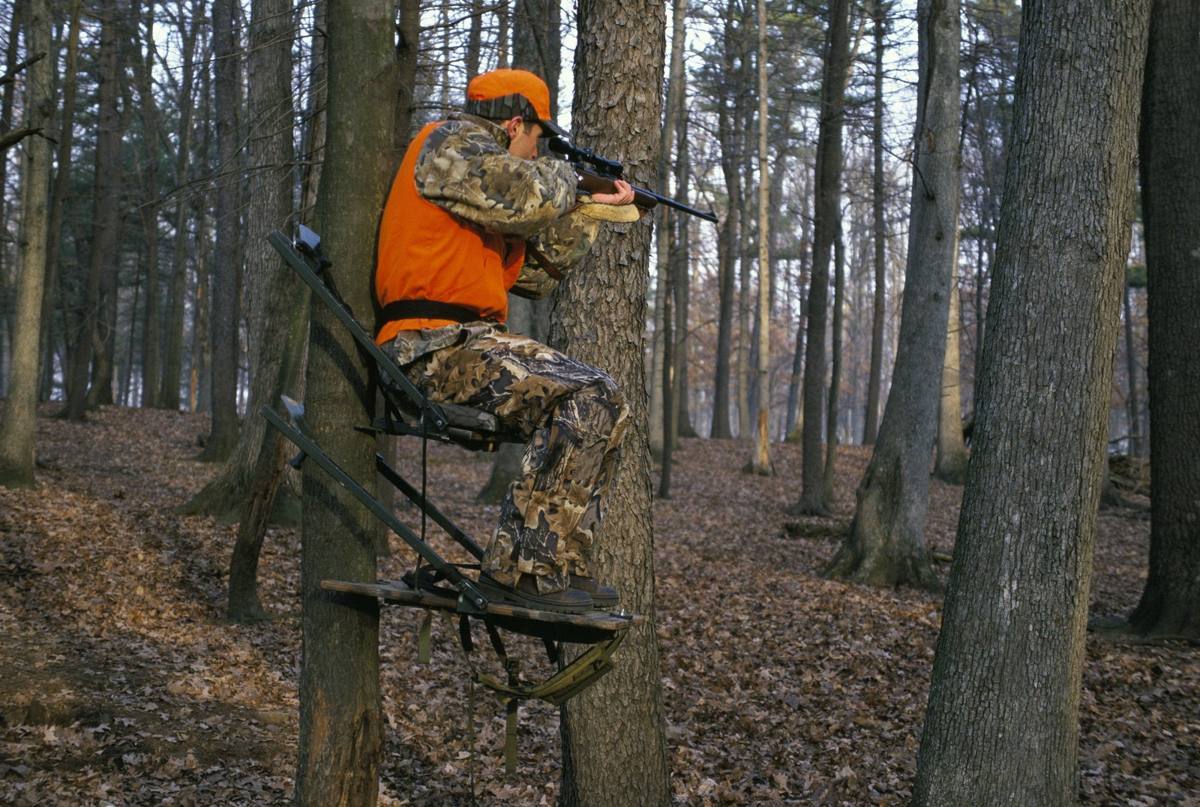
The sticker on a treestand is a standards pointer, not décor. Intertek’s TMA-approved testing overview lists ASTM F3249 as the standard specification for treestands, climbing sticks, and tripod or tower stands, with F3545 covering static loading tests for those products (Intertek). Fall-arrest harnesses hitch to ASTM F2337; hunting saddles have F3544 static load capacity testing (Intertek). Industry standards for treestands and harnesses are developed and approved by TMA members, and Intertek is a TMA-approved test lab that evaluates products to confirm they meet or exceed those standards (Intertek). TMA manufacturing members must third-party test to recognized ASTM/TMS standards, and from 2016 forward member products must comply with current ASTM standards under subcommittee F08.18 (Intertek). The recognized suite also includes F2123 instructions, F2125 static stability, F2126 static load capacity, F2128 repetitive loading, F2275 manufacturer QA, F2531 seat load capacity, and F3412 terminology (Intertek). Reading the hangtag means matching those F-numbers to capacity, FAS, and instruction claims before you leave the ground on opening morning (Intertek).
Key Takeaways
- F3249: specification for stands, sticks, tripods/towers (Intertek).
- F3545: static loading test method for those products (Intertek).
- F2337: fall-arrest system test (Intertek).
- F2123: instructions practice; F2275: manufacturer QA (Intertek).
- TMA members require third-party certification (Intertek).
Decode the acronym pile
TMA is the industry association; ASTM publishes the consensus test methods and specifications Intertek lists for certification (Intertek). Older Treestand Manufacturing Standards (TMS) numbers map into ASTM designations - load-capacity TMS entries now sit inside F3249/F3545 (Intertek). TMA’s own crosswalk marks the old TMS 01, 02 and 05 practices and the ASTM F2120, F2121 and F2124 series as withdrawn and folded into F3249 (TMA Standards). Packaging that leans only on those retired numbers is worth checking with the maker. F3412 is the terminology standard so labels share language (Intertek). Intertek’s role on the hangtag story is third-party confirmation that products meet or exceed the recognized list hunters should be able to verify (Intertek).
Capacity labels
Static load capacity claims should trace to testing under the F3545/F3249 family for stands and sticks (Intertek). Seat-specific capacity historically referenced F2531 before consolidation notes on Intertek’s list (Intertek). F2125 static stability and adherence and F2126 static load capacity also appear in the recognized suite for related stand products (Intertek). Never exceed the posted user weight including clothing, boots, and gear (Intertek). The rating covers you plus clothing, pack and weapon, so a 300-pound stand is not fine for a 290-pound hunter with a 40-pound pack (TMA Standards). Watch for partial claims too. ASTM F3249 prohibits partial use of the spec: a product that fails any requirement has failed the specification and can’t be sold as meeting parts of it (ASTM F3249). A sticker that quotes a weight without claiming the full spec isn’t how a compliant stand is labeled.
Harness and saddle marks
Full-body fall-arrest systems are evaluated under F2337 (Intertek). Hunting saddles have a dedicated static load capacity method, F3544 (Intertek). A stand sticker without a matching FAS harness story is an incomplete safety system for hang-on or climber use (Intertek). Carry the harness that was tested as part of the fall-arrest system, not a random waist belt leftover from another sport (Intertek).
Instructions are auditable
F2123 standard practice for treestand instructions means the manual is part of compliance (Intertek). F2275 addresses manufacturer quality assurance programs behind the label (Intertek). F2128 repetitive loading capability testing speaks to durability under repeated use cycles all season (Intertek). Lost manuals are a compliance problem, not a trivia problem (Intertek).
Why labels change over time
Intertek notes the shift from older TMS designations into current ASTM numbers under subcommittee F08.18, with TMA members required to comply with current ASTM standards from 2016 forward (Intertek). A stand bought a decade ago may carry TMS language that maps to today’s F3249/F3545 family, while a new hangtag should cite the ASTM methods on Intertek’s recognized list (Intertek). When replacing one stick section or a FAS harness, match the new component’s standard claims to the rest of the system instead of mixing unlabeled garage gear with certified pieces (Intertek).
Buyer checklist
Look for TMA member / ASTM testing claims, readable capacity, FAS harness inclusion, and intact instructions before money leaves your wallet (Intertek). Match climbing-stick ratings to the same F3249/F3545 world as the stand (Intertek). Replace gear that lost labels or failed inspection per the manual, and stay under the lowest-rated component in a mixed stick-plus-stand system (Intertek).
Bottom line
Read treestand labels as ASTM/TMA test pointers - F3249/F3545 for structure, F2337 for the harness - and stay under posted capacity every sit (Intertek).
The other side of it
All of this rests on one test lab’s overview page, and a label only tells you the product passed when it was new. It can’t tell you whether your stand survived years strapped to a tree in the weather, and the F-number soup doesn’t mean much to a hunter standing in a store aisle. Inspection still does the heavy lifting. Plenty of guys can recite F3249 and still clip into a harness older than their truck.
Keep reading
Latest deer news
Comments