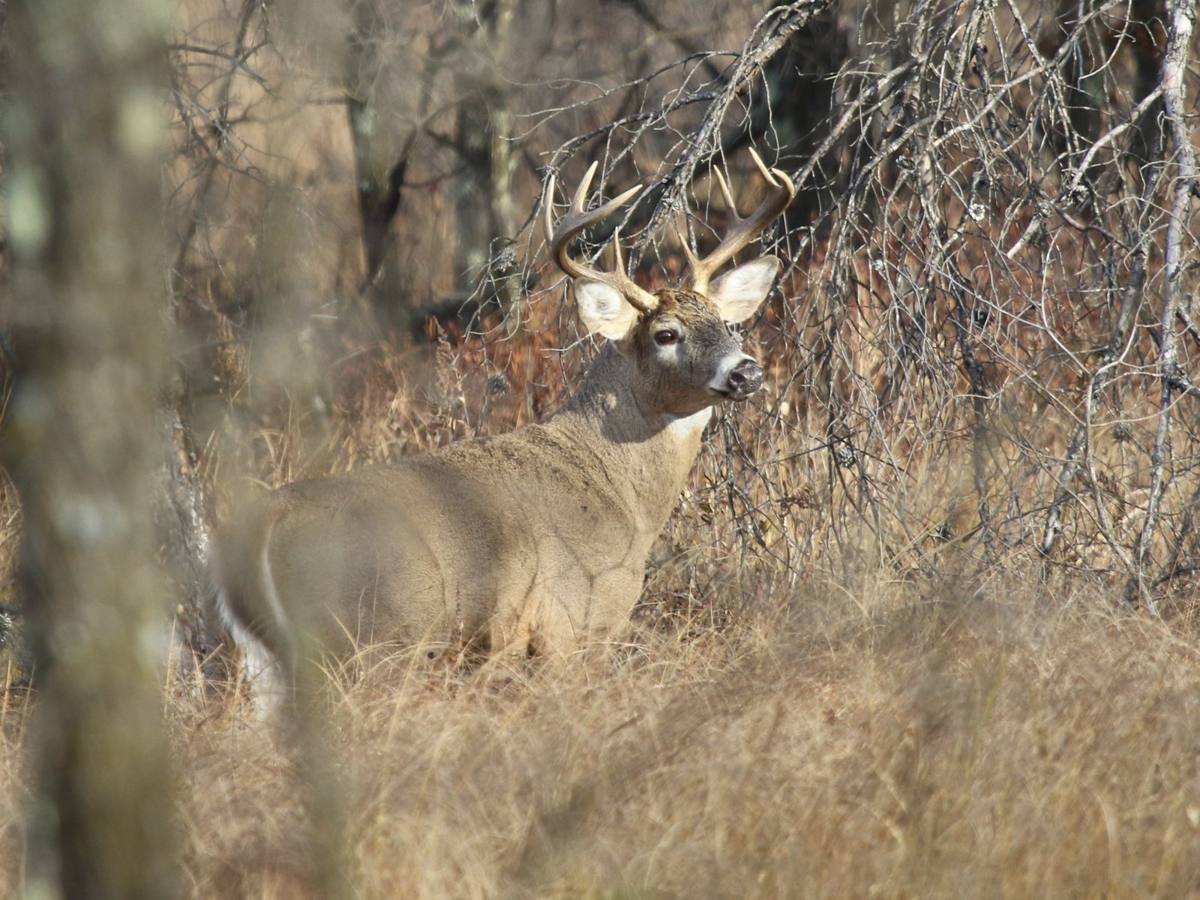
The deer rut in Ohio peaks in the first three weeks of November. In the most recent breeding study by Ohio Division of Wildlife biologists, more than 70% of adult does were bred between Nov. 3 and Nov. 23, the same window found in the 1960s (Tonkovich et al., Ohio Journal of Science, 2004). Courtship starts in mid-October and doe fawns breed about a month after the adults, but in 2026-27 archery is the only statewide season open through that whole peak.
Season dates verified against ODNR’s 2026-27 season release on 2026-11-05.
Key Takeaways
- Peak breeding: more than 70% of adult does bred Nov. 3-23, and fawned May 25 to June 14, in both the 1960s and 1997-99 studies (Tonkovich et al.).
- Courtship starts mid-October. Bucks chase a doe “over a period of five or six days prior to mating,” per ODNR.
- Second rut: doe fawns conceive about a month later than adult does, spread over a wider stretch (Tonkovich et al.).
- 2026-27 seasons: archery runs Sept. 26 to Feb. 7, youth gun is Nov. 21-22, and gun week (Nov. 30 to Dec. 6) falls after the adult peak (ODNR).
- Bows took more bucks: in 2025-26, archery hunters checked 55,205 antlered deer to 40,793 for every gun season combined (ODNR harvest report).
When does the rut start in Ohio?
Mid-October, by ODNR’s account. Its white-tailed deer page says: “Courtship activities among deer begin in mid-October. Bucks will chase does over a period of five or six days prior to mating. The buck will mate with a doe several times and remain with her for a few days, keeping other males away.”
Ohio State University Extension’s Marne Titchenell wrote in 2016 that the rut “takes place October through December in Ohio,” and that “In November, deer are entering the peak of their breeding season.”
When is peak rut in Ohio?
For hard dates, you need dead does, unfortunately. Division of Wildlife biologists Michael Tonkovich, Michael Reynolds, William Culbertson and Robert Stoll Jr. collected roadkilled does in February through April of 1997, 1998 and 1999, measured the fetuses and worked backward to conception dates. More than 70% of adult does had been bred between Nov. 3 and 23 (Tonkovich et al.).
They also compared that with 1960s data and found “the timing of the rut had not changed in Ohio between the 1960s and late 1990s.” The peak “appeared to be a week later” in the late ’90s, which the authors thought might come down to differences in methods or sampling. They added that Ohio’s timing was similar to Missouri’s.
Here’s the honest catch. That 1997-99 work is the newest published Ohio conception data we could find. But Ohio deer didn’t move their dates across 30 years, and the National Deer Association says rut timing in any one place is “consistent year to year.”
Is there a second rut in Ohio?
A small one. Citing the 1960s work, the study says conception dates of doe fawns “occurred a month later and had a wider distribution than for adult does.” Alabama’s wildlife director, Chuck Sykes, used Ohio as his example of a tight northern rut in a 2015 ADCNR article: “If I’m managing property in Illinois or Ohio, you’ve got two weeks you can hunt the rut, and then you may have two weeks with a small secondary rut.”
How does the Ohio rut line up with the 2026-27 seasons?
| Season (2026-27) | Dates | Where it lands |
|---|---|---|
| DSA early archery | Sept. 12 to Feb. 7 (DSA only) | Whole rut |
| Archery | Sept. 26 to Feb. 7 | Whole rut, peak and second rut |
| DSA early gun | Oct. 10-12 (DSA only) | Around the start of courtship |
| Youth gun | Nov. 21-22 | Last days of the Nov. 3-23 peak |
| Gun | Nov. 30 to Dec. 6 | After the adult peak |
| Gun (December weekend) | Dec. 19-20 | Inside the 1960s doe-fawn breeding window (Nov. 24-Dec. 21) |
| Muzzleloader | Jan. 2-5, 2027 | Post-rut |
Dates are from ODNR’s Wildlife Council release. Hours, bag limits and the DSA townships are on our Ohio deer season page.
The study’s authors noted that Ohio’s gun season “has traditionally occurred after the peak of the rut.” They found more than 70% of adult does, 1.5 years and older, bred Nov. 3-23, and doe fawn conceptions came about a month later (Tonkovich et al.). The fawn dates come from the 1960s Ohio study they cite. Nixon reported “70 percent of fawn conceptions occurring between November 24 and December 21” (Nixon, Ohio Journal of Science, 1971). Gun week and the December weekend both fall inside that window.
Why do Ohio bowhunters kill so many bucks?
Look at who’s in the woods during the peak. ODNR’s 2025-26 harvest report, through Feb. 1, 2026, shows 232,142 deer checked. Gun hunters (rifle, shotgun, muzzleloader and handgun) took more deer overall, 124,359 to archery’s 107,783. But archery hunters took 55,205 antlered deer to 40,793 for gun hunters. Add Ohio’s one-antlered-deer limit, which the release says applies “regardless of where or how it is taken,” and a lot of buck tags are filled before gun week opens.
What are the best days to hunt the rut in Ohio?
Nov. 3-23, if you go by the breeding data (Tonkovich et al.). Chasing comes first, since ODNR says bucks chase a doe five or six days before mating, so the running starts ahead of those breeding dates.
As for every “2026 Ohio rut prediction” floating around, we didn’t make one. The breeding data already says the rut lands in the same weeks every year.
So if you only get one week off, do you take a bow in mid-November, or hold out for gun week after most adult does are bred?
What time of day should you hunt the Ohio rut?
Dawn and dusk, then stay put if you can. ODNR says whitetails are “active around the clock, but less so during daylight hours,” and are most often moving at dawn and dusk. The NDA adds that your chance of seeing a buck at midday “is highest during the rut,” though it’s still lower than the first and last few hours of the day.
Why are there so many deer on Ohio roads in November?
The rut. OSU Extension’s Titchenell wrote that a deer’s daily travel of 1 to 4 miles is “increased dramatically in males during the breeding season,” and told drivers to “be extra careful throughout November, as the number of accidents peak during this month.” ODNR says to pay special attention October through December.
Related reading on RAD:
- Deer rut: phases, timing and the moon
- Ohio deer season 2026-27
- Deer hunting in Ohio
- How long can a deer hang?
The other side of it
The deer rut in Ohio data comes from roadkilled does nearly 30 years ago, and an average breeding window says nothing about whether your bucks move in daylight on your farm. Hunting pressure, food and a warm spell change what you see, even if they don’t change when does are bred. And gun hunters still checked more deer overall last season, so the slug-gun crowd isn’t wrong to like gun week. As for the yearly 2026 Ohio rut predictions, the deer published theirs in 2004 and haven’t issued a revision.
Keep reading
Ohio's biggest bucks in the record book →
Latest deer news
Sources
- Tonkovich et al., Ohio Journal of Science, 2004 (kb.osu.edu)
- Nixon, Ohio Journal of Science 71(4), 1971 (OSU Knowledge Bank)
- white-tailed deer page (ohiodnr.gov)
- Wildlife Council release (ohiodnr.gov)
- 2025-26 harvest report (dam.assets.ohio.gov)
- White-tailed Deer Road Watch | BYGL
- says (deerassociation.com)
- Whitetail Rutting Activity in Alabama Varies Widely | Outdoor Alabama
Comments