Saddle hunting is hunting from a tree while you sit in a fabric harness roped to the trunk, with a small platform or a ring of steps under your feet instead of a stand. You climb on sticks, stay clipped in with a lineman’s belt on the way up, switch to a tether at height, and lean back into the saddle to hunt. Done right, you’re tied to the tree from the ground up and back down, which is the whole safety argument. The kit runs 10 to 15 pounds by the industry’s own count, and the tradeoffs are real: weak-side shots, a learning curve, and a standards picture thinner than the marketing suggests.
Key Takeaways
- A setup has five parts: saddle, lineman’s belt for climbing, tree tether for hunting height, a climbing method (usually sticks), and a platform or steps (Tethrd; Latitude Outdoors).
- The Kalkomey hunter-ed saddle course puts a saddle at “typically less than five pounds,” a full system at “10 to 15 pounds,” and tree stands at 10 to 45 (Hunter-Ed).
- One ASTM test method exists for saddles, F3544, “Hunting Saddle Static Load Capacity,” published 2021 and reapproved 2026 (ASTM). The Treestand Manufacturers Association’s standards page lists no saddle standard (TMA).
How does a saddle hunting setup actually work?
Latitude’s own primer says it best: “Think of a hunting saddle as a rock climbing harness for hunting” (Latitude Outdoors). The saddle wraps your hips. A short rope called the bridge runs across the front, and the tether clips to that.
The sequence the makers describe: saddle on at the truck or the tree. Lineman’s belt around the trunk, clipped to both hips, and up the sticks you go, sliding the belt as you climb. At height you hang a platform, girth-hitch a tether above your head, clip it to the bridge, and only then unclip the belt. Tethrd tells you to attach the tether “before stepping onto the platform” and remove the lineman’s belt “only after you are secure on the platform,” then reverse it coming down (Tethrd). You hunt facing the tree, leaning back, with the trunk as your cover.
What’s the difference between the tether and the lineman’s belt?
Two ropes, two jobs. The lineman’s belt is the climbing rope: around the tree, clipped at both hips, hands free for the sticks. The tether is the hunting rope: hitched above you, clipped to the bridge at one point so you can swing around the trunk. The hunter-ed course calls it “critical that you use a tether in addition to a lineman belt” (Hunter-Ed).
Platform or ring of steps?
Either works. Tethrd says feet go “on a platform or on a ring of strap-on or screw-in steps” (Tethrd). The ring packs lighter. The platform sets faster and gives you more to push against on a shot.
Is all of that safe? The fall risks, suspension trauma, the standards that do and don’t cover saddles, and the recall record are on is saddle hunting safe?.
What does a saddle hunting kit weigh?
Less than a stand, which is why the method took off with public-land bowhunters. Manufacturer and course figures only:
| Piece | Stated weight | Source |
|---|---|---|
| Saddle | “typically less than five pounds” | Hunter-Ed |
| One climbing stick (Tethrd One Stick) | 1 lb | Tethrd |
| Platform (Tethrd Predator CFX) | 2.3 lb | Tethrd |
| Full system: saddle, ropes, sticks, platform | “10 to 15 pounds” | Hunter-Ed |
| Tree stand, for comparison | 10 to 45 lb | Hunter-Ed |
Bowhunting.com puts a light treestand at about 13 pounds against about 5 for a saddle and platform (Bowhunting.com). Note who’s talking: the hunter-ed saddle course is produced by Kalkomey with Tethrd, so that’s the industry weighing itself. How you carry the pile is its own page.
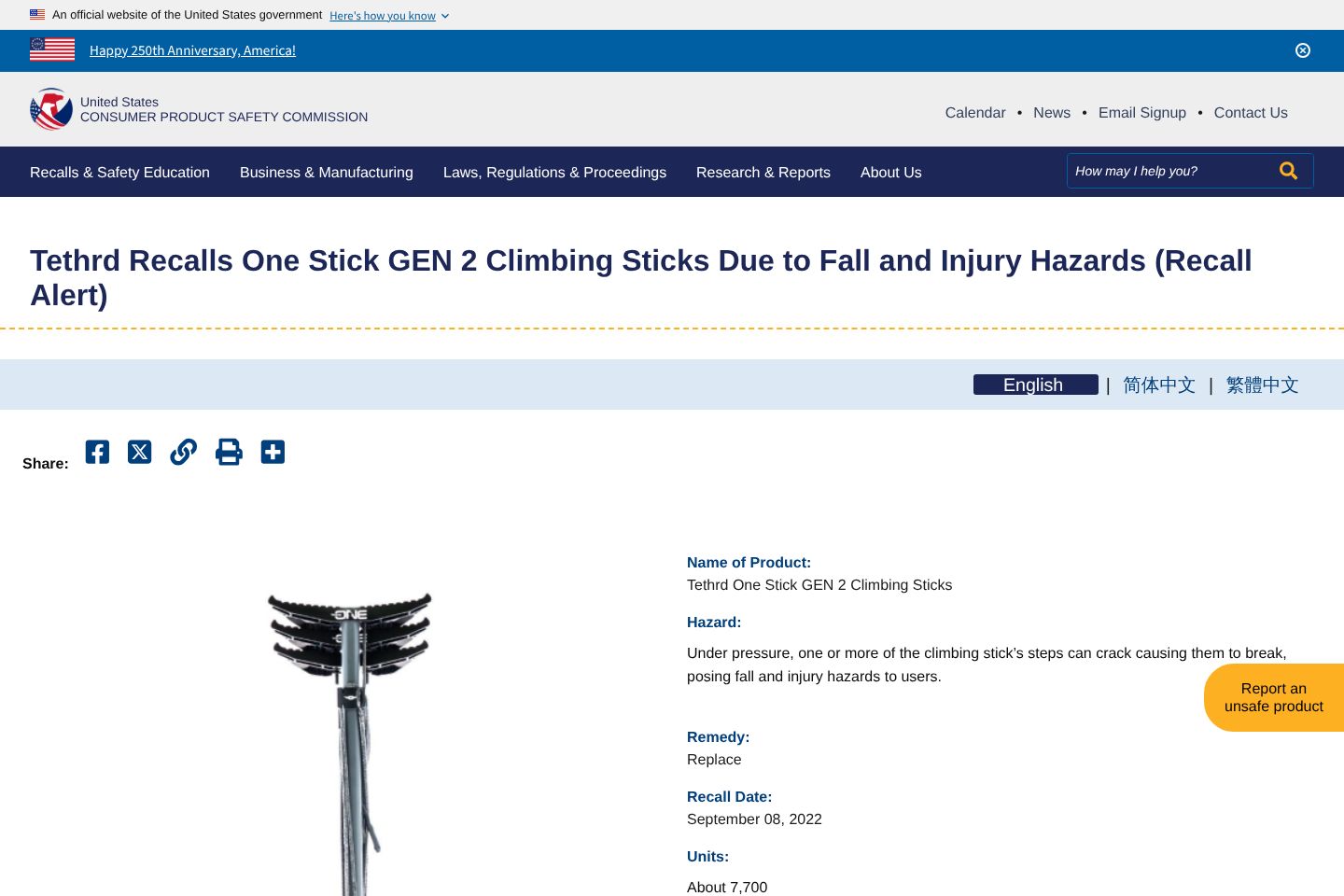
On cost, we won’t print prices we couldn’t pull from the makers’ pages today. The one government-documented price point is the 2022 CPSC notice listing One Stick GEN 2 packs at $140 to $350 (CPSC). Four or five line items like that and you see why a full kit is a real purchase.
Where did saddle hunting come from?
Bowhunter magazine traced it to James Green, who in 1961 bought military webbing at a surplus store in Marietta, Georgia, and strapped himself to the tree because he kept dozing off on limbs. The family sold Green’s Tree Saddles by word of mouth, patented one in 1989, renamed the company Trophyline in 2000 and relaunched it in October 2019 (Bowhunter). How it went mainstream with the mobile crowd is a story we’re saving for its own piece.
What are the downsides of saddle hunting?
Weak-side shots. You face the tree, so a deer behind your off shoulder is a problem. Grossman missed a Kentucky buck that circled behind him and called it a lesson in “how tough it can be to make a weak-side shot” (NDA). Field & Stream agrees: “Off-side shots are doable, but strong-side shots are much easier” (Field & Stream).
Comfort takes reps. Grossman had hip discomfort an hour into his first sit (NDA). Tethrd’s page names a hunter who says the saddle helped his hip pain (Tethrd). Both can be true. The first three sits are the tax.
Guns and crossbows want a rest. The trunk steadies a shot from the front. Anywhere else you’re freehand, which a stand rail makes easier (NDA).
Gear creep. “Too much garbage hanging off your saddle makes it cumbersome to move” (Field & Stream).
The leaning-tree question. TMA’s guidelines say “Never select a leaning tree” (TMA guidelines, PDF). Tethrd’s guide explains how to set up on one (Tethrd). The guideline was written for stands and saddles change the physics, but know that the industry’s safety sheet and a leading maker’s how-to disagree here.
Rules vary. The hunter-ed course warns that “saddle hunting restrictions can vary by state” (Hunter-Ed). Screw-in steps and tree-damage rules on public ground are the usual catch, and those live on your agency’s page.
Related reading on RAD:
The other side of it
The case against saddle hunting isn’t that it’s dangerous. It’s that for a lot of hunters it solves a problem they don’t have. If you hunt the same two private-land stands every fall, a hang-on with a lifeline is already connected from the ground, already comfortable and already paid for, and the 10-pound savings means nothing on a 60-yard walk from the truck. Then again, the loudest “saddles are a fad” guys tend to be the ones hauling a 40-pound climber up a tree with no harness on, so grade on a curve.
Keep reading
Latest deer news
Sources
- Saddle Hunting 101 | Setup, Climbing & Safety | Tethrd
- Saddle Hunting 101 - What is Saddle Hunting? – Latitude Outdoors
- Benefits of Saddle Hunting vs. Tree Stand Hunting | Tethrd Hunter Safety Course
- F3544 Standard Test Method for Hunting Saddle Static Load Capacity
- Standards - TMA Stands
- Why Tethering Matters | Tethrd Hunter Safety Course
- What is Saddle Hunting?
- CPSC (cpsc.gov)
- Bowhunter (bowhunter.com)
- NDA (deerassociation.com)
- Saddle Hunting 101: A Beginner's Guide | Field & Stream
- TSG_2015_hq
- Check for Local Saddle Restrictions | Tethrd Hunter Safety Course
Comments